Do Dogs Dream? Understanding the Twitches and Running

Dog Behavior Articles

dog dreams

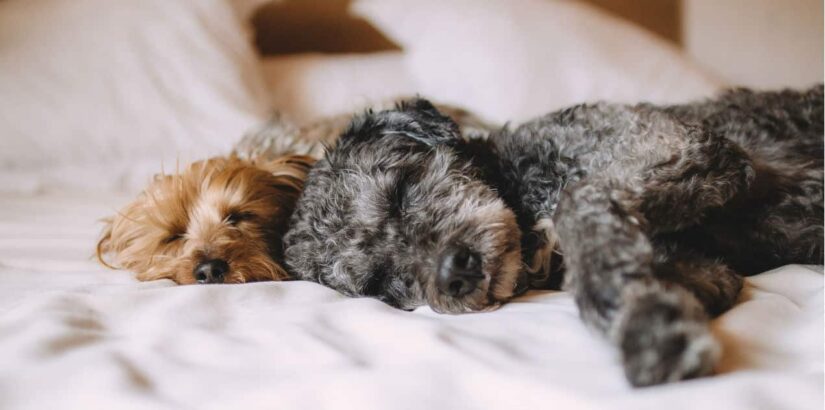
If I had to guess what my dogs dream about when they enter the REM (rapid eye movement) phase of sleep, the images would certainly include squirrels, a peanut-butter filled KONG, and the flash of weeds as they tear along their favorite trail.

Most of us have witnessed the tell-tale eye twitches and running motion of recumbent legs that signal dreaming in our pets, but do dogs really dream? Here’s some background information on dream studies on animals and how dogs dream!

How Dogs Dream

According to Psychology today, typically, a medium-sized dog will begin to dream about 20 minutes after falling asleep; their breathing may become shallower and irregular as compared to deep, sonorous, non-dreaming sleep.

The darting of eyes behind closed lids is the dog “seeing” images as if they were viewed in real life. Some animals may even snap or growl at imagined prey. Humans awakened during this same phase of sleep report they were dreaming at the time.

Anecdotal and scientific research both indicate the probability and content of a dream state. Anatomically and physiologically, the dog’s brain is extremely similar to a human’s, who we know dream of events and images pulled from daily life.

Based on brain wave studies, scientists have determined that smaller breed dream more frequently, but with shorter dream duration, than larger breeds.

The Study of Rats Dreaming 

Of special importance in the generation of dreams is the hippocampus, an area of the brain associated with memory formation and storage. Washington Post states, that in rats, a species with a simpler brain structure, electrical recordings were taken from the hippocampus while the rats were awake and completing a complex maze.

The brain waves generated by these rats running the maze were very specific, repeatable, and so precise that researchers could pinpoint which area of the maze the rats were running based on the electrical wave. Later, when brain activity had indicated the rats were in the dream-generating REM portion of sleep, MIT scientists observed these identical waves.

This data was extrapolated to mean that the rats were dreaming about the maze they had just completed, down to precise location of the maze the rats were “running”  in sleep. In all likelihood, our dogs are dreaming about their version of the maze, dashing along a familiar path or playing with a favorite squeaky toy of which the hippocampus has retained images.

The Pons Region of the Brain

Another portion of the brain, the pons, was studied to determine dream content. In addition to acting as a sensory message relay center in the brain and helping to regulate sleep and respiration, the pons helps hinder movement in sleep. Without this special structure, animals actively engage in movement in the same manner during sleep as they would when awake.

In studies where the pons was removed or inactivated, sleeping dogs executed familiar actions even when brain waves indicated they were dreaming, such as chasing make-believe balls and flushing out imagined birds. Observing this study sounds like watching a dog zombie apocalypse! Puppies, human babies, and seniors all experience more movement such as twitching during sleep due to the underdeveloped or less efficient pons. Fascinating!

Can Dogs Have Bad Dreams?

If dogs dream about their daily lives, can they also have nightmares of being home alone during a storm or being attacked by another animal? If it occurred in real life, it’s very likely they do. It can be difficult to watch your restless pup dream and become agitated in sleep. Should you wake them from their nightmare or leave them be?

From personal experience, it can be very disorienting having a scary dream interrupted by the alarm clock; it takes a few minutes for my breathing to slow and my mind to register my surroundings. Instinctually, your dog may react aggressively and unpredictably if woken during a nightmare. It’s best to let them sleep though it; when they wake, provide plenty of snuggle and play time so that future dreams include these joyful memories!

A Stinky Situation: Dog Anal Gland Problems

Pet Health Articles

There’s no polite way to introduce this topic: pet anal glands. These are mysterious, marble-sized, sacs that contain malodorous material and can be found at approximately 4 o’clock and 8 o’clock between your pet’s internal and external anal sphincter.

All dogs, cats, and carnivorous species (including humans) have them; you may know what anatomical parts I’m talking about if your dog has ever been frightened, scooted their bottom along your favorite rug, or had the unfortunate experience of developing an anal gland infection.

Anal Gland Problems In Dogs

Problems with your dog’s anal glands lead to lots of veterinary and groomer visits, though they do serve a purpose beyond providing job security. Sebaceous glands produce a liquid substance that has a foul, fishy odor which is yellow to tan in color and exists as means of identification and territory marking.

Normally, the liquid secretions are expressed when a dog defecates. The pressure of the firm feces allows the glands to complete empty.

No problem when this occurs outside! Where do things take a hard turn? If your dog has softer stools and the anal glands are not fully expressed naturally, was born with narrow ducts, produces excessive material, or has acquired damage to the duct due to perianal infections, trauma, allergies, or inflammation, they are more likely to develop anal gland impaction and infection.

Sphincter dysfunction and obesity also predispose a pet to anal sac disease. Certain breeds (usually on the small side) are also more likely to need monthly, manual expression of their glands: Chihuahuas, Toy and Miniature Poodles, Cocker Spaniels, Lhasa Apsos, Basset Hounds, and Beagles top the list.

How Do I Know If My Dog Needs His Anal Glands Expressed?

Most pet owners are alerted to the discomfort of impacted glands when their pet drags their rear on the ground, bites at the tail base, excretes the tell-tale liquid (stinky) at times other than defecation, strains when defecating, or a red, hairless bulge is noted near the area of the anal glands.

When swelling is evident either on physical exam or during a visual inspection of the area, an anal gland abscess is present.

Bacterial overgrowth in the gland filled with abnormally copious, thick material causes swelling, pus formation, ultimately rupture and pain. Abscesses can be soothed with a warm washcloth applied to the area and must be treated with antibiotics by your veterinarian.

If your dog has chronic anal gland infections and you’ve ensured stools are firm with a high fiber diet, his weight is managed, exercise is adequate, and allergies aren’t leading to biting and trauma to the area, he may be a candidate for surgical anal gland removal or anal sacculectomy.

Surgery in this delicate area can lead to fecal incontinence and should not be done as a first step in managing anal gland disease.

Preventative care for your dog includes practicing good hygiene and grooming, awareness of these glands, and knowing the signs of inflammation. Most groomers will express your dog’s anal glands monthly as part of their service, especially if you own a small breed or your dog has a history of anal gland disorders.

How to Squeeze Dog Anal Glands

Squeezing the glands can be done with steady pressure to milk the secretions from the inside of the gland, and through the duct opening near the anus. Use latex gloves, lubrication, and a lot of paper towels, or let a professional handle the gland evacuation for a minimal charge. As in most things, “if it ain’t broke, don’t fix it!”.

Repetitive compression of the glands and ducts also causes a little traumatic inflammation at the site and can lead to impaction down the road. So, if your pet has not exhibited symptoms of distended glands, consider yourself lucky!

Dog vs Yard: Digging Holes, Plant Eating, and Lawn Burn!

Dog Behavior Articles

dog in the lawn

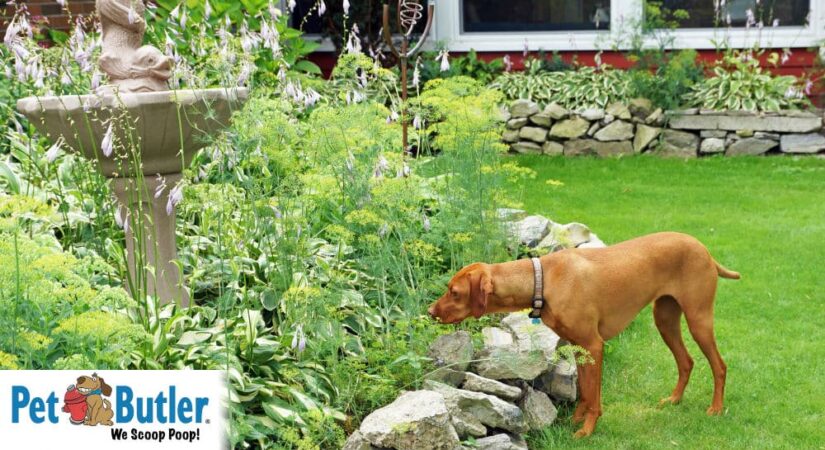
Many pet owners are frustrated when, despite countless hours of fertilizing, weeding, and seeding, their lawn is riddled with brown spots, holes, and severely “pruned” plants. Unfortunately, many dogs cause destruction just by doing what comes naturally.

Dogs Digging Holes On Lawn

The word terrier comes from Latin and means “earth dog”.  A common behavior of this group of dogs is burrowing underground to energetically hunt vermin and rodents.  They are tenacious and excellent diggers, and were bred to eliminate mice, rats and other furry pests from farms.  Hounds, such as the beagle and dachshund, use their exceptional sense of smell to root for groundhogs, voles, and rodents.  When they can’t reach their prey underground, they can track a rabbit above ground, sometimes digging under the fence to catch a rascally critter. While we see their destructive behavior as naughty, digging holes was once a dog’s job; it’s hard to fight the genetic code! Other dog breeds will dig holes to find a cool spot.

Malamutes and huskys are known to dig under the shade of a bush or tree to find the chilled soil underneath.  Border collies and other herding dogs are active pups who need alternate “jobs” if they are not out corralling sheep.  Without an occupation, they may take it upon themselves to become landscapers.  Beware the bored border collie.

Break Bad Yard Dog Behavior and Habits

How can you deter this canine bad habit and inbred behavior? Stop them from digging holes in undesirable locations by burying bricks or chicken wire with the edges well-protected and re-cover the area with soil.  After a few unfruitful attempts and scraping of the nails, they will move on to another activity.  Mulch beds with pinecones which is an unfavorable substrate for dogs to walk upon. Better yet, reinforce their natural tendency to dig by designating a sand pile or corner of the yard as an appropriate excavation site.  Place hidden toys or treats in these locations; training your dog to head to these locations isn’t hard if they are rewarded!

Plant Chewing and Grass Eating

Some dogs chew leaves and grass to relieve nausea, so it’s always best to rule out a medical problem with the vet.  Planting thorny bushes such as barberry, holly, or roses will discourage chewing, as will showcasing fast-growing shrubs like viburnum and euonymus   Unless you have a water-loving retriever, Havahart Spray Away or Contech ScareCrow are two motion activated sprinklers that may keep pets away from vegetation.  By placing them near tender new plants, a dog that attempts to nibble will get a squirt in face. A product sprayed on plants that imparts a bitter flavor such as Liquid Fence or Lambert Kay’s Boundary spray may also eliminate chewing.

Repeated applications may be necessary to “remind” pets that the plant still tastes bad.  These same products can be used on rabbit feces to deter dogs eating rabbit poop.  You may have more success installing rabbit fencing buried a foot deep near your yard’s perimeter to discourage them from taking up residence.

Dog Urine Lawn Burn

Brown spots of dead grass can be the bane of a dog owner’s existence.  Both volume and concentration of pet urine contribute to lawn burn-out. Urine contains high levels of nitrogen, a by-product of protein metabolism.  In small amounts, nitrogen can be a great fertilizer, hence the lush green ring of grass that can be found surrounding the brown spot.

Though not exclusively a female dog issue, males do tend to urinate on shrubs or vertically growing plants in smaller bursts, especially if they are marking. So, the problem may be more noticeable if you have a female dog. What does not work to protect your grass? Adding pH modifiers to your dog’s diet such as tomato juice or baking soda has no proven benefit and may even harm your pet’s kidneys or digestive system. Modifying your dog’s body chemistry can have other unintended consequences such as encouraging the production of bladder stones.  What does work to eliminate or reduce the dog urine spots? The solution to pollution is dilution! I can’t remember if I learned this gem in chemistry class or when treating contaminated wounds… but it holds true.

Watering your lawn within 8 hours of elimination dilutes the nitrogen in waste products.  The market is flooded with sprinklers that can be set on a timer if you don’t have an in-ground programmable sprinkler system.  Promote the consumption of clean, fresh water (tap is fine) by refilling your dog’s bowl often and offering ice cubes or watering down kibble.  Your dog’s urine won’t be as concentrated, and your lawn will thank you!

Training your dog to eliminate on mulch or pea-gravel will also stop lawn burn.  This can be accomplished by repetition using a leash and an immediate reward.  Fescue and rye grass are turf types that are more resistant to dog urine lawn burn than Bermuda or bluegrass, and can be used when reseeding bare patches or as part of your overseeding lawn maintenance protocol.

By following these tips, man’s best friend won’t become your yard’s worst enemy!

Find a Pet Butler 800-Pet-Butler