How Much Exercise Does a Dog Need?

Pet Health Articles

PBC How Much Exercise Does a Dog Need 1000x800

Humans need regular exercise to maintain optimal health. By moving our bodies, we strengthen bones and joints, manage weight and chronic conditions such as diabetes and heart disease, and improve immune system and cognitive function. Regular exercise also releases hormones that decrease stress.

Surprise! Our dogs are no different. And just like humans, they come in a variety of shapes and sizes. Because of age, breed and environmental variations, exercise requirements differ from dog to dog.

How Much Exercise Does My Dog Need Each Day?

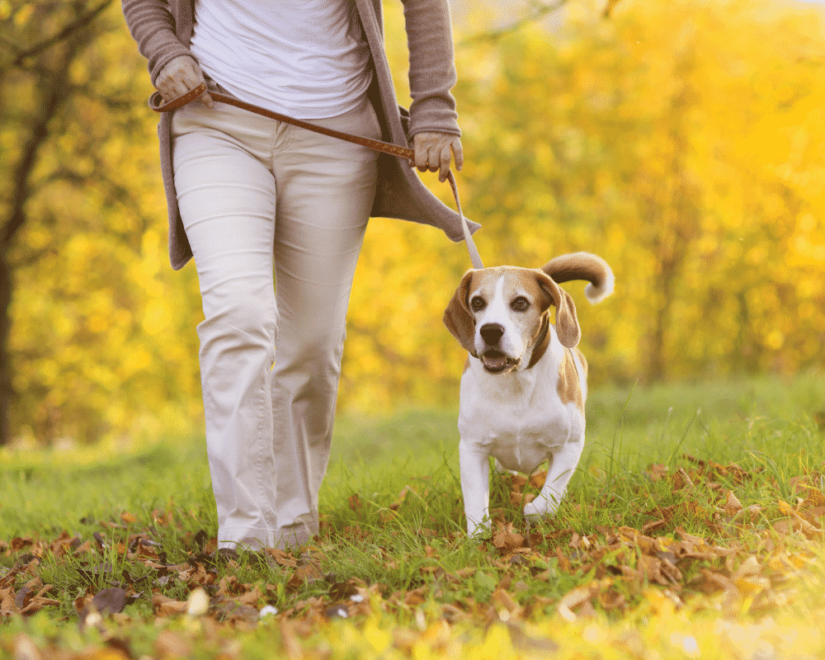
A good baseline for most canines is one hour of activity per day.

For middle-aged, brachycephalic breeds such as Pugs and Bulldogs, several walks a day for 45-60 minutes cumulatively can be plenty. These dogs have restricted airflow due to their shortened snouts, and more vigorous activity can be harmful to their health, leading to respiratory distress. It’s also best to exercise in cool temperatures as their body heat can rise quickly.

Breeds such as Border Collies are built to sustain high-intensity and a longer duration of activity. These breeds can be active for two or more hours per day, which may include chasing a frisbee, going for a run with their human, practicing flyball and similar activities.

Sighthounds like Whippets and Greyhounds need relatively little exercise to meet their physical and mental needs. Built for speed, they are content with three walks a day, and they thrive when provided a few, safe off-leash opportunities to reach their maximum velocity. They tire easily and aren’t endurance athletes. Many retired sighthounds become excellent apartment-dwelling companions.

How Much Exercise Does a Puppy Need?

Not surprisingly, puppies need more physical activity than most adult or senior pets.

If you have a puppy, you’ve likely experienced the “Zoomies”—that quick sprint around a room or throughout your home. This is evidence of pent-up energy that needs to be expended.

Because of their developing limbs, puppies over four months should be exercised multiple times a day for one to two hours cumulatively. At a very young age, a leashed walk is not needed and is unlikely to be very productive since puppies are so distractable. Although, practicing leash-walking skills and recall exercises, such as “come when called”, constitute physical activity.

Playing with a ball, hide and seek with a toy or treat or playtime with other healthy dogs can be productive. Hiking is also a safe activity you and your pup can enjoy together. New sights, smells and terrain provide lots of opportunities for stimulation. Various muscle groups are utilized which is optimal for injury prevention and building strength. In inclement weather, running the stairs, playing tug-of-war and leveraging puzzle games are activities to enjoy.

How Much Exercise Does My Senior Dog Need?

Older dogs need exercise to maintain muscle mass, control weight and provide enrichment. A good rule of thumb to follow for senior dogs is that they need roughly 30 minutes of exercise per day.

Shorter, slower walks that incorporate hills are very beneficial. Swimming is an ideal exercise for older pets, too. They aren’t as likely to overheat, and the non-weight-bearing exercise is easy on arthritic limbs. It’s important to monitor your pet in the water as exhaustion can occur rapidly; life vests can help maintain buoyancy while allowing your pet to reap the benefits of swimming.

If your senior dog slows down, starts limping or seems otherwise physically stressed, stop exercising and consult your veterinarian.

How Do I Know If My Dog Isn’t Getting Enough Exercise?

Dogs that aren’t receiving enough exercise are relatively easy to identify.

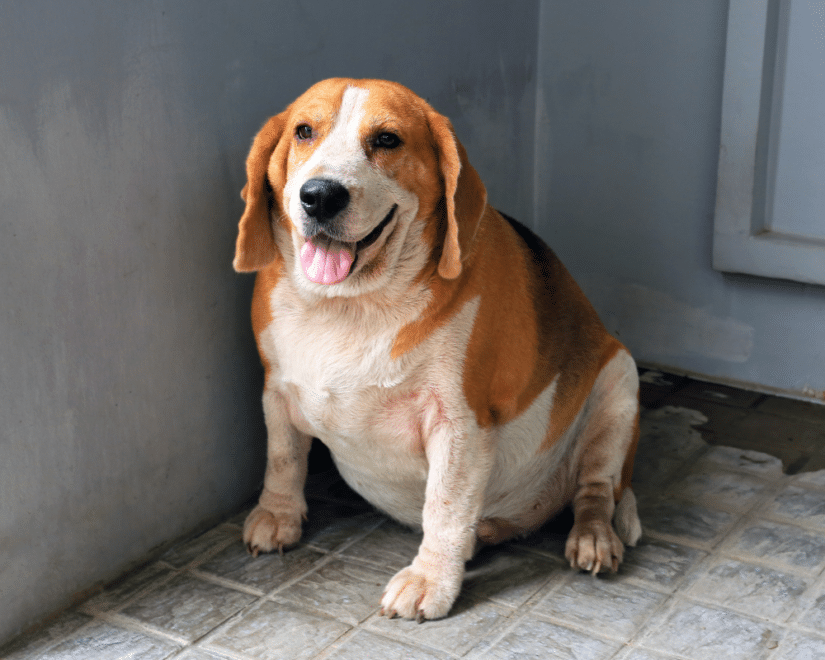
Weight gain, in a general sense, reflects too many calories being consumed and not enough expended. A pet’s ideal weight can be determined by assessing their muscle and body condition. A pet with an abdominal tuck, palpable ribs and an hourglass shape, when seen from above, is at their ideal weight.

AKC breed standards can also be a rough guide as to where your purebred pup should fall on the scale. If your pet is 10% above their ideal weight, they are considered overweight. It’s time to get moving!

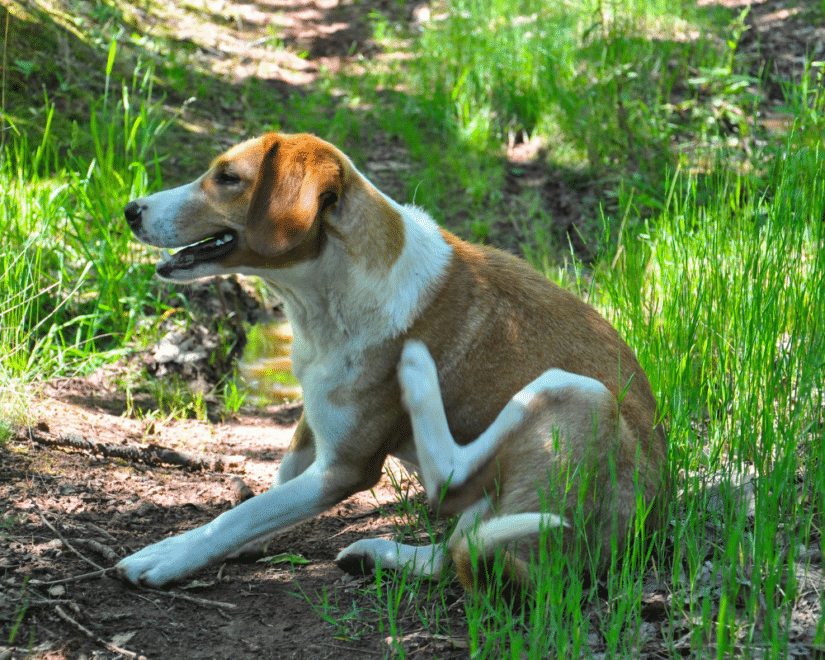
Under-exercised dogs can also exhibit a multitude of behavioral problems. Dogs that excessively bark, chew household items or pace around the house may not be receiving enough exercise. Lesions attributed to chronic licking such as lick granulomas on the limbs may be caused by boredom and stress. These lesions can look like red, raised, hairless spots on any or all the legs, especially near the wrists.

Muscle atrophy, or muscle wasting, can be a sign that your pet is too sedentary. Since other metabolic, autoimmune and inflammatory diseases can lead to muscle loss, it’s best to consult your veterinarian if you notice any changes in body condition. It’s also best to check in with the doctor before starting any new exercise routine.

At Pet Butler, we want your pet to feel and be their healthiest and happiest. Free up your time spent doing chores so you can have more quality time with your furry companion. We’ll take care of your dog’s waste removal on a weekly, every other week or monthly basis.
What You Need to Know: The Difference Between Raw Food, Freeze-Dried Food and Kibble

Pet Health Articles

PBC Types of Dog Food 1000x800

These days, eating options for our canine friends are about as diverse as they are for their human counterparts.

With options including raw, freeze-dried and kibble, it can be challenging as a pet owner to understand the differences between the different food products.

We’ll break it down for you.

Raw Dog Food

How does raw dog food work?

Raw dog food is just as it sounds—uncooked meats, bones, organs, vegetables, etc. At its core, raw dog food is a natural feeding style, one that represents what canines would face in the wild.

When feeding your dog a raw diet, you have two options of where you can get the food from. You can purchase pre-packaged raw dog food from a commercial retailer, or you can make it yourself.

Raw diets boast a handful of benefits to your dog’s health, including increased energy levels, improved dental hygiene because of bone consumption and healthier skin and coats. Raw dog food also contains a much higher water content than dry food, which can help achieve a feeling of fullness.

With that in mind, there are a variety of substantiated issues raw diets can present to pets and even pet-owners.

Feeding your dog a raw diet can run the risk of introducing bacteria, like Escherichia coli, salmonella and staphylococcus, into your household without proper feeding and cleaning methods. The immuno-compromised or children who have less than meticulous hygiene can be especially vulnerable.

Additionally, the bacteria in raw meat can be dangerous to our furry friends by causing gastrointestinal or systemic disease. Parasites such as Neospora caninum and trichinella spiralis found in raw meat can cause inflammation and infection. Finally, if bones are not consumed properly, it can result in chipped teeth and choking.

Freeze-Dried Dog Food

What is freeze-dried dog food?

At your local pet store or online retailer, you can likely find raw dog food that’s freeze-dried.

Freeze-drying is the process by which water is removed from formulated food. This is accomplished by freezing the wet product, then vacuum sealing the product while raising the temperature. This causes the frozen water to turn into vapor and disperse from the food while many of its nutrients remain.

The benefits of freeze-dried foods are similar to those of the raw dog food diet. Freeze-dried foods are a fast and simple alternative to raw food since you don’t have to handle or prepare wet, raw material.

It is important to note that bacteria-related problems are not isolated to fresh raw diets. While the freeze-drying process limits the ability for new bacteria to grow and causes pathogens to enter dormancy, it does not inherently kill the bacteria.

Kibble Dog Food

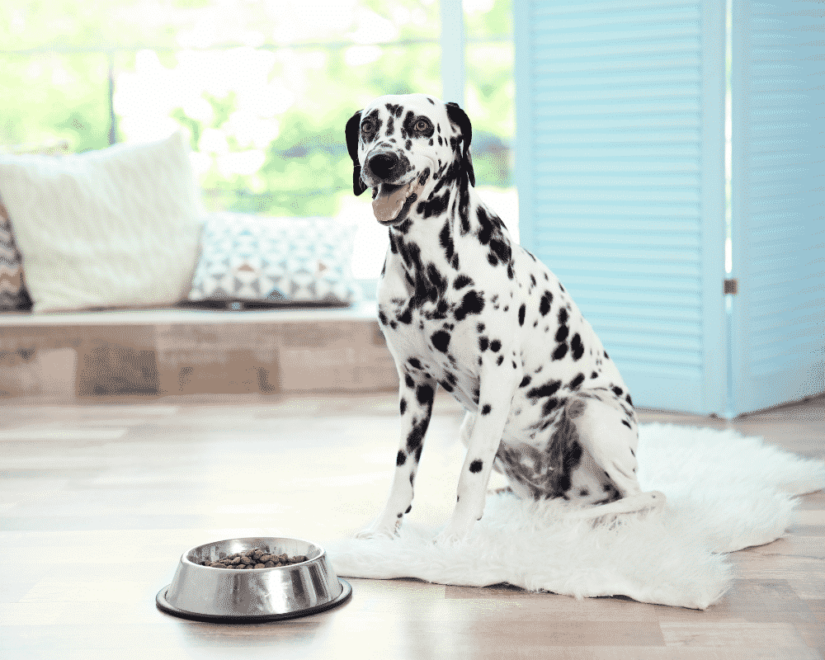
Doggie kibble is at the other end of the feeding spectrum. Kibble food includes formulas that are processed together and cooked. Added preservatives are included to increase product longevity.

Brands of dry food that meet the Association of American Feed Control Officials (AAFCO) standards are required to meet the nutritional needs of your canine, and per USDA regulation, are to be produced under sanitary conditions without harmful substances.

The major benefit of a kibble-based diet is the reduced risk of infection since the products are fully cooked. Additional benefits include portability, healthier gums, reduced levels of plaque and cost-effectiveness.

No matter what diet you choose for your pet, it’s crucial that you consult your veterinarian prior to making a decision. Discuss the options with your vet to ensure you’re feeding your furry friend a balanced diet that supports their breed, age, physical condition, lifestyle and more.


At Pet Butler, we strive to create a healthy outdoor environment for you and your pet. Learn about our poop scooping services.

Diseases that Mimic Obesity in Pets

Pet Health Articles

PBC Diseases the Mimic Obesity in Pets 1000x800

You have upped your pup’s workout routine to include 30-minute walks, twice a day. You’ve added a few hills and varied pace, counted calories and changed up treats to include apple slices and baby carrots. A download from WSAVA provided you with intel on body condition scoring and the importance of monitoring body weight to get an accurate picture of your pet’s nutritional health and general wellness.

But what happens when your pet is still gaining weight despite your efforts, or their weight is stable, but they are losing muscle mass? Maybe their “waist” is still present when viewing their profile from above, indicating a body condition score of 5, but a side view shows a generous potbelly and leads you to believe they may be more like an unhealthy 9?

First of all, great job on monitoring these important health indices! Second, it’s time to call in the health care professionals, your veterinary team members, for an assessment. When there are inconsistencies, inexplicable changes in weight, or your pet experiences shifts in appetite, energy or hydration needs, call your vet.

There are several diseases that can mimic obesity in pets, so it’s best to assess your pet’s condition as soon as possible.

Common Diseases in Dogs

Hypothyroidism

One of the most common diseases among middle-aged to senior dogs is hypothyroidism. The thyroid glands control metabolism, and when hormone levels are low, your pet may experience lethargy, hair loss, weight gain or recurrent skin and ear infections.

Breeds predisposed to hypothyroidism include our retriever friends, doberman pinschers, Irish setters, boxers, poodles and cocker spaniels. A simple blood test followed by thyroid supplementation can set your pet on the road to wellness.

Cushing’s Disease (Hyperadrenocorticism)

Cushing’s disease, or hyperadrenocorticism, is another endocrine disorder that disproportionately affects boxers, terriers, poodles, dachshunds, and maltese breeds. The disease is caused by an over-production of steroid hormones, namely cortisol.

Overmedication of pets or chronic use of a steroid called “Prednisone” can also lead to Cushing’s disease. Cortisol in healthy pets regulates the body’s response to stress and helps modulate the immune system. In excessive amounts, too much cortisol can lead to weight gain, a decreased ability to fight infection, increased water consumption and appetite, a swollen appearance to the abdomen and deposition of fat stores in the shoulder and neck areas. It can also lead to hair loss, thinning or darkening of the skin and lack of energy.

While often manageable, Cushing’s disease is a serious problem in middle-aged to older pets that may require surgery or lifelong medication and blood testing.

Pancreatic Tumors

The pancreas is made up of cells responsible for producing and secreting insulin, a hormone that regulates blood sugar levels. Dogs that have tumors of the pancreas secrete excessive amounts of insulin, causing glucose levels to drop, weakness, dull mentation and weight gain.

Blood testing paired with a biopsy at the time of surgery to remove the tumor can be diagnostic and curative if the cancer has not spread.

Fluid in Belly and/or Chest

Free fluid, water or blood in the abdomen can lead to changes on the scale or a bloated belly despite consistent calorie intake and exercise. Diseases that lead to water retention or leakage of fluid out of the bloodstream and into the abdomen are many and can affect young and old animals alike. Liver disease, gastrointestinal diseases that cause low blood protein and heart disease can all lead to fluid build-up in the belly and/or chest.

Certain cancers or trauma can cause free abdominal fluid or blood loss into the abdomen, resulting in a pot-bellied appearance.

Intestinal Parasites

Puppies are adorable, no doubt; however many pups harbor intestinal parasites, giving them that rotund appearance. Most puppies are exposed to roundworms, hookworms, tapeworms and whipworms in utero via the maternal milk supply or in the environment. Intestinal parasites rob the puppies of necessary nutrients, so deworming and regular fecal testing are necessary.


No matter the cause, a sudden change in your pet’s body shape or size should be considered an emergency and prompt a visit to the veterinarian immediately. At Pet Butler, we want your pup to be their happiest and healthiest, which is why we’re here to take care of their waste. Call 1-800-PET-BUTLER to learn more about our waste removal services and how we can keep your yard clean.


How to Determine if Your Pet is Obese

Pet Health Articles

PBC How to Determine if Your Pet is Obese 1000x800

Did you know that obesity isn’t unique to humans? Studies show that 1/2 – 2/3 of dogs are overweight. While we are very well versed on our own signs and symptoms of obesity, it can be much more of a challenge to understand our pets’ health in regard to their weight.

So, how can you tell if your pet is overweight, and when is it time to call your vet?

Body Condition Score and Weight

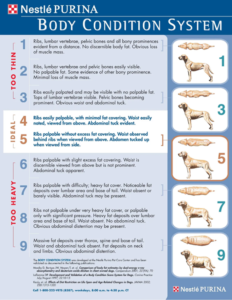
Let’s start with one of the fundamental tools veterinarians use to evaluate the health of canines: a Body Condition Score (BCS). The BCS is a rating of your dog’s current weight compared to its ideal weight. This is determined through visual and manual assessment. You can think of a BCS as the dog equivalent of a Body Mass Index (BMI) or a similar health indicator.

BCS scales can range from 1-5 or 1-9 and typically follow the same structuring. An example is shown below, with the “ideal” range at approximately 4 to 5.

Image Source: Purina’s Body Condition System

However, just like any analytical index, a BCS isn’t without its flaws. For one, the system is subjective, outlining generalized terms of what to look for in your pet. Second, body condition scoring isn’t going to be applied the same for all dogs and can be dependent on breed, gender and age.

As a species that ranges vastly in shapes and sizes, there is no one “ideal” weight for a dog. While there are standardized ranges for each breed, a healthy size is going to be unique to your pet alone. For example, healthy greyhounds typically have visible ribs due to their conformation and haircoat, but this same statement is not true for a golden retriever.

Ask your veterinarian to help identify a healthy weight range for your pet, which is likely to correspond to a range of 4-5 on the body condition score chart. Your pet will be overweight if they are 10-20% above that number on the scale and clinically obese if that number reaches more than 20%.

Not to fear, though. Just because you can’t rely on a BCS alone doesn’t mean you can’t determine if your pet is overweight. Here are some other signs you can look out for.

Physical Appearance

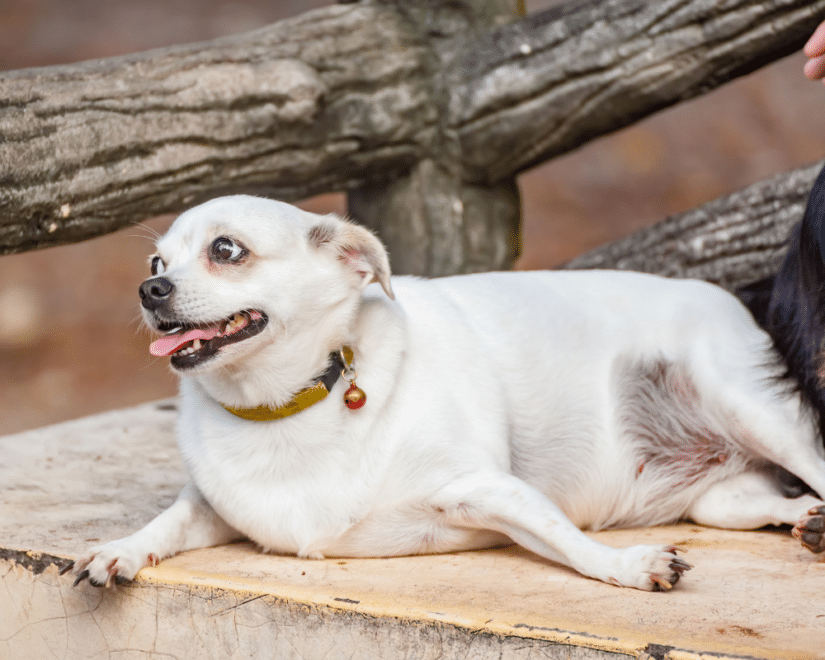
As with the visual examination involved in body condition scoring, the easiest way of understanding where your dog’s weight is at is simply by looking at them. Does your dog’s waist sag? Are there fat pads at the base of its tail and top of its hips? Do its legs stick out awkwardly to the sides instead of being directly under them? These could be signs of a weight problem.

In general, your dog should have its abdomen tucked up in relation to its chest. From an overhead view, a healthy dog is one that is wider at the chest and slimmer toward the waist. If your pet has an ovular body shape from the side or over the top, you’ll know something’s up.

One of the biggest visual indicators is the ribcage. In a healthy dog, the ribs shouldn’t be very prominent, depending on the breed, but they should be very easy to feel upon touch. A telltale sign of an overweight dog is one whose ribs take excessive palpation to find.

Respiratory Issues

Another common presentation of obesity in dogs comes in the form of breathing. If you’ve noticed that your pet struggles with breathing, namely wheezing or heavy breathing, this could be a result of being overweight.

Respiratory problems can even manifest when your dog isn’t exerting effort. Checking if and how intensely your dog snores can also provide insight into its weight situation. When it comes to snoring, more is not merrier.

Difficulty with Movement

As with humans, extra weight is going to place additional pressure on joints, making movement more challenging. If your pet isn’t moving around as well as it used to, weight can be the culprit. Better indicators come in the form of more difficult movements, like running, jumping and climbing stairs.

General Behavior

As a less specific rule-of-thumb, your pet’s overall behaviors can be indicative of needing to shed some pounds. If you find that your dog has become particularly sedentary, opting for laying around as opposed to going on walks, something likely isn’t right. An absence of energy and general lethargy is never going to be reflective of positive health.

If you find your dog following any of these patterns or displaying symptoms of obesity, it’s time to schedule a visit with your vet. At the end of the day, your veterinarian will be able to give you the most thorough and definitive answer regarding your pet’s health.


At Pet Butler, we want your pet to feel their best and be their healthiest. That’s why we specialize in caring for your pet by scooping up their waste. Find out more about our services or call 1-800-PET-BUTLER to learn how we can make your pet’s life happier, healthier and cleaner.

To continue learning about obesity in pets, be on the lookout for our upcoming articles on diseases mimicking obesity, how to help your pet lose weight and obesity in senior pets.


How to Avoid Obesity in Dogs

Pet Health Articles

Blog How to Avoid Obesity in Dogs Banner 1000x800 (1)

Did you know that 55.8% of dogs were classified as clinically overweight in 2018? That means an estimated 50 million dogs are unhealthily heavy, based on 2018-2019 pet population projections from the American Pet Products Association (APPA). And these numbers are likely an underestimation considering the surge in pet ownership during the COVID-19 pandemic; many have been guilty of hibernating with our pets, packing on the additional pounds along with our furry friends.

To further shed light on National Pet Obesity Awareness Day, here are 4 tips on how you can prevent your dog from gaining unhealthy weight.

4 Tips to Avoid Obesity in Dogs

1. Talk to your veterinarian

The best way to prevent your pet from becoming overweight is to start with gaining an awareness of their body condition. To do this, speak to your veterinary professional about your dog’s current health, find out about exercise and activity requirements and ask how many kilocalories (kcal) they should intake daily based on breed, age and lifestyle.

2. Find the right food for your pet

Not all breeds require the same type and amount of food. Be sure to consult your vet for various food suggestions for your dog.

The “right” foods to maintain a healthy weight also depend on your pet’s particular circumstances. Age, breed, pre-existing conditions, activity level and even environmental temperature can all affect your pet’s nutritional and caloric needs. Controlling portions is key for all pets, regardless of how “low-calorie” a food may be. In general, younger pets tend to be more active and require food higher in caloric density vs. older, more sedentary pets. A good quality protein source is important for all life stages.

Most veterinarian-approved foods meet the Association of American Feed Control Officials (AAFCO) standards for testing, nutritional content, labeling, guaranteed analysis and ingredients. It’s no small or inexpensive undertaking to create a safe, effective, palatable and nutritionally complete pet food. Some mom-and-pop shops that use colorful logos, promise “real” or “fresh” food and sell terms that are merely descriptive that can mean any number of things should be avoided unless approved by your veterinary health care professional.

For pets with specific dietary needs such as a low-fat diet for pancreatitis-prone patients, your vet may advise a calorie-controlled, prescription food to prevent obesity and manage pre-existing disease.

3. Treat them wisely

Who doesn’t love giving their pet a tasty treat in between meals? They’re always excited for treats, and you’re always delighted to offer them. However, remember that treats are not nutritionally complete and balanced. As such, they should contribute to no more than 10% of overall kcal intake.

If you’re unsure what store-bought treats your pet should have, consult your vet for recommendations. You can also serve your pet fun, human-friendly options too! Healthy snacks for your dog can be apple slices, frozen yogurt “pup cups”, bananas, carrot sticks or frozen blueberries. Some owners even reserve a small portion of their daily kibble ration to be dispensed as treats. Your pet won’t know the difference, and you can effectively control intake while offering more treats throughout the day.

4. Develop healthy habits

Just as humans can develop unhealthy habits, our pets can, too. It’s imperative to your pet’s health that you help them create beneficial daily habits. Develop good routines such as a long morning walk, or for senior pets, several short daily walks.

Other dogs may enjoy playing fetch, a run at the dog part or a game of hide and seek, which involves hiding a toy in the yard or house to be sought after. To mix things up, you can even try hiding so your pet can find you! For elderly pets, swimming is a particularly healthy activity that aids sore joints.

So, why should we be evaluating our pet’s weight throughout their life and ensuring they maintain an ideal weight? We witness the same physiological changes in our heavy pets that we do in overweight humans. Obesity leads to an increase in joint pain, generalized inflammation, diabetes and other metabolic issues and respiratory disease, as well as heart and kidney functional changes. It reduces life expectancy and is a financial drain on pet owners to treat obesity-related conditions. And most obviously, it compromises our pets’ ability to participate in exercise or activities with their owners, which decreases their quality of life.

At Pet Butler, we want your pet to feel their best and be their healthiest. That’s why we specialize in caring for your pet by scooping up their waste. Learn more about our services or call 1-800-PET-BUTLER to learn how we can make your pet’s life happier, healthier and cleaner.

To continue learning about obesity in pets, check out our articles on how to determine if your pet is obese, how to help your pet lose weight, obesity in senior pets and more!

Parasites: What You Need to Know for Your Pet’s Health

Pet Health Articles

Blog Parasites What You Need to Know for Your Pet’s Health Banner

By definition, a parasite is an organism that lives in or on another host and gets its nutrients or at the expense of the host. There are three types of parasites that affect dogs, cats, and humans: ectoparasites, helminths, and protozoa.

What does this mean to you, a compassionate and responsible pet owner?

There are creepy crawlies, some visible to the naked eye and many invisible, that can live on or in your furry friend and cause them harm. Some parasites can even be passed back and forth between humans and their pets. But no need to fret—we have effective ways to diagnose, treat and prevent parasites from hurting you and your four-legged friends.

Types of parasites in dogs:

Ectoparasites, like fleas and ticks, are the easiest to diagnose. Though the egg and larval stages are tiny, barely the size of the period at the end of this sentence, engorged ticks and adult fleas can be seen with the naked eye. Ticks like to feed in places they aren’t likely to be found, like on ears, between toes, under the tail and near the groin or elbows. Fleas are fast-moving pests that tend to congregate where they can’t be reached by a chewing dog’s chompers, namely near the base of the tail; however, they can be caught crawling just about anywhere. It’s more likely you will find the tell-tale evidence of flea “dirt”, flea fecal material, that looks like ground pepper and turns a red-brown color when placed on a damp paper towel. A fine-toothed flea comb can be used to grasp hairs and trap flea dirt to test.

Internal parasites such as heartworms, whipworms and giardia are more difficult to detect. Blood tests will indicate the presence of heartworms. Microscopic inspection of a fresh stool sample is necessary to diagnose parasites that infect the gastrointestinal system. To compound the matter, not all life stages of parasites are detectable on laboratory tests. For this reason, your veterinarian may request multiple blood or fecal samples given over several weeks to months.

How do dogs act when they have parasites?

What are the symptoms your pet may have a parasite problem, and how alarmed should you be? Puppies and kittens are often infected with intestinal worms through nursing and during pregnancy. It’s not uncommon to see a new pup present with diarrhea and a distended-looking belly.

Vomiting is another common symptom of intestinal parasite infection. Transmission and re-infection occur in pets when fecal material containing parasites eggs or cysts are ingested. Sometimes direct contact with a parasite, such as hookworms, occurs through broken skin.

Heartworm larvae are transmitted by the bite of a mosquito, and tapeworms can be acquired through ingesting an infected flea. Symptoms of both infections can cause weight loss and lethargy. In the case of heartworm disease, difficulty breathing, exercise intolerance, and in severe cases, ultimately death.

Fleas can lead to intense itching and hair loss while ticks often go unnoticed until the diseases they carry, such as Lyme disease or rocky mountain spotted fever, cause signs of illness. Tick-borne diseases can be great pretenders, often mimicking the symptoms of other illnesses. They can cause low platelet count and bleeding, lameness, lethargy, coughing, vomiting, diarrhea and general malaise.

How are parasites treated in dogs?

The good news is that most parasite infestations are very treatable.

Deworming medications such as ivermectin are effective at killing many internal parasites. Heartworms can be treated with a series of injections, though side effects of the treatment can be severe and the treatment costly. Protozoal parasites such as coccidia and giardia can be treated with oral medications such as fenbendazole or sulfadimethoxine, an antibiotic.

There are several topical treatments that can be used to kill fleas and ticks. Many of the same medications used for treatment can be used topically as prevention. Advantix, Revolution, Frontline and Bravecto are veterinary-prescribed products with a high degree of efficacy. Newer oral medications such as Simparica Trio kill fleas and ticks, as well as internal parasites such as roundworms, hookworms and heartworm larvae before they mature in the respiratory tract.

How to protect your pet from parasites:

  • Topical and oral preventatives should be given to your dog year-round to minimize the opportunities for parasites to reproduce.
  • Attend your pet’s yearly vet visits to update vaccines and receive regular check-ups.
  • Keep up with the housekeeping. Wash bedding regularly and vacuum couch cushions and along baseboards.
  • Maintain your yard. Eliminate brush and yard debris, and pick up pet poop daily. If eggs can’t hatch and pets can’t consume fecal matter, the likelihood of infection decreases.
  • Do not feed wildlife or encourage stray animals to visit your yard by setting out shelters or food.
  • Eliminate free-standing water so heartworm-carrying mosquitoes can’t breed. Empty your outdoor water bowl and only refill when needed. Also, check for various puddles of water in your yard and ensure your pet cannot reach them.
  • Check your dog’s fur for hitchhiking ticks when you return from an outdoor adventure.
  • Be a good human; pick up your own pet’s waste if you are out on a walk or at a dog park!

At Pet Butler, we want your pet to feel their best and be their healthiest. That’s why we offer affordable pet waste removal services for your yard.

What Causes Pet Depression?

Dog Behavior Articles

Pet Depression - Image

We know that our canine companions are sensitive, intuitive creatures. They pick up on their owners’ emotional states, changes in routines, and their environment. It’s no wonder they are capable of experiencing a wide range of emotions and moods including depression. That’s why Pet Butler wants to help you identify the situations that are causing your pet’s depression.  
 

What are common triggers of pet depression? 

Changes to a dog’s environment are one of the most common causes of pet depression. Dogs are dependent on us and their familiar home base for comfort and stability. Something as simple as an environment change can cause a chain reaction. Changes like moving, going through a divorce, or returning to work can be unsettling to your pet. 

One of the more common situations is the loss of another animal or family member. The absence of another companion can lead to signs of depression. Animals experience feelings of grief and loss though we don’t know exactly how they process the concept of death. Your pet can often sense a companion’s illness/death and respond by exhibiting behavioral changes consistent with pet depression. For pack animals such as dogs, it’s no surprise the loss of a bonded companion leads to sadness. Because dogs are so attuned to our moods, they may also respond to the physical manifestations of human grief such as crying, detachment, and lethargy.  

Pet depression can be exhibited because of a simple shift of schedule causing their owner to not be home as often. Changes in routine brought upon by increased work demands can cause anxiety, stress, and boredom which lead to signs of pet depression. Dogs are creatures of habit and a change in their daily activities can be unnerving. They gain confidence and reap the physical and mental benefits of having a “job” and regular exercise. When those neurons and muscle fibers aren’t firing, hormones such as oxytocin, dopamine, and endorphins aren’t released, and signs of pet depression may be observed.  

 Pet Depression - Image

What if it isn’t pet depression? 

Dogs can’t tell us when they are physically ill or in pain but changes in behavior offer clues. Some dogs that aren’t feeling well physically may show signs of pet depression. Endocrine disorders like hypothyroidism cause dogs to become sluggish and mopey. Neurological diseases such as seizure disorders or tumors affecting the central nervous system may cause mood changes. Anytime your pet exhibits a shift in their behavior that isn’t easily explicable, always rule out a medical problem by visiting the veterinarian. By determining the root cause of your dog’s depression, you can make changes to improve their mental health and well-being.     


At Pet Butler, we want to help you give your pet the best care possible. That’s why we offer pet waste removal services so you can care for them why we do the dirty work. Sign up with your local Pet Butler today at Petbutler.com.  

Is Your Pet Depressed?

Dog Behavior Articles

Pet Depression Image

Dogs are complex animals with social, mental, and physical needs much like our own. They thrive in safe, nurturing, and consistent environments that provide companionship and routine. So, what happens when those environments are disrupted by a change in work schedule, a new location, or a life alter event? For many of us, returning to work has been an adjustment, but not just for humans. Some dogs exhibit clinical signs that can only be attributed to pet depression. Of course, we can’t ask them how they are feeling, but we can be aware of how these changes in routine can lead to sadness and depression. The real question is, what we can do about it?  


What are signs that my pet might have pet depression?

Many dogs exhibit symptoms consistent with their human counterparts including those of pet depression. If your pet is normally excitable and friendly but has been spending more time hiding behind the couch, they could have pet depression. Some signs include:  

  • Not wanting to go on their normal walk  
  • Sleep excessively  
  • Changes in appetite or no appetite  
  • Shaking & whining   
  • Not wanting to play with their favorite things  
  • Excessive sniffing, circling, and/or licking  
  • Aggression  
  • Relieving themselves in naughty places  

What is causing my pet’s depression? 

To treat pet depression, we need to look at what changes may have triggered the condition. First, have your dog examined by a veterinarian. The vet may recommend blood tests or other diagnostics to determine if a physical ailment such as arthritis pain or endocrine disease is present. Certain medical problems can lead to behavior changes that mimic or lead to depression.  

If your dog is otherwise healthy, be aware of shifts in the environment that may have led to pet depression. Is your pet not receiving enough exercise or attention due to a job change? Have you recently moved? For many of us that have returned to work, our pets are not receiving the companionship they have come to rely on.   


How can I treat my pet’s depression? 

  • Quality Time – Spend additional time with your pet if you think they are lonely. Make sure you have a consistent routine that includes plenty of exercise. Dogs are creatures of habit that come to anticipate positive interactions, grooming, and feeding times. Mentally stimulating games and classes such as obedience or nose work can provide a depressed pet with a social outlet and a confidence booster. Some dogs love car rides, vigorous brushing, or fetch. It sounds simple but do more of what your pet loves!  
  • Train Them – While you may want to comfort a depressed pet with treats and positive affirmations, save the food rewards for when they exhibit desired behaviors. Pets with depression should be taught to relax in stressful situations. Use recorded sounds played for a short duration, at low volume while petting or feeding to get them. This will help get them acclimated to the stressful triggers. Provide a secure, quiet space and reward them when they can respond to commands such as “settle”, or they resume eating in the presence of the trigger. You can use sounds like the jangling of your keys, the hairdryer in the morning, or starting your car. Any sound that signals a change in the environment is coming.   


The good news is most dogs that have pet depression are sad for a short duration of time. Once the inciting cause has been addressed, their mood improves. For dogs without any other physical ailment that continue to behave unusually, a visit to the vet for a prescription of canine anti-anxiety drugs or medication for depression may be in order. Pets usually show a positive response to the pharmaceuticals within 6-8 weeks. They can often be weaned off after less than a year.   

Stay plugged into your pets’ changing moods and habits. The sooner we identify and treat pet depression, the more quickly we can get those tails wagging! For pet wellness tips, you can go to Petbutler.com/wellness-guide. At Pet Butler, we understand that your pet is family. We know you want quality care and advice when you need it. That’s why Pet Butler is in the business of helping care for your pet’s needs. We provide waste removal services to keep your yard poop-free for you and your pet. Go to Petbutler.com to sign up for our poop scooping services today! 

A Guide To Pet-Friendly Flower Gardens

Pet Safety Articles

Pet Friendly Flowers Image

Now that spring is in full bloom, you’ll want to plant flowers and shrubs to spruce things up in your gardenHowever, don’t overlook the dangers that some plants can cause to your dog or pet. As a pet owner, keeping your pet safe is your priority, but as a homeowner, you want to keep your garden looking beautiful too. Pet Butler has compiled a guide to help you choose the right pet friendly plants that will also look in your garden.
 

What Are Pet Friendly Garden Flowers?

While you want to make sure that you choose the right flowers your geographical region, you also need to choose the right ones that are safe for you pets. Below are some pet safe flowers that you can plant in your garden this spring. 

Pineapple Sage – The Pineapple Sage offers colorful red booms that smell divine and attract hummingbirds but are safe for your dogs. 

Snapdragons – Snapdragons are classic and popular flowers that are safe and non-toxic for dogs. Snapdragons can be found in a variety of colors and are easy to master, even for beginning gardeners. 

Daylilies – A Daylily might become your dog’s favorite outdoor spot because they provide cool leaves to chill out under on a warm day. Although Daylilies are fine for dogs, it is worth noting that they are toxic for cats. 

Marigolds – Marigolds are attractive flowers that come in a myriad of colors but offer more benefits than just their beauty. The Marigold is not only pet-friendly and attractive, but its also a deterrent to insects. 

Roses – Roses are beautiful, elegant, and safe for pets. Color your garden with roses in many shapes, colors, and sizes. 

Asters – With over 200 varieties of Aster, your choice of color and size can bring an ambiance like no other flower can. All while being very pet friendly 

Gerber Daisies – No matter what gardening zone you are in, you’ll likely be able to succeed in growing non-toxic Gerber Daisies. These annuals offer a classic look and fit in with any landscaping style. 

 Flowers That Are Safe For Your Pets image

How Can I Protect My Garden From My Pets?

Fence off part of your garden to protect your pet from certain plants or vice versaIt’s a good option to keep certain delicate plants, shrubs, or flowers from being trampled or disturbed by your dogs. Be sure to include a spacious area that is your pet’s special place to enjoy. Here are some ideas to make your dog’s special place amazing. 

Make a Sunflower Pyramid Doghouse – Sunflowers are easy to grow and mold into a pyramid that can serve as a tent that offers comfort and shade to your pup. Your dog might find a nice napping spot or a natural doghouse that can house their food and water bowl. 

Provide Dog-friendly Herbs – Certain herbs are calming and healthy for dogs. You might add chamomile and lavender to provide health benefits to your curious pet. Be sure to check with your dog’s vet first to make sure your choice of herbs are pet-friendly. 

Include Outdoor Fun – If your garden has space, you can add a sprinkler feature or climbing element to allow your dog to take outdoor enjoyment to the next level. 

The temperatures are starting to rise and summer will be in full effect soon. It’s the perfect time to have the best of both worlds – a colorful garden full of flowers and an oasis for your dog to enjoy all year-round. One part of keeping your garden beautiful is clearing away your pet’s waste. It can be a full-time job to keep up with, but Pet Butler offers a solution that makes life easier for the pet owner. 

At Pet Butler, we work hard to help bring you quality information so you can make the right choices for you and your pet. That is why Pet Butler makes it an easy decision on who should help keep your yard poop-free. If you want to learn more about the services we provide, follow the link here!   

How Do I Give My Pet Medicine?

Pet Health Articles

Givng dogs meds

Giving your pup medication isn’t always the easiest task; humans aren’t the only ones who don’t like taking pills or swallowing a bitter liquid. Just one lick of medication can make some dogs suspicious of anything that’s not beef jerky.  Luckily, there are alternatives to the traditional offensive tasting medicine and ways to get your dog to takthemJust make sure to follow your veterinarian’s instructions as some medicine must be taken on an empty stomach. 


What foods are best for hiding pills and powders?   

Pill Pockets – Soft dog treats like pill pockets, easily disguise meds that come in the form of a pill. Keep in mind, the smaller the treat, the less time your dog has to chew and discover the pill. The less your furry friend tastes of the medicine, the easier it will be for you to give him meds in the future.   

Creamy Textures – Dogs typically like peanut butter and cream cheese, so they are great choices to mask the taste and smell of medication. Check with your vet if you think you may need to open the capsule or crush the pill first as some medications can’t be altered.   

Use Cheese –  Baby Bell Cheeses or American cheese are great hiding sources. Make sure to use a small amount as some dogs have a dietary sensitivity to dairy. Avoid any foods with garlic, onions, or xylitol.   

Get Smelly – In general, dogs like food that are stinky. Liverwurst, meat sticksbaby food, wet cat food, and rotisserie chicken are all great options that have potent flavors that are appealing to canines.  

Trick-Or-Treat – This method is consisting of treat, pill, treat. The first piece of cheese is fed unadulterated. The second one is quickly offered and hides the pill. The third is a plain piece of cheese. By ending on a positive note, the dog associates eating the cheese with a happy experience and is more likely to take the bait the next time!  


How do I mask a liquid medication? 

Medicine doesn’t always come in pills. Liquid medication is commonly prescribed for smaller breeds. Canned goods are perfect for mixing liquid medication. Ice cream or whipped cream can hide these medications if your dog isn’t sensitive to those specific foods.  You don’t need to add much, just a couple of tablespoons to mask the unpalatable flavor. You want to make sure that you give a small amount in hopes that your pup will consume it entirely before tasting the unfavored flavor. Best to have a few extra teaspoons in case your dog rejects the first attempt.  


How do I administer liquid medication without a food aid?   

If you must administer the liquid medicine by hand, it’s easier to have a second person to help. It’s best to bring medicine to room temperature first, but make sure not to microwave it. Tilt your dog’s head back and insert the syringe tip just behind your dog’s canine teeth. You should angle the syringe so that the medicine dispenses onto your pet’s tongue. Slowly release the medicine so your pup has time to swallow. If your dog spits out some of the medication, consult your vet prior to re-administering medication. 


 Do I have any other options?

Other options for making the medicine go down include having your pet’s prescription custom compounded. Flavored tabs, liquids, or even a gel that can be applied inside the ear flap can be created at a compounding pharmacy familiar with pet medication. While a salmon flavored syrup might not sound tasty to a human, dogs love it! Transdermal (through the skin) medication may also work best if your dog has medical conditions such as pancreatitis, inflammatory disease, or food allergies.  


What happens if I miss? 

 If you suspect your dog consumed even a partial dose, don’t re-dose without talking to your veterinarian first. Empty gelatin capsules can also be filled with small amounts of liquid medication. You can ask your vet if this method of dosing might be an option. You can also request a few extra pills from your vet until you master your technique. 

After administering your pet’s medication, always spend a little extra cuddle or play time with him. It will calm his nerves and reinforce a positive next experience with medicine! 


Here at Pet Butler, we understand how important it is to provide the best care for your pets. That’s why, at Pet Butler we provide pet waste removal services to keep your yard clean so your pets can play all year long. So, call 1-800-PET-BUTLER to learn how we can make your pet’s life happier, healthier, and cleaner. 


Find a Pet Butler 800-Pet-Butler