What Colors Do Dogs See?

Pet Health Articles

dog vision

As we head into Fall, it’s a great time to go outside with your dog and enjoy the comfortable temperatures and beautiful colors this season brings. Vibrant reds, yellows and oranges decorate the trees; colorful mums and pumpkins are on display.

We know our furry friends appreciate the cooler weather and we like the changing fall colors, but what colors can dogs see? Learn more about our dogs vision and how they see!

Can Dogs See In Color?

To better understand our dogs vision, we need to know a little about the dog’s eye. The retina is a structure covering the back of the eye containing the light-sensitive cells called rods and cones.

Cones help both dogs and people detect color and small visual details while rods are necessary to see motion and objects in dim light. Dogs have only about one-tenth the number of cones as humans.

Their rod-dominated retinas are better at seeing in the dark and detecting movement but dogs are essentially red-green color blind. This means they can differentiate yellows, blue-violets, and variations in shades of grey but cannot distinguish red, orange, yellow, and green.

How Dogs Vision Help With Navigating

How then does dogs vision help with navigating across a busy intersection when the light turns green? They use other visual cues and senses such as position and brightness of the light, noise, and traffic movement. Their increased peripheral vision is an asset; dogs’ visual field is 200-240 degrees vs. humans’ 180 degrees. Visual acuity is not as strong.

Dogs typically have 20/75 vision though working retrievers bred for better eyesight may have closer to 20/20 vision. So, even if your dog had the mental ability to read, he wouldn’t be able to resolve the individual letters.

A better understanding of dog vision is necessary when considering training and behavior. A change in posture or movement is significant to a dog as are sounds and smells. Sweeping arm motions, clicker noises, and food rewards are often used in successful training programs.

Although dogs vision may not see the changing colors of the fall season, they undoubtedly love the crisp weather, the sights and sounds of geese heading south, and the crunch of leaves underfoot. Most of all, they like spending time with you. Happy Fall!

Allergy Season: Symptoms and Treatment for Allergies in Dogs!

Pet Health Articles

Dog in grass

Just as airborne allergies are common in people, manifesting as itchy eyes, sneezing, and congestion, allergies are also common in dogs (and cats!). As the weather warms up and our furry friends spend more time in the spring sunshine, their exposure to outdoor allergens increases. Some inhalant allergies are prevalent year-round, such as those activated by house dust mites or food storage mites, but many airborne allergies are seen during particular times of the year. Atopy, another name for airborne allergies, is typically triggered by grasses, pollen, weeds, trees, dander, mold spores, insect proteins, and even fabric. Dogs living in different parts of the country may experience allergy symptoms during different months, all depending on the weather and what is blooming!

Signs & Symptoms of Allergies in Dogs

Pets with atopy usually experience a seasonal spring or fall itchiness that begins in the first or second year of life; often the duration of the itchy period becomes longer and longer. Other dogs start the itch-scratch cycle like clockwork on the same day every year and symptoms predictably last just a few weeks. Itch and skin redness, bacterial infection, scabbing, hair loss, licking or swelling is associated with certain parts of the body in atopic dogs. Hair loss around the eyes and mouth, in the dog’s “armpits” or axillary and inguinal regions, the lower abdomen, around the rear end, and feet are the first clues your dog may have airborne allergies. Ear infections are common secondary problems; the heat from inflamed skin make the dark canal a perfect environment for bacteria or yeast to overgrow.

I get countless calls where an owner has self-diagnosed ear mites because of a black, smelly ear discharge that causes intense itching. Yeast overgrowth, caused by underlying allergies, is a more common culprit. Without treating both the infection and the allergy, ear disease is likely to become chronic. While some dogs also experience red, itchy eyes and have more mucous production, we rarely see the nasal and sinus congestion that people suffer, though a few pets do develop an allergy-triggered bronchitis or a throat-clearing rumble.

What causes allergies in dogs and why do some react while others don’t?

An allergy is a state of over-reactivity or hypersensitivity of the immune system to a substance called an allergen. Chronic exposure to the offending protein allergen, sensitizes or prepares the immune system to react, in this case over-react, on subsequent exposures. Normally the immune response protects the dog against infection and disease by making protective antibodies, but with allergies, the immune response can be harmful to the body accumulating in a cascade of events leading to histamine release and itch. It is thought that there is a genetic component in dogs with atopy. Terriers, such as the West Highland White Terrier, Retrievers, Pugs, and Bulldogs are over-represented.

Treatment For Dogs With Allergies

As any veterinarian will tell you, atopy is a disease that we manage, not cure. As the immune system is the “problem”, most treatments are aimed at decreasing the body’s over-reaction and modifying the dog’s environment to reduce exposure to the offending allergen(s). As such, it is important to identify which proteins triggers your pet’s itch. The gold standard in allergy testing remains intradermal skin testing. This test is performed by a veterinary dermatologist and involves injecting small amounts of different allergens under your pet’s skin to evaluate the immune system response. Some veterinarians offer blood testing, which identifies allergens via antibody levels.

Once the allergens are identified, we attempt to limit environmental exposure as much as possible. HEPA filters, vacuuming, washing bedding, cutting back weeds and limiting time outdoors during allergy season can help. Frequent bathing and wiping your dog’s fur and feet with a medicated shampoo or wipe can minimize absorption of allergens, promote a healthy skin barrier, and soothe the itch. Fatty acids in liquid or capsule form act as anti-inflammatories and can reduce signs of dog allergies. Too much can be a bad thing and can cause problems with blood clotting and wound healing; a dose between 20-55mg combined EPA and DHA per pound of body weight is safe for dogs and cats.

Dog Allergy Medicine

Anti-histamines such as Benadryl and Atarax are effective for dog allergy medicine – only about 25% of our patients. Newer dog allergy medications such as Apoquel tablets and injectable Cytopoint have been life-savers for many dogs and their frustrated owners. Apoquel works by affecting messengers of the itch, called cytokines, and can stop symptoms in 4 hours. It is a daily pill and good for short-term itch flares-ups. Apoquel causes minimal interference with healthy immune system function and is preferred over corticosteroids or cyclosporine, the administration which can lead to endocrine disorders, immune-suppression, and increased urination. Cytopoint is a convenient injection that acts as an antibody to block the itch signal; it also begins working within hours and lasts 4-5 weeks.

Ultimately, to affect long term change, the goal is to desensitize the dog to the same allergens they currently react to. Dog Allergy “shots” or oral drops are formulated with increasing amounts of allergen and administered regularly to permit the immune system to recognize the allergen without going into a tailspin. About 2/3 of dogs get relief from desensitization therapy, but it is a financial and time commitment to follow-through with treatment on the part of the owner.

With so many options available to manage your dog’s environmental allergies, there is no excuse not to get outside and enjoy the beautiful weather. Just remember to wipe down dirty paws and claws before coming back inside!

Sources:

PetMD The Dangers of Too Much

The Asac Battle of the Dermatology Titans

Pet Safety: Safe Foods Dogs Can Eat On Thanksgiving

Pet Safety Articles

PBC Blogs 1500 × 1200 px) (4)

Next time you are the pet store picking up a bag of kibble, check out the ingredients in some popular brands of dog food.  The lists read like a veritable Thanksgiving Day menu: sweet potatoes, turkey, peas, white potatoes, carrots, pumpkin and cranberries.  As the lines blur between pet food diets and what we feed our human holiday guests, it is a good idea to clear up some common misconceptions about safe and dangerous Thanksgiving meals for dogs, so they can join the party!

Thanksgiving Table Decorations To Watch Out For

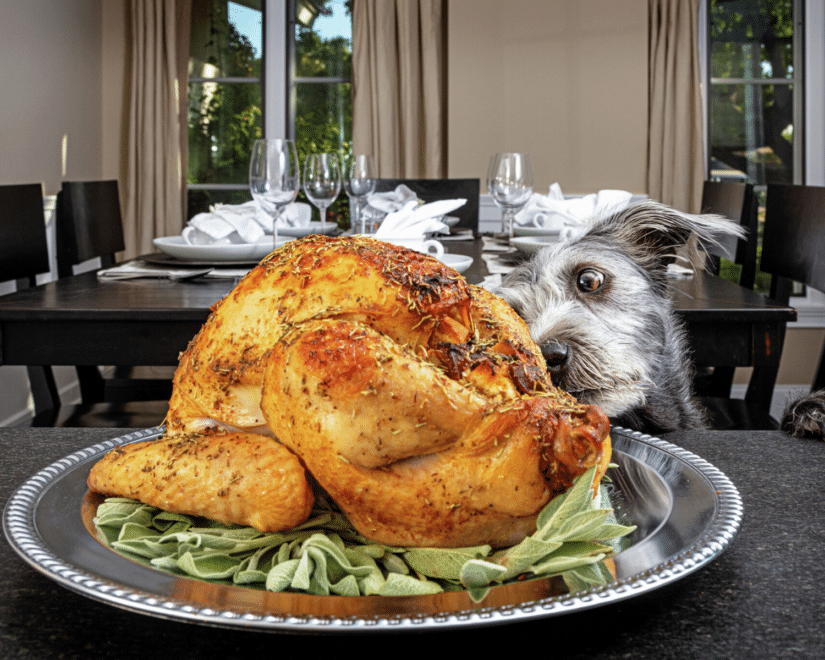
During the holiday preparations, we may overlook the dog in the corner munching on a mum or an amaryllis.  Both plants, as well as macadamia nuts, holly, English ivy, cyclamen, and Christmas rose are all found on the ASPCA Animal Poison Control Center’s list of toxic plants.  Ingesting modest quantities will generally cause vomiting, diarrhea, depression, and excessive salivation so it’s best to keep any plants high out of reach of a rogue canine.

The kitchen! Home to all varieties of delicious smells, tastes, and frenzied activity.  Dough rising in the corner for dinner rolls? Should your dog eat raw dough, be prepared for a host of potential problems including bowel obstruction and bloat as the dough continues to rise and release gases INSIDE your dog’s belly.  As the yeast ferments, ethanol is produced.

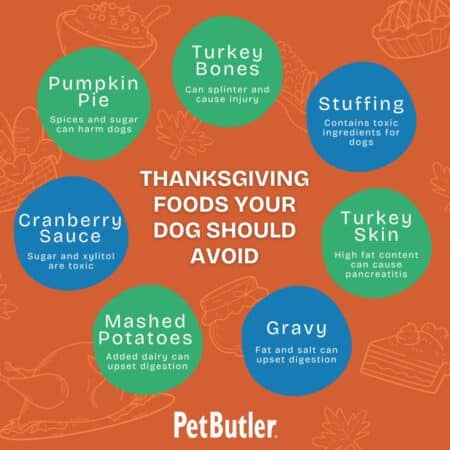
Think an over-served relative is bad news? A drunk dog is no laughing matter; watch for signs of drooling, difficulty walking, weakness, low blood pressure, body temperature, vomiting, and seizures in an intoxicated pet. Raw or under-cooked meat waiting for the deep fryer can also be dangerous to your dog.  In addition to bones which can puncture the esophagus, stomach, intestines, or become lodged in the mouth, Salmonella and E.coli love to live on raw turkey.  Ingesting these bacteria may cause vomiting and diarrhea in your dog which may lead to secondary exposure by unsuspecting guests.

Safe Thanksgiving Foods For Dogs

Can your dog eat cooked turkey? For most otherwise healthy dogs with no food allergies or intolerances, the answer is yes! A good rule of thumb is to feed your dog no more than 10% of his daily calories in treat form or suffer the consequences (read: diarrhea).

Skinless, boneless white meat is low in fat and calories and is easy to digest for most dogs.  Likewise, canned or cooked pumpkin (NOT pumpkin pie filling with sugar and spices) is a great source of fiber and Vitamin A; 1-2 Tablespoons can be added to your dog’s dish without leading to excessive gas or loose stools.

Mashed or cooked white potatoes or sweet potatoes are also a delicious treat; set aside some safe starches before you add butter, salt, milk, cheese, gravy, and especially garlic or onions (both on the naughty list and can cause red blood cell damage!).  And please, no gravy!

Traditional Thanksgiving foods like cranberries can be eaten in very small amounts before being doctored with sugar and other goodness.  And while they may look similar, grapes and raisins are known to cause kidney disease in dogs and are to be avoided.  Plain green beans and peas are tasty and healthy! Add a few to your dog’s Thanksgiving plate.

Blog Cta Graphic (1)

Sweet Treats Dogs Can and Cannot Eat 

No meal is complete without dessert. Chocolate is a definite no-no; the caffeine and theobromine cause nervous system stimulation, gastrointestinal upset, and even death in high enough doses.  All chocolate is not created equal; dark chocolate and baking chocolate, i.e. the “good stuff”, contains more of the “bad stuff” and will cause toxicity in smaller quantities.  Size does matter.  A smaller dog will become ill eating the same amount of chocolate as a larger pet.

Those of you trying to minimize the calorie load in your Thanksgiving meal need to be sure sweeteners containing xylitol aren’t accessible to dogs. The no-calorie sweetener can be found in some peanut butters, gum, mints, pudding snacks, and some baked goods.  Unlike humans, dogs consuming xylitol experience a massive release of insulin which can cause low blood sugar, weakness, seizures, and liver failure.  If you like to spoil your pet, apples, carob chips, and frozen banana bites are safe Thanksgiving indulgences for your dog.

Most of all, make sure your guests are on the same page when it comes to sharing their Thanksgiving food.  If everyone gives your dog a “tiny” bit of turkey, tummy troubles or even a serious case of pancreatitis could send you to the vet. It’s also important to remember to feed your dog his Thanksgiving dish IN his dish and not from your hand or the table.  Bad behavior can begin or be reinforced during the frenetic holidays.

Be mindful of these tips and you can be thankful you avoided a Thanksgiving trip to the Animal ER!

Pet Butler November 2024 Smm

Find a Pet Butler 800-Pet-Butler