Puppy Shots: Important Vaccines Your Dog Needs

Pet Health Articles

Puppy Vaccines


What an exciting and exhausting time! You have brought your new puppy home and are handed papers detailing vaccination and deworming dates, feeding instructions, and maybe even your dog’s pedigree. The first call you should make is to your veterinarian. The veterinarian will be able to provide you with a puppy vaccination schedule and information to best protect your new friend from common diseases, viruses and infections.

Few issues in veterinary medicine are as controversial as the debate about administration of vaccines to our dogs and cats. Long considered part of the puppy as well as annual visits and credited with conquering some of the fiercest infectious diseases, vaccines are also suspected of creating vulnerability to certain illnesses and chronic conditions such as anemia, seizures, allergies, thyroid disorders, and cancer.

What Vaccines Should My Puppy Get?

To determine which vaccines are necessary and an appropriate vaccination schedule for your dog, you and your veterinarian must start with an individual risk-assessment. Questions you may be asked include: Will my puppy meet other companion animals in training classes, dog parks, grooming facilities, or in the neighborhood? Do we have wildlife in our area? How much time does my dog spend outdoors? Will I travel with my pet?

Vaccines, or “shots”, are traditionally divided into core, or essential, groups, and non-core vaccines. These determinations are based on the likelihood of exposure to the infectious agent, the severity of the disease contracted by infected animals (contracting Rabies is always fatal, kennel cough is not), and zoonotic potential (a disease that can infect humans as well as animals). It is recommended that most puppies receive core vaccines every 3-4 weeks though the first 16-18 weeks of life, with the need for non-core vaccines being determined on an individual basis.

Core vaccines, based on the American Animal Hospital Association’s recommendations are as follows: Distemper, Adenovirus/Hepatitis, canine Parvovirus, and Rabies.

Non-core vaccines include: Bordetella, Parainfluenza, Coronavirus, Lyme, Giardia, Leptospirosis, and Influenza.

How Often Should My Puppy Get Vaccinated?

Frequency with which to vaccinate is perhaps the most confounding decision we must make as part of the veterinarian-owner pet care team. This is where a basic understanding of the immune system and how it operates becomes critical. When exposed to natural disease or a vaccine, memory cells are primed to recognize the infectious agent should the animal become re-exposed and antibodies should be produced against the disease. If maternal antibodies are still present, the animal is ill, doesn’t respond to the vaccine given due to immaturity, or there is a problem with the vaccine itself, it is possible to have an animal that was vaccinated, but not adequately protected. This is the reasoning behind the 3-4 week puppy vaccination protocol; we want to catch that puppy’s immune system when maternal antibodies have disappeared, but before the puppy can get sick!

There has been much discussion on the value of checking antibody titers to certain viral diseases such as Canine Parvovirus and Distemper. A titer is a measurement of how much antibody to an infectious agent is circulating in the blood at that time. Titers are expressed as a ratio and indicate how dilute the blood was made before detectable levels of antibody disappeared. A titer test does not measure immunity, because, as we know, true immune status of an animal is dependent on multiple variables. A high titer is strongly correlated with recent infection or good immunity, but a low titer does not necessarily mean the body won’t produce an effective immune response if challenged.

Dog Vaccination Schedule

What to do? Our practice has determined that considering all the information presented by the AAHA and after evaluating the duration of immunity studies conducted by the vaccine manufacturers, we recommend the following important vaccination schedule:

  • Healthy puppies will receive regular boosters every 3-4 weeks of core and select non-core vaccines beginning at 6-8 weeks.
  • After one year of age, dogs will receive a one-year booster for Distemper, Adenovirus, Parainfluenza, and Parvovirus (4 in 1 or if including coronavirus 5 in 1 DAPPC) and a three-year Rabies vaccine; other non-core vaccines will be administered based on risk assessment.
  • At two years of age, dogs will continue to receive non-core vaccines and three-year DAP vaccine. In future years, they will receive non-core vaccines annually and DAP and Rabies as they come due on a three-year rotating basis.

Talk with your veterinarian and don’t miss those important vaccines!
Mushroom Dog Poisoning: Toxic Mushrooms to Avoid

Pet Safety Articles

toxic mushrooms

As we know, summer and fall bring a unique set of seasonal scares for pet owning families. In addition to an increase in parasite exposure such as fleas and ticks, wild animal encounters, and dog park injuries, exposure to certain environmental toxins also peaks.

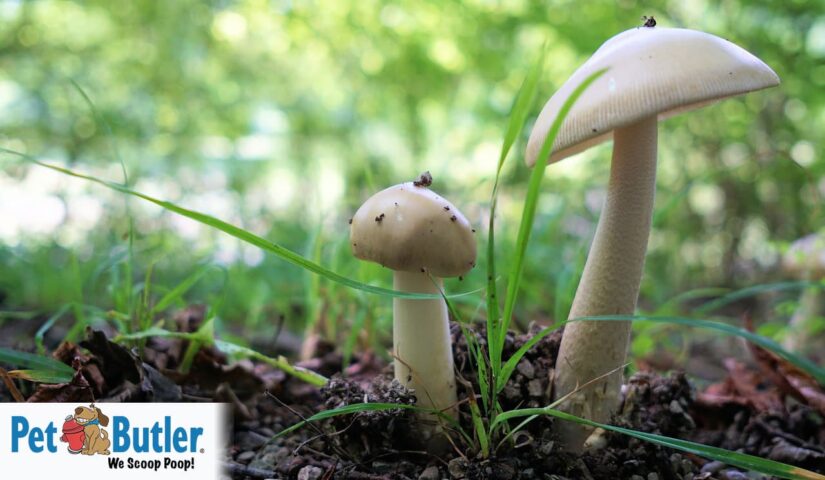
Toxic mushrooms are one such hazard and they multiply in the warm, wet weather season. Although they don’t do much to harm your lawn, be alert for signs of poisonous mushrooms and toxic plant growth as symptoms of toxicity can mimic other types of poisons and diagnosis can be challenging!

Watch Out For Toxic Mushrooms

There are four classes of poisonous mushrooms; the classes are based on the type and severity of symptoms they cause.

Additionally, mushrooms can be classified into groups, separated by the type of toxin they contain. Poisonous varieties include:

  • False Morels
  • Hallucinogenic Mushrooms
  • Toadstool Mushrooms
  • Liver Toxic Mushrooms and those that cause gastrointestinal signs or are muscarinic containing species.

Identification of the type your dog has consumed can be difficult once they pass your pet’s lips; treat any mushroom ingestion as a poisonous species and call your veterinarian immediately.

Another after-hours alternative is to call the National Animal Poison Control Center hotline at (888) 426-4435. They are open 24/7 and 365 days a year and charge a nominal fee to advise you on how to manage your pet’s ingestion.

If a sample of the mushroom is available, consider contacting the North American Mycological Association to aid in identification.

Hepatoxic Mushrooms

The deadliest class of mushrooms are those that cause liver failure (hepatotoxic) with signs precipitating in 6-12 hours. At this point, inducing vomiting with hydrogen peroxide or slowing toxin absorption with activated charcoal given orally is fruitless.

Once an animal has started to show signs of poisoning, it is no longer safe or advisable to try to expel the offending agent. With names like “death cap” and “death angel”, liver cell death and eventual mortality can occur within a day or two, after being preempted by gastrointestinal upset.

These mushrooms are found throughout North America including the Pacific Northwest, parts of California and the northeastern part of the United States.

Neurotoxic Mushrooms

These affect the nervous system due to the compounds they contain and include psilocybin (“magic”), hydrazine and isoxazole mushrooms.

Magic or psychedelic mushrooms are often found indoors as part of a pet owner’s “pharmacy”. Others grow throughout the United States, but favor the West and Northeast. Symptoms of ingestion are typically seen within 30-90 minutes, but effects can last hours longer.

Varying from initial gastrointestinal upset to weakness, stupor, tremors, disorientation, vocalization and seizures, these mushrooms are typically less toxic but severity of illness depends on the amount ingested and the dog’s size and health status.

Gastrointestinal signs such as vomiting and diarrhea are seen early on after the ingestion of most mushrooms (15 minutes to less than 6 hours).

Muscarinic containing mushrooms not only cause mild to severe vomiting and diarrhea, but ingestion can lead to dehydration, excessive salivation, tearing, urination, slow heart rate and difficulty breathing depending on the type and amount consumed.

Nephrotoxic Mushrooms

Our last class of mushrooms, the nephrotoxic (kidney) varieties, are thankfully rare with poisoning reported in Europe. Signs of toxicity are delayed by up to 8 days as the kidney cells are destroyed.

Symptoms of poisoning are typical of a dog in kidney failure and include vomiting, increased thirst, and urination; dogs can succumb if not treated aggressively with fluid therapy and hospitalization.

If caught within the first hours of ingestion, decontamination by inducing vomiting and delaying intestinal absorption, managing symptoms, and blood and urine sample monitoring are often successful at managing mushroom poisoning in dogs.

As always, be on the lookout in your yard for anything unusual underfoot!

Sources
Health Poison Control
Psilocybin Mushroom

Dog Food: What to Buy and Ingredients to Look For

Pet Health Articles

dog food

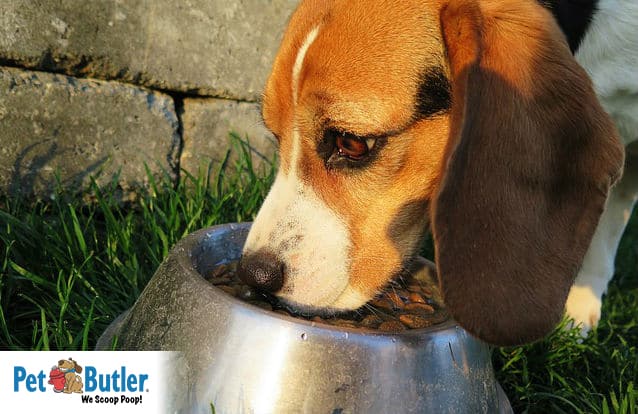
Over the weekend, I peered into our dog food bin and saw just a lone kibble sitting at the bottom. No doubt, my teenagers forgot to mention we were low on food. As I stood in the pet food aisle at the grocery store, I quickly understood the paralysis my clients feel when it comes to choosing a diet and best dog food for their pets; the variety of choices on the grocery shelves and refrigerated cases was dizzying. Let’s address a few common misconceptions and give you some general tips to choose healthy dog food for your own pup. As always, consult your veterinarian for advice as variations in breed, life stage, body condition, activity level, and health status should affect your purchase.

The Association of American Feed Control Officials (AAFCO) is a regulatory agency that checks to ensure dog foods meet the minimum standard of nutritional adequacy; the AAFCO label should be present on any food you are buying and includes key information such as identification of product, net quantity statement, manufacturer’s name and address, proper listing of ingredients by weight (including water), the guaranteed analysis, nutritional adequacy statement, feeding directions, additional label claims, and calorie statements. If the AAFCO label does not exist, the company may not have verified nutrient claims with laboratory testing. Call the business to find out. All pet food companies should be transparent and want to educate the consumer about their product.

Dog Food Ingredients & Nutritional Value

What is the minimum standard for an adult dog to maintain weight and good health? A food must contain at least 18% protein, 5% fat, and maximum percentages of crude fiber and moisture. Some dog foods guarantee minimum levels of other nutrients such as calcium, phosphorous, sodium, and linoleic acid which are especially important for bone growth in puppies. Changes to minimum accepted levels of taurine will likely be included on future labels as a link between low levels of dietary taurine and heart disease in dogs was recently discovered in dogs eating certain pet foods containing peas, lentils, other legume seeds, or potatoes as main ingredients.

Let’s talk about pet food manufacturers. Mars, Purina, and Big Heart make 93% of all pet foods sold today. They invest billions of dollars, employ untold numbers of nutritionists, scientists, quality control experts, and veterinarians, as well as conduct feeding trials and test products for nutritional components to ensure your dog receives complete and balanced nutrition for every age and stage of life. Don’t rule their foods out and assume smaller companies make safer and more wholesome diets. According to Dog Food Advisor, 83% of food recalls over the last 5 years came from small manufacturers. Plan on doing more of your own research should you choose food produced by a mom and pop pet food company. Smaller pet companies are also more likely to outsource manufacturing and production. It is key to know where your dog’s food is made in order to monitor for food recalls and determine product safety.

What ingredients make up a quality food and from where should they be sourced? Ideally, companies obtain the raw materials for protein, carbohydrate and fat from local or regional sources with whom they have an established relationship and have strict quality control. Contamination from bacteria such as salmonella and listeria, mold, or toxins such as cadmium, lead and arsenic should be monitored by the supplier and and rechecked by the pet food company after manufacturing. Surprisingly, diets labelled grain-free were found to contain more toxins that those that contained grain.

Brokers on the open market and countries with inferior food quality standards may offer cheap ingredients that can be harmful to your dog but cost considerably less. Interestingly, many of these same countries make superior quality supplemental vitamins and minerals such as Vitamin C that are found in most commercial pet foods. Pet foods with ingredients such as a clean meat source (turkey, beef, bison, duck…) instead of a meat meal which may contain horns and hair, fewer artificial preservatives, like BHT and ethoxyquin, and colors are preferred. Foods with labelled as “natural” and “super-premium” are not held to any different standards as those without such label claims. While natural may imply the diet was preserved with tocopherols (a Vitamin E source) vs. artificial chemicals, that isn’t necessarily the case; don’t be fooled into paying a higher price for these “superior” products.

Dry vs Wet (Canned) Dog Food

What’s the difference between wet and dry dog food? Which is better for your dog? Increased water content may make wet diets easier to chew for puppies and senior pets, more palatable, more filling, and can contain fewer artificial preservatives and flavors as they are sealed in air-tight containers. Often, wet foods contain a higher protein content and fewer carbohydrates compared to their dry counterparts which may be beneficial for animals needing to maintain lean muscle or that have medical conditions such as diabetes mellitus.

When comparing the nutritional analysis of wet vs. a dry diet, be sure you are comparing them both on a dry matter basis. The FDA has a guide on how to perform this calculation. Dry foods can assist in the mechanical removal of plaque, improving dental hygiene. They also are easier to store and are usually less expensive. Ultimately, the decision to feed wet or dry food is between you and your veterinarian.

Get started on your search for the best and healthy dog food for your pet to ensure a proper dog diet and avoid overfeeding. Best of luck out there and may you never be stuck utterly perplexed at a grocery store on a lovely night!

Other sources:
FDA Pet Food Labels
Animal Food Recalls & Alerts
Clean Label Project Pet Food

How Lyme Disease Affects Dogs: Symptoms and Causes

Pet Health Articles

lyme disease tick

We’ve previously talked about the presence of fleas and ticks in the environment, and both local and national news have drawn attention to the fact that this year we are seeing an even greater abundance of these pesky parasites. Fleas and ticks cause topical irritation at the site of the bite, there is the huge “ick” factor of knowing these parasites are out and about, but the primary concern is the diseases they transmit to unknowing hosts. Lyme disease, in particular, has drawn broad attention from organizations such as the Centers for Disease Control and American Veterinary Medical Association. The CDC reports that there are over 30,000 new cases of Lyme disease reported every year. In dogs, we are seeing upwards of high number of cases of reported Lyme disease. The term “reported” is important here, as many cases of Lyme disease are not identified in both humans and canines. A great pretender, signs and symptoms can be subtle, shift, and diagnosis and treatment can be confounding.

Symptoms and Causes of Lyme Disease

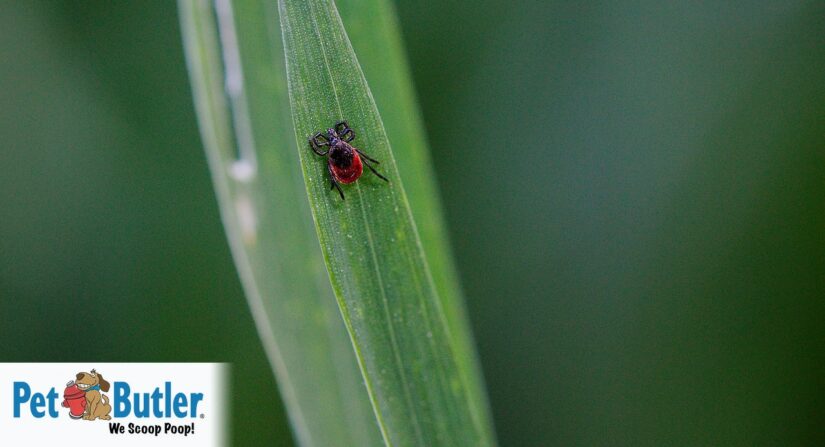
Lyme is caused by the transmission of the bacterium Borrelia burgdorferi from the deer tick or black-legged tick species. The tick requires two years and a blood meal at each stage to complete their life cycle from egg to larvae to nymph to adult. The source of the first blood meal can be a mouse, bird, or other small mammal and if infected with the bacteria, will pass the disease on through the blood to the host tick. If the affected tick then bites a human or dog and attaches for over 48 hours, the unsuspecting animal may become infected with the Borrelia organism.

In dogs, only 10% of dogs infected with the bacteria show signs and symptoms of Lyme disease illness; owners may be surprised by the results of their pet’s annual screening test. Often incorporated as part of a yearly preventative protocol that may include fecal and other blood testing as well as an examination and any recommended vaccinations, testing for the presence of antibodies to the lyme bacteria is recommended. In New England, 50-75% of dogs may test positive for lyme antibodies (independent of lyme vaccination) according to MSPCA.

Signs of Lyme disease typically occur 2-5 months after infection. They may include enlarged lymph nodes, lameness in one or multiple limbs, lethargy, anorexia, and fever. Lyme can also affect the kidneys, heart, and nervous system. These complications seem to be over represented in dog breeds such as Retrievers, Shelties, and Bernese Mountain dogs. Treatment is usually successful requires the administration of amoxicillin or doxycycline antibiotics.

Lyme Disease Rise in the US

The surge in Lyme disease in the US can be attributed to several factors. Habitat range expansion is the movement of the ticks’ hosts to areas not previously inhabited. Because mice and deer are the primary hosts, their shift into previously unoccupied territories leads to transport of the tick population, as well. Climate change and movement of the human population are the two major factors contributing to the relocation of deer and small mammal population. An abundance of resources such as food (acorns) for mice leads to an increase in their population numbers and expansion to new areas; ticks numbers increase and expand as a result.

Adult deer ticks are on the move when temperatures exceed freezing. With an extension of seasonal activity due above normal temperatures, female adult ticks have an extended season to gorge on a deer, dog, or human and drop off to lay up to 2000 eggs in late spring. Eggs hatch in the summer, and larvae will feed on a small animal or bird and re-emerge the next spring (or late winter as ambient temperatures are on the rise) as a nymph.

With movement of people and dogs to areas that ticks favor such as campsites and wooded trails, as well as human population growth and expansion into previously unpopulated areas, there is an increase in opportunity for ticks to feast. The nymphal stage of the tick, no bigger than a poppyseed, is especially active in May through August and unknowingly attaches to out of the way locations such as the scalp, groin, or armpit. This increase in human and canine exposure is also responsible for the surge in Lyme transmission.

Sometimes the bacteria cannot be completely eliminated and symptoms will return at a later time; this makes the lyme organism especially terrifying and tick prevention and an integrated pest management program essential to ensuring the health of your dog. As previously mentioned, clearing brush in your yard, applying a topical preventative such as Advantix, Vectra, or Frontline Gold, or administering a oral pill like Simparica, Nexgard, or Bravecto all aid in eliminating potential tick vectors. Thoroughly examining yourself and your dog after spending time outdoors can identify ticks hitching a ride before they have a chance to attach to your pet!

Sources: PetMD, Vector Disease Control International

What You Should Include In Your Pet’s First Aid Kit

Pet Safety Articles

Vet holding first aid items

It’s 7 pm on a Sunday evening and you walked into the kitchen just as your retriever polished off a bag of chocolate chips snatched from the counter. You think, “Isn’t chocolate supposed to be poisonous for four-legged critters?”. What do you do? Who do you call? In your haste to help your dog, you are unable to summon a rational thought. If only you had taken the time to put together the pet first aid kit your veterinarian had recommended, you could have had all the supplies and information you needed at your fingertips!

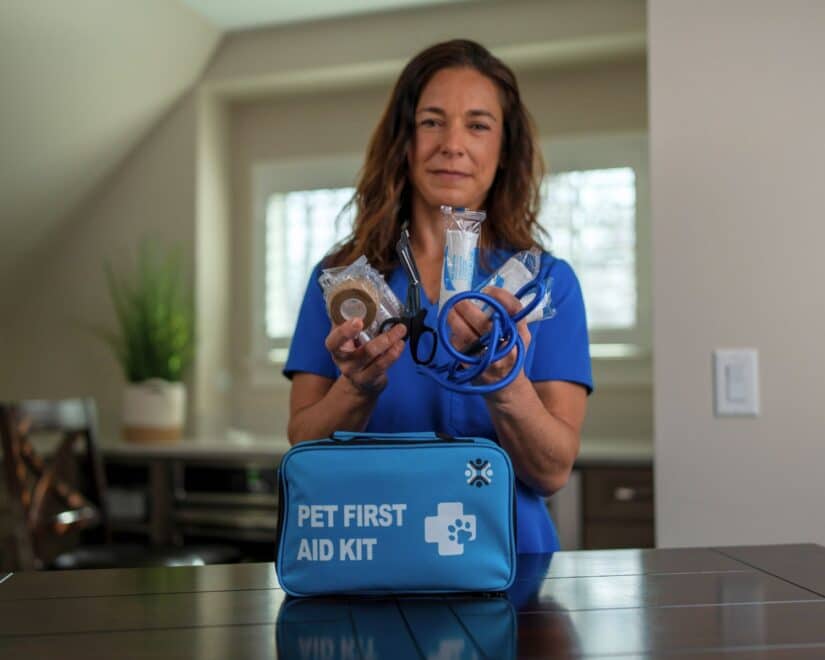
So you don’t have to experience the angst that accompanies the above scenario, I recommend assembling a basic first aid kit filled with the supplies and information you need to deal with any dog emergency. Most of these tools are available online or at your local pharmacy. For dosing recommendations, check in with your veterinarian as breed, size, and pre-existing conditions may determine a safe amount to administer.

What Should Be In My Dog’s First Aid Kit?

Most canine medical emergency kits should include a list of important phone numbers. You’ll always want to be in contact with an animal health professional before taking matters into your own hands; a knowledgeable voice can be a great reassurance. The phone numbers at the top of your list should include: your regular veterinarian, a local 24/7 emergency clinic, and the ASPCA’s Poison Control Center (1-800-426-4435) or the National Animal Poison Control Center at 888-4ANI-HELP (888-426-4435), the Emergency Disaster Information Line (1-800-227-4645), and the Pet Travel Hotline 1-800-545-USDA before traveling across state lines.

You should have your dog’s medical records readily available, so you can answer questions about previous reactions, currently administered medications, and vaccination status. I also like to add the addresses of a few online sites where you can reference emergency dosages, toxicity calculators, and other information needed to perform basic first aid on your dog. VetCalculators will allow you to determine an appropriate action to take should your dog ingest various types of chocolate, PetMD alerts updates pet owners on current food recalls, and AVMA has a wealth of information on CPR basics, traveling with a pet, basic first aid procedures, and handling injured pets.

Basic Supplies For Pets First Aid Kit

A few necessary items in your pets’ first aid kit should include:

  • Flexible digital thermometer
  • Gauze for wrapping open wounds or to use as a muzzle for painful pets
  • Non-stick bandages and adhesive white tape for covering wounds (or a self-adhesive bandage material)
  • Blanket or large towel as well as a rigid board or stretcher for transporting an injured pet
  • Leash
  • Eye dropper or needless syringe for administering medication
  • 3% hydrogen peroxide to induce vomiting
  • Baby aspirin
  • Adult or children’s Benadryl for allergies (diphenhydramine)
  • Saline eye wash
  • Activated charcoal for absorbing toxins.

Tweezers as well as good old soap and water can be used to remove a tick or foreign object from a paw and to flush wounds. I like to keep a gallon of nursery water on hand for that purpose, as well as to help rehydrate an animal or cool a pet suffering from heatstroke. Pedialyte or another electrolyte solution will replace salts and minerals that are important for proper hydration, blood pH and nerve conduction. Simple sugars such as honey or maple syrup can be rubbed on the gums of dogs given too much insulin, having a seizure due to low sugar, or to puppies that may have a difficult time maintaining blood sugar due to illness or stress and are lethargic.

Sterile lubricant helps to cover a break in the skin barrier or ease passage of the rectal thermometer. Cornstarch or quik-stop can stop an actively bleeding nail and a nail clipper (Miller’s Forge, orange handle) to trim a torn nail back to healthy tissue is needed. Most creams and ointments as well as Band-Aids or other small adhesives are easily consumed by dogs. It’s better to keep an E-collar handy to prevent self-mutilation. Clippers aid in the removal of hair around a cut or laceration. Be sure to apply lubricant to the area to prevent the introduction of additional debris and clipped hair into the area.

As gentle and loving as your dog may normally be, an injured pet will often react out of fear and pain towards a caregiver. Using a muzzle when handling pets (except for those that are vomiting) is always prudent. An improvised muzzle can be created using gauze, a necktie, or strips of fabric and should be considered when assembling your dog’s emergency kit. Towels or blankets can help to restrain a pet comfortably. You can only help your pet by staying healthy, calm, and safe.

Always remember that any first aid administered to your pet should be followed by immediate veterinary care. A portable carrier for smaller dogs will aid in safe transportation. First aid care is not a substitute for veterinary care, but it may save your pet’s life until it receives veterinary treatment.

Allergy Season: Symptoms and Treatment for Allergies in Dogs!

Pet Health Articles

Dog in grass

Just as airborne allergies are common in people, manifesting as itchy eyes, sneezing, and congestion, allergies are also common in dogs (and cats!). As the weather warms up and our furry friends spend more time in the spring sunshine, their exposure to outdoor allergens increases. Some inhalant allergies are prevalent year-round, such as those activated by house dust mites or food storage mites, but many airborne allergies are seen during particular times of the year. Atopy, another name for airborne allergies, is typically triggered by grasses, pollen, weeds, trees, dander, mold spores, insect proteins, and even fabric. Dogs living in different parts of the country may experience allergy symptoms during different months, all depending on the weather and what is blooming!

Signs & Symptoms of Allergies in Dogs

Pets with atopy usually experience a seasonal spring or fall itchiness that begins in the first or second year of life; often the duration of the itchy period becomes longer and longer. Other dogs start the itch-scratch cycle like clockwork on the same day every year and symptoms predictably last just a few weeks. Itch and skin redness, bacterial infection, scabbing, hair loss, licking or swelling is associated with certain parts of the body in atopic dogs. Hair loss around the eyes and mouth, in the dog’s “armpits” or axillary and inguinal regions, the lower abdomen, around the rear end, and feet are the first clues your dog may have airborne allergies. Ear infections are common secondary problems; the heat from inflamed skin make the dark canal a perfect environment for bacteria or yeast to overgrow.

I get countless calls where an owner has self-diagnosed ear mites because of a black, smelly ear discharge that causes intense itching. Yeast overgrowth, caused by underlying allergies, is a more common culprit. Without treating both the infection and the allergy, ear disease is likely to become chronic. While some dogs also experience red, itchy eyes and have more mucous production, we rarely see the nasal and sinus congestion that people suffer, though a few pets do develop an allergy-triggered bronchitis or a throat-clearing rumble.

What causes allergies in dogs and why do some react while others don’t?

An allergy is a state of over-reactivity or hypersensitivity of the immune system to a substance called an allergen. Chronic exposure to the offending protein allergen, sensitizes or prepares the immune system to react, in this case over-react, on subsequent exposures. Normally the immune response protects the dog against infection and disease by making protective antibodies, but with allergies, the immune response can be harmful to the body accumulating in a cascade of events leading to histamine release and itch. It is thought that there is a genetic component in dogs with atopy. Terriers, such as the West Highland White Terrier, Retrievers, Pugs, and Bulldogs are over-represented.

Treatment For Dogs With Allergies

As any veterinarian will tell you, atopy is a disease that we manage, not cure. As the immune system is the “problem”, most treatments are aimed at decreasing the body’s over-reaction and modifying the dog’s environment to reduce exposure to the offending allergen(s). As such, it is important to identify which proteins triggers your pet’s itch. The gold standard in allergy testing remains intradermal skin testing. This test is performed by a veterinary dermatologist and involves injecting small amounts of different allergens under your pet’s skin to evaluate the immune system response. Some veterinarians offer blood testing, which identifies allergens via antibody levels.

Once the allergens are identified, we attempt to limit environmental exposure as much as possible. HEPA filters, vacuuming, washing bedding, cutting back weeds and limiting time outdoors during allergy season can help. Frequent bathing and wiping your dog’s fur and feet with a medicated shampoo or wipe can minimize absorption of allergens, promote a healthy skin barrier, and soothe the itch. Fatty acids in liquid or capsule form act as anti-inflammatories and can reduce signs of dog allergies. Too much can be a bad thing and can cause problems with blood clotting and wound healing; a dose between 20-55mg combined EPA and DHA per pound of body weight is safe for dogs and cats.

Dog Allergy Medicine

Anti-histamines such as Benadryl and Atarax are effective for dog allergy medicine – only about 25% of our patients. Newer dog allergy medications such as Apoquel tablets and injectable Cytopoint have been life-savers for many dogs and their frustrated owners. Apoquel works by affecting messengers of the itch, called cytokines, and can stop symptoms in 4 hours. It is a daily pill and good for short-term itch flares-ups. Apoquel causes minimal interference with healthy immune system function and is preferred over corticosteroids or cyclosporine, the administration which can lead to endocrine disorders, immune-suppression, and increased urination. Cytopoint is a convenient injection that acts as an antibody to block the itch signal; it also begins working within hours and lasts 4-5 weeks.

Ultimately, to affect long term change, the goal is to desensitize the dog to the same allergens they currently react to. Dog Allergy “shots” or oral drops are formulated with increasing amounts of allergen and administered regularly to permit the immune system to recognize the allergen without going into a tailspin. About 2/3 of dogs get relief from desensitization therapy, but it is a financial and time commitment to follow-through with treatment on the part of the owner.

With so many options available to manage your dog’s environmental allergies, there is no excuse not to get outside and enjoy the beautiful weather. Just remember to wipe down dirty paws and claws before coming back inside!

Sources:

PetMD The Dangers of Too Much

The Asac Battle of the Dermatology Titans

Protect Your Dog From Fleas & Ticks This Season

Pet Safety Articles

itchy scratching dog

Fleas and ticks can, unfortunately, find their forever homes on dogs. Preventing fleas and ticks has come a long way with topical products that can be applied as often as monthly, or oral pills that are both tasty and effective at eliminating many life stages of the flea and tick.

Here are some important facts on fleas and ticks and how to keep your pets safe from them.

What are Fleas?

Fleas are tiny parasites that require the blood meal of a mammal or bird to survive and reproduce. While they need warm, humid temperatures to thrive (our friends in the south have particularly bad flea problems), the larvae and pupa can overwinter in the house or on animals like coyotes and rabbits and their dens, extending their life cycle from several weeks to many months.

Fleas tend to hang out in the same areas that are popular with your dog and other wildlife: shady areas out of direct sunlight and direct foot traffic. The flea life cycle is complex, consisting of four stages: egg, larvae, pupa, and adult. Because some of these life stages occur off the host (your dog or cat), prevention and treatment for fleas and ticks targeted at several of these stages works best.

Flea Prevention & Treatment

First off, we want to treat the environment and make it an inhospitable place for fleas to live. Clearing brush, keeping grass cut short, and raking leaf piles are great at eliminating flea hide-outs. Inside, frequent vacuuming to stimulate egg hatching and laundering bedding daily is important if you suspect a flea infestation. Next, you’ll want to utilize one of the many products available from your veterinarian to kill adults, larvae, and eggs.

Some popular preventatives include:

Over the counter products can not only be ineffective (think flea collars), but dangerous to pets. Flea preventatives work by sterilizing the adult flea (flea birth control, if you will), others work via overstimulating the flea central nervous system. Treated hairs can also work to kill larva and eggs in the environment. Because new eggs shed into the house or yard are constantly hatching, it is important to treat consecutively every month to kill emergent fleas. An adult flea can produce 500 eggs in just a few weeks!

A flea comb can be utilized to find live fleas on your dog, though most pet owners aren’t fast enough to catch a hopping flea. Tell-tale signs of a flea problem are itching or biting near the tail base and evidence of a black pepper-like granule (flea poop) in the fur that turns reddish on a damp paper towel. That red coloration is digested blood. Fleas can cause an allergic response to their saliva in some dogs; one bite can cause severe hair loss and scratching. A heavy infestation can lead to low red blood cell count, transmission of tapeworms, or diseases such as the plague or typhus.

tick on dog

How Are Ticks & Fleas Different?

Similarly, ticks love to live in outdoor areas such as wood piles, yard clippings, or attached to hosts such as mice and deer. True opportunists, they wait to attach to an unsuspecting mammal as they brush past. Ticks become most active as the temperatures rise above freezing. This fools many dog owners into thinking they can forgo preventatives from December to March. Ticks don’t typically leave tiny poop calling cards like fleas. Many times, they are not discovered on your dog until they have been attached for days to weeks and are engorged with blood.

Ticks also have a four-part life cycle, and other than the egg, each stage including the larva, nymph and adult needs a blood meal to survive. The complete life cycle can take two years to complete and an adult tick can produce up to 3,000 eggs. Frighteningly, the larva stage of the tick which will attach to a host animal is no bigger that the size of the period at the end of this sentence. Imagine finding that in your dog’s fur!

Ticks are tremendously dangerous to dogs and humans because they transmit devastating and sometimes hard to treat diseases. The deer tick is most commonly known for its ability to spread Lyme Disease.

Tick Prevention & Treatment

Because it takes 24 hours of tick attachment to infect a host with disease, prompt identification and removal is critical. If you spend time outdoors with your pet, do a tick check of the skin and hair coat after returning home. Ticks especially love to set up shop on a dog’s ear flaps. If you see an embedded tick…

  1. Grasp its head as close to the skin as possible with a pair of tweezers.
  2. Pull the entire tick out in one swift movement.
  3. It’s okay if you get a bit of dog with your tick – just clean the area with soap and water and apply a triple antibiotic ointment to the bite.

Many of the same preventatives we use for flea control are also effective at repelling and/or killing ticks during that 24-hour window of attachment. Consistent use is important and recognize if your dog is boarded or groomed, it can pick up parasites from other dogs. Yard treatments are also available to kill ticks and fleas. It’s best to consult a company that specializes in such treatment as some chemicals can be harmful to humans on pets.

Dog Overweight? Ways to Help Maintain and Control Your Dog’s Weight!

Pet Health Articles

PBC Types of Dog Food 1000x800

Now that it’s 2018, we wearily rub the sleep out of eyes and take a tentative step back into reality. Our pants are a little more snug from the holidays and it’s time to get moving and regroup! After we purge the last bit of fruitcake and eggnog from the fridge, we owe it to our pets to take charge of their health and well-being. That starts with weight assessment and management, and it doesn’t have to be difficult.  The trick is knowing where to start and being consistent. And the payoff is huge; a landmark study published in 2002 by Nestlé Purina’s showed that maintaining a dog’s lean body condition extended their median life span by 15 percent. For the Labrador Retrievers in the study, the statistic translates into two years.

What To Do If Your Dog Is Overweight

Placing a call to your veterinarian is the first thing you should do if you’re wondering if your dog is overweight. At the appointment, it helps to bring your pet’s food, treats, and measuring cup; taking it one step further, an accurate log of your pet’s food intake over a week or two is ideal. By having all family members write down what is fed, your vet gets an accurate picture of nutritional intake. Don’t stop there! Record any activity your dog has engaged in during that same time period. We aren’t necessarily counting calories expended, but gauging a rough level of activity. A pug on a couch doesn’t use the same amount of energy (calories) as a border collie who chases a frisbee 2 hours a day.

Your veterinarian is going to weigh your dog. You can monitor weight at home by weighing yourself, then weighing yourself holding your dog, and subtract your weight to get your pet’s LBS/pounds.  Make a note of it on your food and activity log. If you have a large breed dog, many vet clinics and pet stores will happily let you walk in and get a weight on their oversized scale.  Because of variability in breeds and body types within the breed, charts will list a healthy weight range for each breed. Taking a look at the AKC guide to breed weights, we see that a Boston Terrier may weigh anywhere from 12-25 pounds. That’s a HUGE degree of variability and isn’t particularly helpful, especially if you have  a mixed breed dog. Veterinarians and knowledgeable pet owners are more likely to rely on a body condition scoring chart to assess weight.

Determine Your Dog’s Ideal Weight

One of the most popular is the Purina Dog Condition Scoring Chart. This chart allows pet owners and medical professionals to  evaluate a dog based on three criteria and assign them a value from 1 (emaciated) to grossly obese (9): feeling the fat pad over the ribs and determining if the ribs are able to be easily visualized, evaluating a dog’s waist profile and thickness from above, and assessing their abdominal tuck. A dog at its ideal weight should be about a 4-5/9.  Anything above or below, and you’ve got a problem! Each point on the scale correlates 10% over or under their ideal weight.  For example, a golden retriever that is an 8/9, is roughly 30% overweight. Instead of weighing 100 pounds, he should weigh 70. (100 pounds x 0.30 = 30 pounds overweight). 4

Armed with your dog’s body condition score, food intake, activity level, diet fed, his rough weight in pounds vs. ideal weight, you can start to make some adjustments in how you feed and exercise your pet. It’s estimated that roughly 45% of dogs in the U.S. are overweight or obese. 2 These staggering numbers contribute to their overall quality of life in a number of ways: overweight pets are more likely to develop diabetes, arthritis, respiratory illnesses, skin infections, and cancer in addition to the relative immobility obesity fosters.

How Much Food To Feed Your Dog

Dogs are physiologically built to thrive on 2-4 small meals a day. Free choice feeding can lead to overeating when bored. The choice of what to feed can be a complex one.  Again, enlist the help of your veterinarian who will likely recommend a food or foods based on your dog’s size, breed, health status (pre-screening for diseases like hypothyroidism, heart disease, Cushing’s disease, arthritis, and others to make sure there are no other medical issues contributing to your pet’s weight gain), activity level, and age. Just reducing your dog’s caloric intake of his regular diet and treats could also deprive him of essential nutrients. In general, a diet higher in protein and lower in fat and calories per 8 ounce cup can help your pet achieve 1-2% loss in pounds per week. Canned foods, though more expensive, tend to be more filling and also contain a higher percentage of protein as fed.

Dog Food Advisor has a handy calculator that can aid you in determining the amount of calories to feed. Be careful; the labels on the back of dog food bags and cans are the estimated amounts to feed a dog at their healthy weight. We are looking to lose! Also, recall that treats count. Ice cubes, carrots, apple slices and green beans can be an appealing substitute to high calorie bones and chews. BalanceIT is a company that will develop a home cooked recipe and supplements exclusively for your dog to meet their individual needs. Started by a board-certified veterinary nutritionist, professional recommendations can aid even a finicky dog or one with food allergies to lose weight.

Exercises and Activities For Dogs

If your dog is cleared to resume exercising, start with a 5-10 minute walk several times a day.  If you are able, incorporate some hills and swimming which help to build muscle and increase your dog’s metabolism. When the weather is chilly, play “find the kibble” in the house after hiding individual pieces under rugs, on chair rungs, and in plastic water bottles or boxes. The mental stimulation is a good replacement for physical exercise on cold days, and the dogs don’t realize they are expending as many calories as they are eating! Keeping a weight loss and activity log can assist in tracking the weekly weigh-in and fine tuning your dog’s program to achieve optimal results. Measure, measure, measure (even keep a baggie of food for your dog’s daily ration if needed). Who knows, you may find that by increasing your awareness of calories in, calories out, you may reach your own weight loss goals!

Pet Safety: Safe Foods Dogs Can Eat On Thanksgiving

Pet Safety Articles

PBC Blogs 1500 × 1200 px) (4)

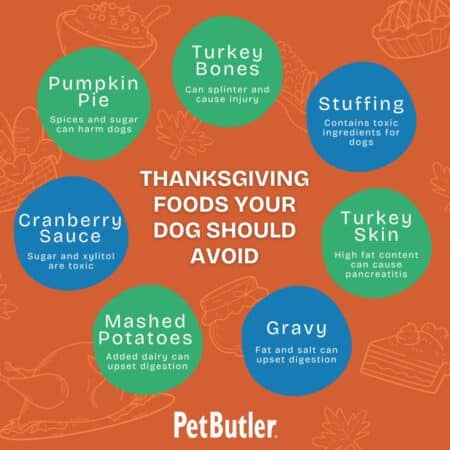
Next time you are the pet store picking up a bag of kibble, check out the ingredients in some popular brands of dog food.  The lists read like a veritable Thanksgiving Day menu: sweet potatoes, turkey, peas, white potatoes, carrots, pumpkin and cranberries.  As the lines blur between pet food diets and what we feed our human holiday guests, it is a good idea to clear up some common misconceptions about safe and dangerous Thanksgiving meals for dogs, so they can join the party!

Thanksgiving Table Decorations To Watch Out For

During the holiday preparations, we may overlook the dog in the corner munching on a mum or an amaryllis.  Both plants, as well as macadamia nuts, holly, English ivy, cyclamen, and Christmas rose are all found on the ASPCA Animal Poison Control Center’s list of toxic plants.  Ingesting modest quantities will generally cause vomiting, diarrhea, depression, and excessive salivation so it’s best to keep any plants high out of reach of a rogue canine.

The kitchen! Home to all varieties of delicious smells, tastes, and frenzied activity.  Dough rising in the corner for dinner rolls? Should your dog eat raw dough, be prepared for a host of potential problems including bowel obstruction and bloat as the dough continues to rise and release gases INSIDE your dog’s belly.  As the yeast ferments, ethanol is produced.

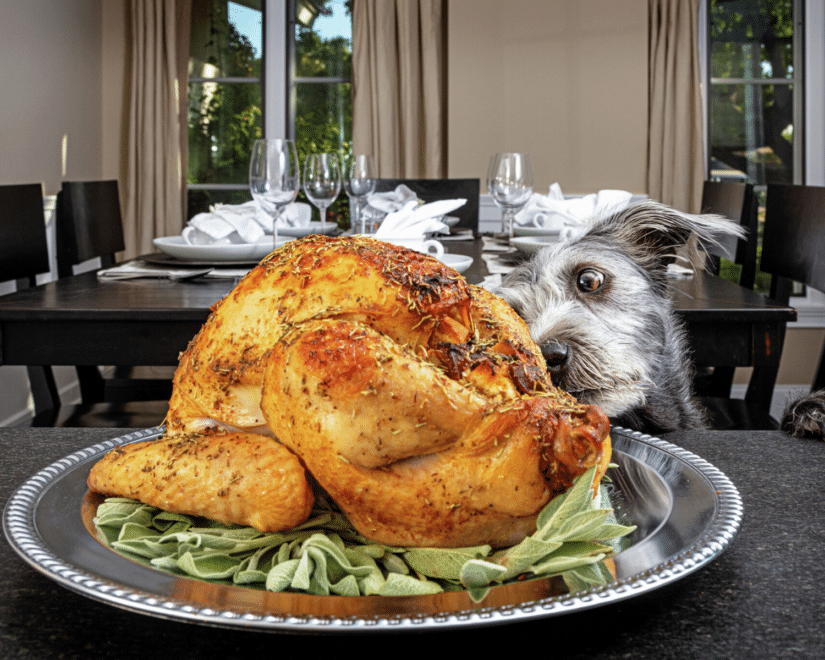
Think an over-served relative is bad news? A drunk dog is no laughing matter; watch for signs of drooling, difficulty walking, weakness, low blood pressure, body temperature, vomiting, and seizures in an intoxicated pet. Raw or under-cooked meat waiting for the deep fryer can also be dangerous to your dog.  In addition to bones which can puncture the esophagus, stomach, intestines, or become lodged in the mouth, Salmonella and E.coli love to live on raw turkey.  Ingesting these bacteria may cause vomiting and diarrhea in your dog which may lead to secondary exposure by unsuspecting guests.

Safe Thanksgiving Foods For Dogs

Can your dog eat cooked turkey? For most otherwise healthy dogs with no food allergies or intolerances, the answer is yes! A good rule of thumb is to feed your dog no more than 10% of his daily calories in treat form or suffer the consequences (read: diarrhea).

Skinless, boneless white meat is low in fat and calories and is easy to digest for most dogs.  Likewise, canned or cooked pumpkin (NOT pumpkin pie filling with sugar and spices) is a great source of fiber and Vitamin A; 1-2 Tablespoons can be added to your dog’s dish without leading to excessive gas or loose stools.

Mashed or cooked white potatoes or sweet potatoes are also a delicious treat; set aside some safe starches before you add butter, salt, milk, cheese, gravy, and especially garlic or onions (both on the naughty list and can cause red blood cell damage!).  And please, no gravy!

Traditional Thanksgiving foods like cranberries can be eaten in very small amounts before being doctored with sugar and other goodness.  And while they may look similar, grapes and raisins are known to cause kidney disease in dogs and are to be avoided.  Plain green beans and peas are tasty and healthy! Add a few to your dog’s Thanksgiving plate.

Blog Cta Graphic (1)

Sweet Treats Dogs Can and Cannot Eat 

No meal is complete without dessert. Chocolate is a definite no-no; the caffeine and theobromine cause nervous system stimulation, gastrointestinal upset, and even death in high enough doses.  All chocolate is not created equal; dark chocolate and baking chocolate, i.e. the “good stuff”, contains more of the “bad stuff” and will cause toxicity in smaller quantities.  Size does matter.  A smaller dog will become ill eating the same amount of chocolate as a larger pet.

Those of you trying to minimize the calorie load in your Thanksgiving meal need to be sure sweeteners containing xylitol aren’t accessible to dogs. The no-calorie sweetener can be found in some peanut butters, gum, mints, pudding snacks, and some baked goods.  Unlike humans, dogs consuming xylitol experience a massive release of insulin which can cause low blood sugar, weakness, seizures, and liver failure.  If you like to spoil your pet, apples, carob chips, and frozen banana bites are safe Thanksgiving indulgences for your dog.

Most of all, make sure your guests are on the same page when it comes to sharing their Thanksgiving food.  If everyone gives your dog a “tiny” bit of turkey, tummy troubles or even a serious case of pancreatitis could send you to the vet. It’s also important to remember to feed your dog his Thanksgiving dish IN his dish and not from your hand or the table.  Bad behavior can begin or be reinforced during the frenetic holidays.

Be mindful of these tips and you can be thankful you avoided a Thanksgiving trip to the Animal ER!

Pet Butler November 2024 Smm

5 Benefits of Giving Your Dog a Massage

Pet Health Articles

5 Benefits of giving your dog a massage

After receiving a massage dogs can feel the same way as we can. The benefits are numerous for owner’s and pets alike. We can all use more relaxation in our lives. Here are some of the reasons you should be giving your dog a massage:

  1. It Reduces Stress– Massage studies have proven this and everyone, even pets, can benefit from this. Since dogs pick up on our stress the can also use some de-stressing as well. If your dog is easily anxious this is a great way to help reduce some of that.
  2. It will Improve Circulation– With increased circulation from massage the body can recover after exercise and also help with conditions, such as arthritis. The act of pressuring and releasing muscles creates blood flow which is very healing to the body.
  3. It can Strengthen Your Relationship– A wonderful way to build your relationship is through touch. Be sure to ease your dog into it, as it may be new and uncomfortable to them at first. Once your dog realizes the benefits this will be something he will look forward to. It’s not hard to find a reason for your dog to want to be near you. This is one way that you can both feel connected.
  4. You can Find Injuries or Problems– It is hard to tell if there is a lump, swelling or weight loss by looking at a dog through their fur. By touching your dog regularly you will be able to find these and also notice any changes that may have happened. This is not the most fun benefit of massaging your dog but it may be a crucial benefit.
  5. It is also a way to Relieve Pain– Dogs are usually very active and in being that way sometimes can be in pain. Massage is an excellent pain reliever. Injuries or arthritis can be soothed with massage. Dogs do not enjoy pain any more that we do. To help them with this is part of being a great owner.

Massage is an easy and healthy way to take care of your dog. Your vet probably can show you some methods to use, especially if you are unfamiliar with massage. Continuing to find ways to take care of your pet is being a responsible owner!

Written by Paige Cerulli for iHeartDogs.com

Find a Pet Butler 800-Pet-Butler