
Training Tips for Your Dog

Dog Behavior Articles

PBC Training Tips Blog 1500x1200

As a “pet parent”, it can be easy to overlook some behaviors that others find undesirable and that may cause you occasional grief. To be a good citizen of the world, safeguard your pet around other dogs and humans, give them a “job” and mental stimulation, and receive the maximum enjoyment pet ownership can provide, it is vital to train your dog with skills needed to operate in a domesticated setting.

While it is easier to teach a puppy new tricks, dog training is necessary and ongoing at every age. Whether you participate in dog training classes, seek out a professional dog trainer, or watch training videos, here are skills every dog owner should teach their dog.

Important Skills to Train Your Dog

Socializing Your Dog

One of the most important skills to teach your puppy is how to be social. While it may seem that dogs, as pack animals, would inherently seek and enjoy the company of others, this is not always the case. A critical developmental window exists from 4 to 14 weeks and puppies who are not exposed to other dogs, little humans, loud humans, and hat-wearing humans during this period may become unaccustomed and fearful of interactions later in life.

Most training techniques, especially at this age, include positive reinforcement. Whether your puppy is motivated by food or affection or a special toy, it’s best to reward them with their favorite thing while in the presence of other dogs and people of all shapes, sizes, and volumes.

House Training

House training, when done correctly, is simple as it speaks to the dog’s instinctual need to keep their den clean. For puppies and adult dogs, the best training tool for housebreaking will be a sturdy wire crate that is just large enough for the pup to stand up and turn around. Crates can be soft sided or plastic and hard sided if you and your dog prefer, but I like the collapsible metal crates with a removable pan that I can move around the house, easily clean, and modify in size as the dog grows.

Dogs can be fed in their cozy kennel or presented with a delicious treat every time they enter their crate. As soon as you open the crate door, expect to take your pup to eliminate in a consistent spot outside and use a command such as “potty”. When immediately rewarded for urinating or defecating outside, and by catching them immediately inside and correcting the mistake, house training can take just a few weeks.

Basic Commands: Sit, Stay, Come, & Leave it

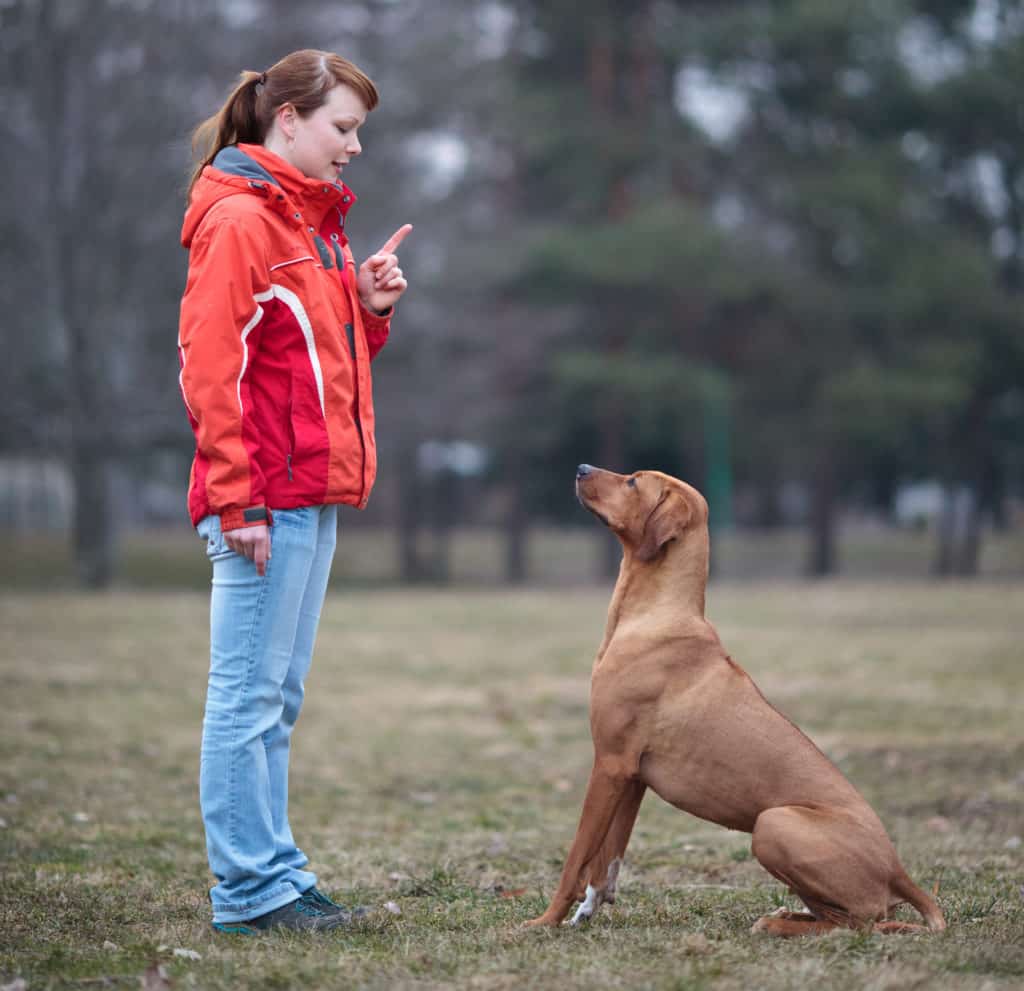
Sit, stay, and come are the three most common commands taught in beginner classes and are the foundation for further skills training and behavior modification programs. By teaching your dog to sit and stay, their minds become engaged and they learn deference to the human at the end of the leash. When a dog’s role is clearly defined in the “pack” and social order is established, it’s reassuring and permits them to relax, gain confidence, and focus.

From a safety perspective, sit, stay, and come are often used when guests are welcomed into the home, or during an emergency such as car or aggressive animal heading toward a loose pet. If a dog can consistently be recalled on or off leash, it can be the difference between life and death.

Leave-it is an oft used command in our house and in the animal assisted therapy work I do at the local hospital. When an object is dropped on the ground (think grapes or a chicken bone) or you come across something you want your dog to ignore and not ingest or approach (bandage material or a skunk), leave-it gives your dog the message to back away for their own good!

Training your dog to go to its place, bed or kennel is done by having your pet in a sit and stay in a specific location while giving the command and a food reward. This command will help you to position your dog for sleep, when the doorbell rings, it’s dinnertime and you don’t want distraction, or to keep your pet away from open doors or guests who may not want slobbery kisses.
pet training

Breaking Barking Habits

Barking can be the bane of anyone’s existence, especially if you have just gotten a cranky baby to sleep! Personally, I like it when my dogs alert me to a stranger at the door. But I don’t need to know every time a squirrel climbs the fence. Consistency is imperative when teaching any skill including “quiet” so make sure everyone in the house is reinforcing the same behavior.

Yelling at the dog can be perceived as “barking”  by your canine and the negative attention can be surprisingly pleasing to a dog. Rewarding a quiet pup or teaching an incompatible behavior like going to their bed is best!

Remove the stimulus for barking by closing the drapes or limiting access to the front door if the doorbell is a trigger. Don’t set your dog up to fail as the longer an undesirable behavior has been performed, the longer it can take to un-train. What are the most important skills you’ve taught your dog?


Expert Dog Tips from Dr. Lisa

Do Dogs Dream? Understanding the Twitches and Running

Dog Behavior Articles

dog dreams

If I had to guess what my dogs dream about when they enter the REM (rapid eye movement) phase of sleep, the images would certainly include squirrels, a peanut-butter filled KONG, and the flash of weeds as they tear along their favorite trail.

Most of us have witnessed the tell-tale eye twitches and running motion of recumbent legs that signal dreaming in our pets, but do dogs really dream? Here’s some background information on dream studies on animals and how dogs dream!

How Dogs Dream

According to Psychology today, typically, a medium-sized dog will begin to dream about 20 minutes after falling asleep; their breathing may become shallower and irregular as compared to deep, sonorous, non-dreaming sleep.

The darting of eyes behind closed lids is the dog “seeing” images as if they were viewed in real life. Some animals may even snap or growl at imagined prey. Humans awakened during this same phase of sleep report they were dreaming at the time.

Anecdotal and scientific research both indicate the probability and content of a dream state. Anatomically and physiologically, the dog’s brain is extremely similar to a human’s, who we know dream of events and images pulled from daily life.

Based on brain wave studies, scientists have determined that smaller breed dream more frequently, but with shorter dream duration, than larger breeds.

The Study of Rats Dreaming 

Of special importance in the generation of dreams is the hippocampus, an area of the brain associated with memory formation and storage. Washington Post states, that in rats, a species with a simpler brain structure, electrical recordings were taken from the hippocampus while the rats were awake and completing a complex maze.

The brain waves generated by these rats running the maze were very specific, repeatable, and so precise that researchers could pinpoint which area of the maze the rats were running based on the electrical wave. Later, when brain activity had indicated the rats were in the dream-generating REM portion of sleep, MIT scientists observed these identical waves.

This data was extrapolated to mean that the rats were dreaming about the maze they had just completed, down to precise location of the maze the rats were “running”  in sleep. In all likelihood, our dogs are dreaming about their version of the maze, dashing along a familiar path or playing with a favorite squeaky toy of which the hippocampus has retained images.

The Pons Region of the Brain

Another portion of the brain, the pons, was studied to determine dream content. In addition to acting as a sensory message relay center in the brain and helping to regulate sleep and respiration, the pons helps hinder movement in sleep. Without this special structure, animals actively engage in movement in the same manner during sleep as they would when awake.

In studies where the pons was removed or inactivated, sleeping dogs executed familiar actions even when brain waves indicated they were dreaming, such as chasing make-believe balls and flushing out imagined birds. Observing this study sounds like watching a dog zombie apocalypse! Puppies, human babies, and seniors all experience more movement such as twitching during sleep due to the underdeveloped or less efficient pons. Fascinating!

Can Dogs Have Bad Dreams?

If dogs dream about their daily lives, can they also have nightmares of being home alone during a storm or being attacked by another animal? If it occurred in real life, it’s very likely they do. It can be difficult to watch your restless pup dream and become agitated in sleep. Should you wake them from their nightmare or leave them be?

From personal experience, it can be very disorienting having a scary dream interrupted by the alarm clock; it takes a few minutes for my breathing to slow and my mind to register my surroundings. Instinctually, your dog may react aggressively and unpredictably if woken during a nightmare. It’s best to let them sleep though it; when they wake, provide plenty of snuggle and play time so that future dreams include these joyful memories!

Pet Coverage: Is Pet Insurance Worth It For Your Dog?

Pet Health Articles

pet insurance

With more technology to diagnose and treat diseases such as cancer and chronic pain, pet owners have a multitude of choices for care when their pet becomes ill. Though cost should be the last thing on the mind of a concerned pet parent, owners often face a difficult decision when an animal companion becomes ill or injured: go into debt to pay for the care the pet needs or euthanize.

This painful scenario can be avoided by purchasing pet insurance, a practice that many veterinarians recommend as a way for owners to be able to consider treatment options for their pets that they otherwise could not afford. In other words, owners can base health care decisions on their pets’ needs and the veterinarians’ recommendations rather than on the cost of treatment.

How Does Pet Insurance Work?

Unlike our health insurance which involves a contractual relationship between the insurance company, the physician and the patient, pet insurance is a contract between the pet owner and the insurance company only. It operates in the same manner as car insurance, with the insurance companies compensating pet owners for the costs associated with the treatment of illness or injury and sometimes routine care.

Thus, if a pet requires veterinary care, the owner pays for the services out of pocket, completes the necessary paperwork, and submits it to his or her insurance company. The company then reimburses the owner based on the plan that the owner selected. For some owners, this is a pro as care is not limited to in-network providers and they can pay the up-front expense with the promise of full to partial reimbursement.

Other pet owners do not have the funds accessible to pay for immediate treatment and must discuss payment plans with their veterinarian.

Which Pet Insurance Is Best?

Figuring out which pet insurance company and plan that works best for you and your pet may seem daunting. With factors to consider such as customer service, deductibles, coverage of congenital or pre-existing conditions, speed of repayment, and the monthly expense, some owners may forgo insurance for their dog and instead establish a monthly pet savings account.

Though still responsible for any out-of-pocket medical expenses, having a cushion in the bank for a medical catastrophe can help ease the financial pain of treating your pet. No doubt about it, even routine care can run into the thousands of dollars annually as vaccinations, parasite preventatives, good nutrition, and dental care are all critical to maintaining your pet’s health.

When evaluating insurance companies, it is important to consider whether veterinarians are employed by the company in arbitrating claims, the company is approved by the state insurance regulatory agency where policies are sold, and there is transparency in communicating policy limits, pricing structures, co-pays, deductibles, limits, and optional coverage or exclusions specific to your pet (i.e. coverage for annual wellness visits).

If your pet has a chronic condition such as seasonal allergies, will examinations be covered along with prescription medications?

Several breeds have higher deductibles; retrievers are notorious for ingesting socks and other foreign objects that require surgical removal and insurance companies know it! More recently, some employers have made it simple for pet owning employees to choose their insurance company by including pet insurance as an employment benefit.

Some pet insurance companies offer discounts, such as for veterans, making those plans most appealing. Whichever company and plan you choose; pet insurance will allow you to reduce veterinary bills but still provide the best possible care for ill or injured pets. It’s something to think about.

Sources:
Pet Insurance
AVMA Policies
Pet Insurance U

Making Friends: Socializing Your Dog With Humans and Other Dogs

Dog Behavior Articles

dog socialization

According to the ASPCA’s National Pet Rehoming survey conducted in 2015, 47% of the 3.3 million dogs surrendered to shelters are relinquished due to “pet problems”  including aggression, undesirable behaviors, and eventual adult size of the pet. So much is known about dog and puppy behavior, training, and optimizing adoption success of a new pet, there is much room for a decrease in these numbers.

Whether it’s a new puppy, an adult dog moving into a home with existing pets, or a senior dog with some behavioral “baggage” to unpack, some items to keep in mind to help socialize your dog with other dogs and humans include:

  • Preparation
  • Setting realistic expectations
  • Consistency
  • Obedience training
  • Confidence building in your pet
  • Seeking expert advice from a veterinarian
  • Getting a trainer to facilitate formation of the human-animal bond

It is imperative to start your relationship with your dog or puppy off on the right foot; that begins with proper socialization with humans and dogs from day one. While it is possible to correct previous socialization training “wrongs”  in an adult pet, the battle can be uphill, frustrating and often limited. Let’s talk about introducing a new puppy or dog into your home with the goal being a well-socialized, agreeable pet.

How to Socialize Your Dog

Understand personality traits. A new puppy is a veritable sponge, just waiting for you to impart knowledge and experiences which will shape future behavior. Dogs, like humans, have a natural tendency toward certain personality traits and selecting a breed or certain temperament of dog to match your lifestyle and expectations is critical. A naturally timid puppy will not do well in a home with young, unpredictable preschoolers, nor will a dominant dog thrive in an environment where other dogs are vying for the same spot on the social ladder.

Prepare the enviroment. Preparing your home for the introduction of a pup involves talking to your veterinarian to ensure proper puppy/breed selection prior to adoption, removing hazards, setting up a quiet retreat such as a covered crate, preventing unsupervised access to other pets and children, investigating puppy classes in your area that encourage socialization, and having a supply of delicious treats and toys on hand. It is ideal to bring any new puppy home around 8 weeks (after weaning) as the period for optimal socialization is about 3-12 weeks of age.

Classical conditioning method. Dogs deprived of human interaction during this time have reduced ability to adjust to new people, animals, and experiences. For psychology buffs, socialization is about classical conditioning: creating a positive association between two stimuli or events. Most puppies see play and food as a positive reward. Realistic interactions with not only the family members, but anyone the puppy may eventually encounter (crying babies, senior citizens with walkers) in a positive way should be immediately rewarded.

Generally, it’s too overwhelming for a new puppy to visit a pet superstore, teaming with too much of the wrong kind of stimulation. Just as important, educate young people interacting with the dog on how to gently play and pet and eliminate teasing or physical punishment.

Dog classes intended to promote socialization and positive interaction between other humans and pets are held in private training facilities, at veterinary clinics, and even at pet stores. Make sure all puppies are healthy and current on vaccinations and deworming prior to attending class.

Introducing Adult Dog in a new home. Introducing an adult dog to a new home, with or without existing pets, should be a gradual transition. By providing a separate, safe space for the new dog, he can become accustomed to routines, smells, and the social hierarchy which may exist among the original pets.

A neutral place, such as a mudroom or den as opposed to a desirable bedroom or kitchen location, is the preferred area to have dogs great each other while leashed and while feeding treats and giving praise. Dogs can also greet each other by sniffing under doorways or from across the room in individual crates if they show signs of agitation or body language indicates stress in closer proximity.

Allow the new dog supervised, gradual exploration of the home and yard. By reinforcing original pets’ social standing by feeding and attending to them first, less conflict arises. Petting dogs in each other’s company, when both are calm and “okay”, also reinforces the idea that good things happen when the other dog is present. Likewise, rewards should come when a new dog is introduced to other dogs on walks, children, or other social situations when behaving calmly.

Training. Training classes for adult dogs not only provide controlled exposure to new stimuli but can help teach you and your dog obedience commands which are necessary to control your dog and reassure them in confusing or scary situations. Though the critical window of socialization has closed for adult dogs, that doesn’t mean that they can’t learn to tolerate and even enjoy new interactions.

Dogs with known aggression issues can often live harmoniously with other dogs and humans. Vigilance and supervision, control, consistency, education, and awareness of body language and cues are keys to integrating a dog with behavioral problems into a home.

A veterinarian and trainer should be consulted when considering adopting or retaining such a dog in your home as they may pose a safety hazard to themselves and others. While some behavioral issues can be mitigated, a dog is still an animal and may respond in unpredictable or instinctual ways. Start smart and socialize responsibly!

A Stinky Situation: Dog Anal Gland Problems

Pet Health Articles

There’s no polite way to introduce this topic: pet anal glands. These are mysterious, marble-sized, sacs that contain malodorous material and can be found at approximately 4 o’clock and 8 o’clock between your pet’s internal and external anal sphincter.

All dogs, cats, and carnivorous species (including humans) have them; you may know what anatomical parts I’m talking about if your dog has ever been frightened, scooted their bottom along your favorite rug, or had the unfortunate experience of developing an anal gland infection.

Anal Gland Problems In Dogs

Problems with your dog’s anal glands lead to lots of veterinary and groomer visits, though they do serve a purpose beyond providing job security. Sebaceous glands produce a liquid substance that has a foul, fishy odor which is yellow to tan in color and exists as means of identification and territory marking.

Normally, the liquid secretions are expressed when a dog defecates. The pressure of the firm feces allows the glands to complete empty.

No problem when this occurs outside! Where do things take a hard turn? If your dog has softer stools and the anal glands are not fully expressed naturally, was born with narrow ducts, produces excessive material, or has acquired damage to the duct due to perianal infections, trauma, allergies, or inflammation, they are more likely to develop anal gland impaction and infection.

Sphincter dysfunction and obesity also predispose a pet to anal sac disease. Certain breeds (usually on the small side) are also more likely to need monthly, manual expression of their glands: Chihuahuas, Toy and Miniature Poodles, Cocker Spaniels, Lhasa Apsos, Basset Hounds, and Beagles top the list.

How Do I Know If My Dog Needs His Anal Glands Expressed?

Most pet owners are alerted to the discomfort of impacted glands when their pet drags their rear on the ground, bites at the tail base, excretes the tell-tale liquid (stinky) at times other than defecation, strains when defecating, or a red, hairless bulge is noted near the area of the anal glands.

When swelling is evident either on physical exam or during a visual inspection of the area, an anal gland abscess is present.

Bacterial overgrowth in the gland filled with abnormally copious, thick material causes swelling, pus formation, ultimately rupture and pain. Abscesses can be soothed with a warm washcloth applied to the area and must be treated with antibiotics by your veterinarian.

If your dog has chronic anal gland infections and you’ve ensured stools are firm with a high fiber diet, his weight is managed, exercise is adequate, and allergies aren’t leading to biting and trauma to the area, he may be a candidate for surgical anal gland removal or anal sacculectomy.

Surgery in this delicate area can lead to fecal incontinence and should not be done as a first step in managing anal gland disease.

Preventative care for your dog includes practicing good hygiene and grooming, awareness of these glands, and knowing the signs of inflammation. Most groomers will express your dog’s anal glands monthly as part of their service, especially if you own a small breed or your dog has a history of anal gland disorders.

How to Squeeze Dog Anal Glands

Squeezing the glands can be done with steady pressure to milk the secretions from the inside of the gland, and through the duct opening near the anus. Use latex gloves, lubrication, and a lot of paper towels, or let a professional handle the gland evacuation for a minimal charge. As in most things, “if it ain’t broke, don’t fix it!”.

Repetitive compression of the glands and ducts also causes a little traumatic inflammation at the site and can lead to impaction down the road. So, if your pet has not exhibited symptoms of distended glands, consider yourself lucky!

Portion Control: How Much Should I Feed My Dog?

Pet Health Articles

dog food

Portion control and regulation: it’s something we Americans sorely lack and not only do our children pay the price, but our pets do as well. While it may be difficult for humans to ignore the barrage of commercials and Happy Meal temptations, we have a clear and simple obligation to fulfill when it comes to feeding our dogs.

Since they solely depend on us feed them, we need to quiet the tiny voice that tells us food=love and make sure we’re feeding our dogs the right amount of food. Wondering how much should to feed your dog or how much is “too much”? We have some tips to help make sure your dog eats the right amount of food!

How Much Should My Dog Eat?

Breeds vary, activity levels fluctuate, stages of life such as puppyhood or gestation demand more calories, and health complications such as diabetes affect ideal type of food and caloric intake for your pet.

One commonality when it comes to healthy amount of dog food and nutrition and feed is that we all want our pets to achieve their ideal body condition, whatever other variables exist.

A good place to start in determining your pet’s healthy size is to reference the Purina Scoring Chart. Whether your dog is a Basset or a Malamute, participates in agility or is a couch potato, some basic rules to assess body condition include: ability to feel your pet’s ribs but not see them, observing some semblance of an hourglass “waist” when viewed from above, and noting the chest is deeper and lower to the ground then the abdomen. Your pet should be a 4-5 out of a 9-point scale.

Measuring Dog Food

Once you’ve established where your pet falls on the chart, assess whether the goal is weight loss and what percent, gain, or maintenance. Each point on the chart is the equivalent to a 10% change in body mass.

Start with a measuring cup, and by cup, I mean the same cup you would use to measure flour if you were baking. Not a Big Gulp cup, not an espresso cup. A cup or container that holds 8 ounces of liquid or dry material.

Because grams are a measure of weight, a cup of lettuce will not weigh the same as a cup of brown sugar, and the same concept can be applied to the variety of pet foods on the market. Likewise, every cup of food does not contain the same number of calories, which is critical in determining how much to feed you pet.

So, check your dog food label. Kcal/cup of food should be clearly marked or at the very least, an 800# to call to get that information must be visible. If it isn’t, what are you feeding?

Talk to your family. Everyone needs to be on board when it comes to portion control and getting your dog to its ideal weight.

Based on current body condition, the caloric content in the food you are feeding (and treats, which do count as additional calories and should make up no more than 10% of the overall caloric intake so factor them in), life stag, activity level, and goal, you can determine with your veterinarian just how much food to feed your dog or how many calories your pet needs in a day. Puppies grow, and their calorie needs and thus quantity fed will adjust over time.

Do the Math

A little math is needed next. Convert your pet’s daily caloric needs to the number of cups they must be fed each day. For example: a cup of the diet you feed contains 300 kcals. Your pet needs 600 kcals a day. 600kcal/300kcal/cup= your pet should consume 2 cups of that food for the day. Use your measuring cup and put the dog’s daily meal and treats into a bag (s).

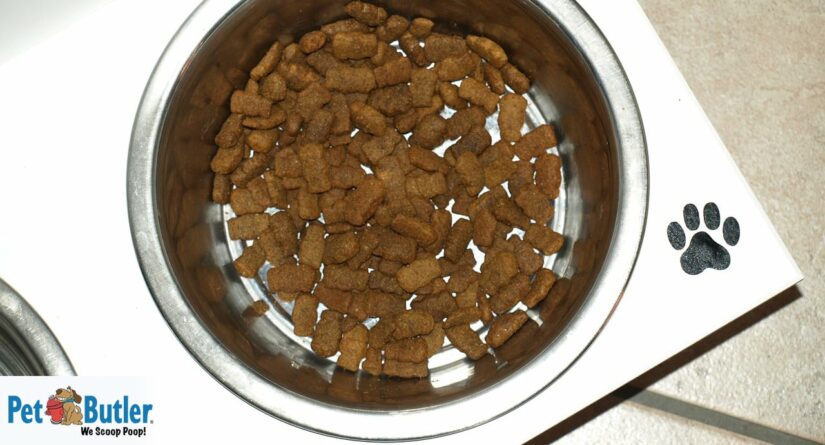
Now feed from this bag for the next 24 hours. Most animals thrive when fed smaller portions in 2-3 servings per day, so you can divide the bag’s contents into meals that will be satisfying but not indulgent. Small breeds and puppies may need to be fed more frequently to maintain blood sugar levels. Some dogs can be free-fed as long as they snack throughout the day and don’t gorge themselves in one sitting.

There a few tools I’ve used to help extend my dog’s feeding time, making it into an enriching game and allowing them to feel satiated. Toys like the Omega paw tricky treat ball, the Kong wobbler dog toy, or other treat dispensing puzzles can provide hours of amusement, mental stimulation, and aid in dispensing appropriate dog food portions.

Remember, exercise helps maintain a healthy weight too! Enjoy the last few weeks of fall.

Are Candles, Essential Oils, and Air Fresheners Safe For Pets?

Pet Safety Articles

candle pet safety

Evoking memories of pumpkin patch visits, jumping in falling leaves, and eating apple cider donuts, the smells of fall are powerful triggers of times long past. It is about this time of year when we pull the blankets a little tighter and light the maple sugar or cinnamon apple scented candle.

Estimates are that our dogs have up to 100,000 times more ability to detect scent vs. their human counterparts, so what do they make of all the appetizing and botanical scents we surround ourselves with every day?

For some dogs, our scented candles, air fresheners, and essential oils, while masking noxious odors, may pose a health risk. Let’s sort out which products can be harmful, as well as determine how we can safely incorporate the heavenly scents of the season into our home environments.

Dangers of Candles and Essential Oils

Both scented candles and some aerosol or plug-in fresheners can release volatile organic compounds as well as toxins like lead, naphthalene, formaldehyde, and phthalates. Synthetic fragrances and carcinogenic soot from paraffin candles, a petroleum product, can exacerbate respiratory conditions such as asthma in humans and pets.

Phthalates, another airborne product released from burning candles, have been implicated in causing endocrine system disruption leading to diabetes, birth defects, and cancer.

In addition to the harm caused by the burning of candles and the release of artificial chemicals into the air, the delicious smells can entice dogs to nibble on candles, wax, or ingest oils. Ingestion of most candles will generally lead to nothing more than an upset stomach and diarrhea. Consuming or absorbing essential oils through the skin and mucous membranes can be a whole different matter.

Essential oils are the volatile organic compounds extracted from plants that contribute to their fragrance and taste. Pets are especially sensitive to these products and depending on the concentration and formulation, just a few drops of tea tree or eucalyptus oil can cause severe illness; clinical signs can range from weakness, to depression, seizures, low body temperature, salivation, vomiting, diarrhea, and even death.

It’s best not to apply any oils directly to the skin of your pet for this reason, and even diffusing some oils can trigger a cough or symptoms of allergy. Which oils should never be used around pets? Some suggest pine, wintergreen, cinnamon, citrus based oils, peppermint, camphor, clove, bitter almond, garlic, horseradish, mustard, and pennyroyal essential oils are dangerous to dogs and cats.

Safe Candles and Plugins

There are safe ways to coexist with the smells we associate with cleanliness and holiday cheer. When purchasing candles, look for those that are made from natural ingredients such as soy, beeswax, and bluecorn and are free from artificial fragrances. A wick made from cotton is cleaner to burn than those that have metal wires in the center which may emit heavy metals into the environment.

Sprays such as Febreze are perfectly safe to use in your home, though you want to avoid direct contact with your pet as they may be a stomach or skin irritant. If you choose to diffuse, monitor your pets for any respiratory symptoms. As no long-term studies have been conducted to verify safety of inhaling oils, let the buyer beware. Most importantly, keep all diffusers, candles, and sprays out of reach. Pets are susceptible to burns when lit candles and hot wax meet skin.

Purchasing wide based-candles and placing burning candles in a dish of water can decrease the potential risk of fire. When in doubt about any products you introduce into your home, keep the ASPCA Animal Poison Control Center phone number (888) 426-4435 on hand to get safety data and toxicity information.

Pet Transport: Local One Way or Round Trip Pet Shuttle Service

Dog Activities Articles

pet shuttle transport service

Your workday ends at four on Friday and your middle schooler has soccer practice until six. You still have to make dinner, but wait! The family pooch has a grooming session scheduled late that afternoon, and you might need to reschedule because you just don’t have the time.

Looking for affordable pet transportation to take your dog to appointments? Let Pet Butler take your dog to and from their appointments with pet shuttle service*!

Local Pet Shuttle Service

While busier lifestyles have become the norm in our society, successful individuals continually strive to maintain a work-life balance. When that balance includes dog ownership, Pet Butler is here to help. In addition to our flagship dog waste cleanup and removal service, consider our convenient pet shuttle service* as your local pet taxi.

While you shuttle your two-legged family members to and from school, extracurricular activities, appointments and events, let our dog shuttle service transport your four-legged family members to and from doggie daycare, the grooming salon, or the veterinarian.

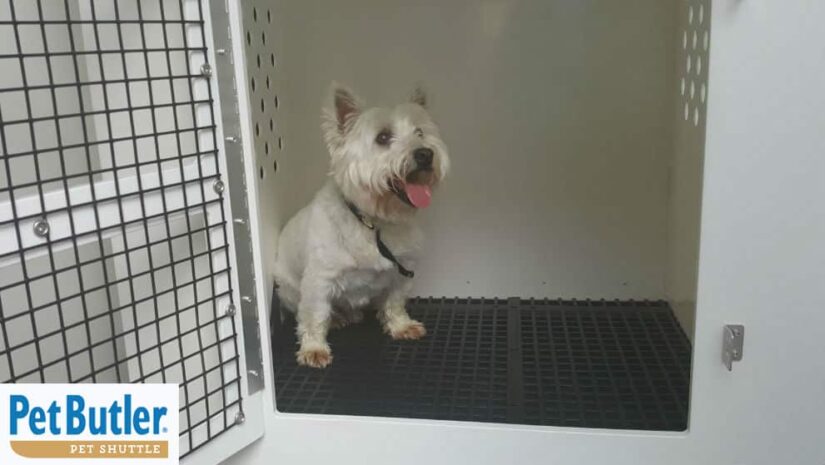
Our Pet Shuttle* service vehicles have been specifically designed to provide safe and comfortable dog transport services. The inside cabin area is climate-controlled with both heating and air conditioning to ensure your pet remains comfortable while in transit. The inside of the pet shuttle* features kennels of various sizes, securely fastened to the inside cabin. This allows us to provide safe, secure pet transport services to virtually any size dog.

Each kennel has a raised rubber mat on the floor to catch any incidental potties your dog might make while being transported. Finally, the shuttle driver is appropriately licensed and insured, in addition to being a “dog person.”

How easy is it to become a Pet Shuttle* user with Pet Butler? 

Very easy! All we ask is that you schedule a one-time “meet and greet” consultation prior to using our dog shuttle service. This only takes about ten minutes and allows the team to get acquainted with the dog(s) as well as the pet owner.

We will learn a bit about your dog’s personality and any special needs while providing more information about picking up and dropping off your pet. After that, you can call to schedule our dog transport services at any time. If you acquire a new dog, schedule another initial meeting. It’s that simple.

How might you use the new pet shuttle service* from Pet Butler?

Whether for daily transport to or from your dog sitter or doggie day care facility or only occasional help getting your dog to or from the veterinarian or groomer, count on the safe, reliable, bonded and insured professionals at Pet Butler to make your life easier. Whether one way or round trip, you can schedule either recurring dog transport services or one-time service and let Pet Butler take it from there. It’s like having an additional car and driver available just for your special furry family member.

How much does it cost to transport a dog?

Pet shuttle* is your affordable pet transportation service. With rates as low as $25 for one-way transport service and $40 for round trip. Frequent users may qualify for discounts. If your dog has unusual needs, such as requiring a private shuttle service or needing to get picked up when the owner is not at home, please contact us to discuss how we may be able to accommodate you.

We at Pet Butler understand how important your dog is to you. We also understand how busy life can become. That’s why we’ve developed our local dog shuttle service with both you and your pet in mind. If you have any questions or concerns, or if you would simply like to learn more about our exciting new service, visit www.PetButlerShuttle.com.

*Only available in the greater Naperville area.

What Colors Do Dogs See?

Pet Health Articles

dog vision

As we head into Fall, it’s a great time to go outside with your dog and enjoy the comfortable temperatures and beautiful colors this season brings. Vibrant reds, yellows and oranges decorate the trees; colorful mums and pumpkins are on display.

We know our furry friends appreciate the cooler weather and we like the changing fall colors, but what colors can dogs see? Learn more about our dogs vision and how they see!

Can Dogs See In Color?

To better understand our dogs vision, we need to know a little about the dog’s eye. The retina is a structure covering the back of the eye containing the light-sensitive cells called rods and cones.

Cones help both dogs and people detect color and small visual details while rods are necessary to see motion and objects in dim light. Dogs have only about one-tenth the number of cones as humans.

Their rod-dominated retinas are better at seeing in the dark and detecting movement but dogs are essentially red-green color blind. This means they can differentiate yellows, blue-violets, and variations in shades of grey but cannot distinguish red, orange, yellow, and green.

How Dogs Vision Help With Navigating

How then does dogs vision help with navigating across a busy intersection when the light turns green? They use other visual cues and senses such as position and brightness of the light, noise, and traffic movement. Their increased peripheral vision is an asset; dogs’ visual field is 200-240 degrees vs. humans’ 180 degrees. Visual acuity is not as strong.

Dogs typically have 20/75 vision though working retrievers bred for better eyesight may have closer to 20/20 vision. So, even if your dog had the mental ability to read, he wouldn’t be able to resolve the individual letters.

A better understanding of dog vision is necessary when considering training and behavior. A change in posture or movement is significant to a dog as are sounds and smells. Sweeping arm motions, clicker noises, and food rewards are often used in successful training programs.

Although dogs vision may not see the changing colors of the fall season, they undoubtedly love the crisp weather, the sights and sounds of geese heading south, and the crunch of leaves underfoot. Most of all, they like spending time with you. Happy Fall!

Disaster Preparedness: Preparing Your Pet For an Emergency

Pet Safety Articles

pet emergency disaster preparedness

June is National Pet Preparedness Month, which gives us pet owners a reminder of what to do in case of an emergency or natural disaster. Natural disasters such as tornadoes, earthquakes, and floods are certainly one category of catastrophe, but what if you were left unable to care for your pet due to sudden illness or injury?

Dogs and cats are among our most vulnerable populations and preparing for any type of emergency or natural disaster is wise. Let’s talk about disaster preparedness with the intention of keeping your pet safe and healthy, and the goal being reunited should you become separated in an emergency.

Pet Emergency Safety Tips

Create an action plan: The first step to prepare for an emergency is to generate a family action/evacuation plan, which includes identifying escape routes from your home, interior spaces with no windows, areas with access to fresh water, as well as boarding facilities, pet-friendly hotels, or family residences where you can stay should you need to evacuate your home.

Helpful tools and resources: If your home isn’t safe for you, it isn’t safe for your pet; make sure to include a labeled carrier and extra leash as part of your supply kit. Mobile apps like the NOAA and ASPCA apps allow you access up-to-date information on weather, pet support and recovery networks, and contain record-keeping features.

Download these apps before you need them. Should you have to leave your pet or if you become separated, make sure to have a sticker visible from outside your house that includes the number and type of animals in the home as well as an emergency number where you can be reached.

Microchip your pet: Permanent microchip identification is recommended for all pets in addition to a collar with ID and can be quickly implanted by your veterinarian. Make sure to keep your contact information as well as your pet’s information current in the online registry.

Emergency contacts: For personal emergencies where your pet may be left alone in your home, designate a neighbor or friend familiar with your pet to assume responsibilities for care. Leave the “foster parent” a set of keys, supply of food and medications as well as feeding instructions and the phone number to your veterinary clinic.

pet kit

Pet Supplies in Your Emergency Kit

Every family should have a smaller emergency kit suitable for traveling as well as emergency supplies that can keep you nourished and safe in a disaster. In some cases, emergency services may not be able to reach you or provide shelter for your pet for several days.

Keep an additional emergency kit for your dog or cat to ensure their safety. Be mindful that food and medications can expire, so refresh supplies often.

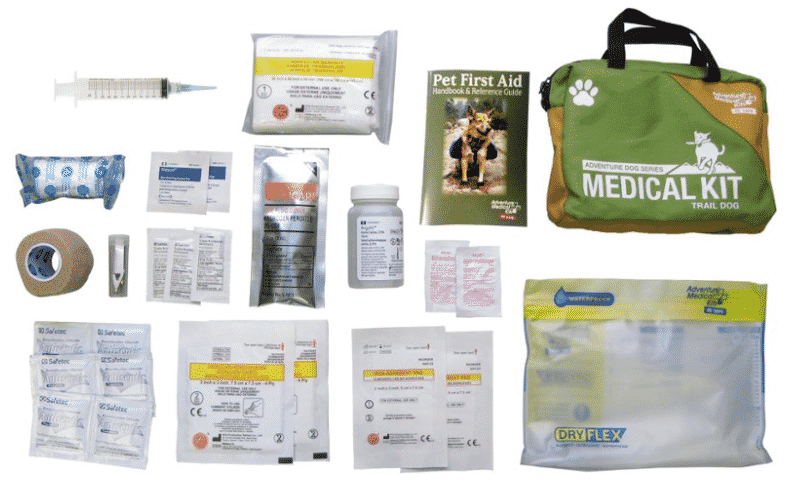
A week supply of canned food and bottled water as well as a two-week stash of medication is ideal. A first aid kit, photo of you and your pet to generate LOST posters, important phone numbers of family members, your vet clinic, and an emergency clinic are critical.

Keep items in waterproof bags and include medical records, a muzzle if needed to transport a scared or aggressive pet, soap, alcohol-based hand sanitizer, self-stick gauze, and plastic bags for pet waste clean-up.

Feeding bowls, a blanket, and a familiar chew toy are good to keep with your pet and may provide some comfort during an emergency. For cats, a pillowcase, hard-sided carrier, and a litter pan and litter are essential.

May you never need to use your emergency kit. But when you’re pets are prepared for an emergency or disaster, the likelihood of safely weathering any storm is high.

Sources
ASPCA Disaster Preparedness

Find a Pet Butler 800-Pet-Butler