
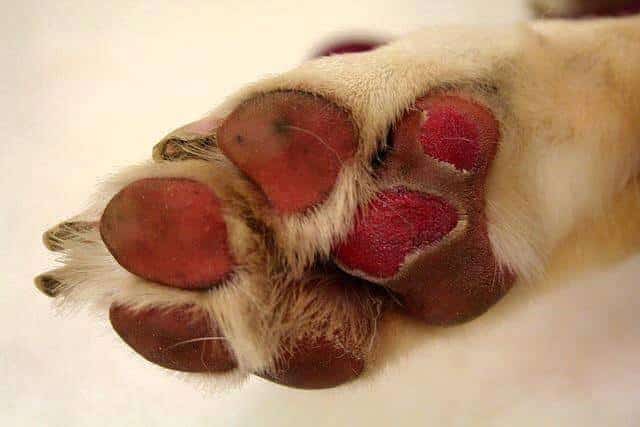
Ways to Protect Your Dogs Paws from Hot Pavement

Pet Safety Articles

dog paws

Photo Credit: Dogtime and Hobart and Channel Highway Animal Hospitals

While we bask in the sun’s warm rays, knowing that summertime weather may only last until September and not return until May, our pets don’t typically seek the heat. Not only do their all-season coats and limited ability to regulate body temperature by panting and sweating keep them toasty, but unprotected body parts like ear tips, noses, upturned bellies, and especially tender paws take the brunt of the sun’s damage. And while humans think to bundle themselves and their pets up against the cold winter temperatures, we often forget to protect dogs in the summer.

How to Protect Dogs Paws

One of the best ways to protect your pet in the summer is to avoid the sun during the peak temperatures of 10 a.m. and 6 p.m. If you’re going to play ball, frisbee, or even swim, try to do it during the cooler mornings and evenings when the heat is less intense. Even if you are enjoying your stroll at dusk and not in the sun’s direct light, don’t forget about the asphalt, which may retain most of the day’s heat and damage dogs paws.

If the outside temperature is a comfortable 77 degrees, driveways and roads can still reach 125 degrees Fahrenheit. At 87 degrees air temperature, a blazing 143 degree can be reached on the asphalt’s surface.

Beware the Hot Pavement

Keep in mind an egg can fry at 131 degrees in just 5 minutes! A good rule of thumb to follow is the 7-second rule: if you can press the back of your hand against the ground for 7 seconds, it’s safe for your dog to walk upon. Artificial turf, running tracks, sand, and even brick and concrete may be dangerous to your dogs paws during the hot summer months.

We recommend walking  your dog early in the morning or late in the evening when temperatures and grounds are cooler.

Besides staying on natural grass, what else can you do to protect your dog’s paws? Invest in some fitted dog booties to help provide a barrier from hot surfaces, especially when pets have to go outside to potty. Many times, these same booties can be used in the winter to eliminate the risk of irritation from salt and ice. It can be a trial and error process to find the set your dog likes best.

Dog Paw Balms

Some are made of a stretchy latex material like PAWZ, and others of fabric with velcro straps and even reflective material. Have your dog practice wearing their gear inside and with plenty of treats. It can take some time to get used to wearing shoes when you’ve always been footloose and fancy-free!

Another option to provide a temporary barrier between the sensitive paw pads and the elements is a paw balm or wax. Paw waxes are especially effective in the winter months but can be used on dry, cracked pads ravaged by the rough pavement. Some dogs don’t know when to call it quits; my golden retriever will fetch a ball to the detriment of her own feet. I apply a paw balm both before and after vigorous outside play, especially if we are on a rough surface.

Musher’s Secret is an especially popular non-toxic wax. Other DIY dog paw balm recipes can be found online and often involve a combination of beeswax, shea butter or coconut oil. Above all else, perform a visual inspection of your dog’s feet and pads after any outside activity when temperatures may be either very warm or very cold.

Sunburn looks like erosion or ulceration of the skin and must be treated by your vet immediately. Foreign bodies like burs or pests like fleas and ticks may be detected before they cause further damage. Keep furry toes neatly trimmed and nails clipped weekly to avoid splitting or cracking and accumulation of dirt and debris. Keep enjoying the dog days of summer!
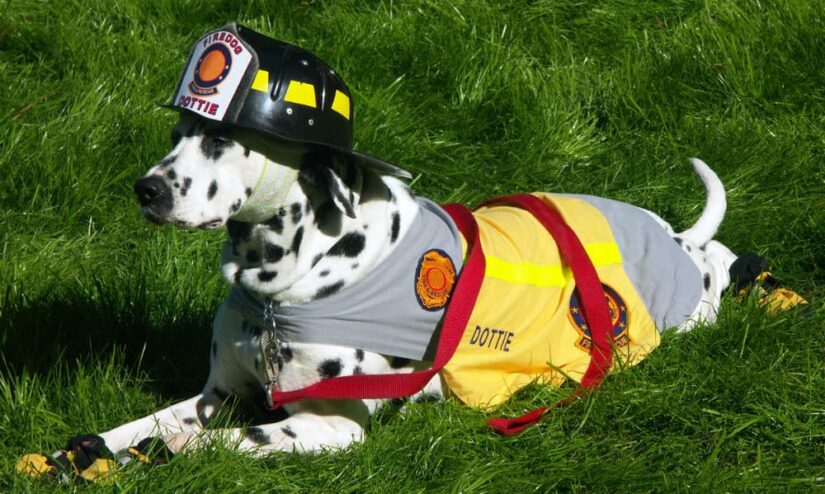

 

Pet Fire Safety Tips & Disaster Planning

Pet Safety Articles

pet fire safety

Did you know that July 15 is Pet Fire Safety Day? One of the most common dangers to befall families is a house fire. According to the American Fire Administration, house fires affect approximately 500,000 pets each year. A portion of these fires are started by pets themselves.

Naturally curious, pets are attracted to the open flames of candles and fireplace fires. Some sweet-smelling oils warmed by a flame may prompt a pet to investigate. A client once returned home to a devastating kitchen fire; he left a cardboard pizza box atop a gas stove. Presumably, the dog jumped up to eat the pizza and inadvertently turned on the burner.

Halogen lamps and space heaters are easily nudged by a pet leading to excessive heat build-up and are a definite fire hazard. Finally, wires can be tempting to chew for both cats and dogs, especially puppies!

Tips to Keep Pets From Starting Fires

  • Keep an eye on open flames: Supervise your pet whenever lighting a candle or fire in the fireplace. A solid screen can prevent embers from escaping and pets from getting too close to the flame.
  • Avoid candles: Keep candles and other diffusible oils out of your dog’s reach and consider going battery-operated.
  • Use safety knobs: Pet and child fire prevention includes investing in safety knobs for your stove top found in any big box store near the infant section.
  • Watch the heating products: Eliminate halogen lamps and use space heaters only when you’re awake and in the same room.
  • Secure electrical wires: Pets can chew on cables or wires, it’s best to secure wires with tape or enclose them in a plastic cable organizer. Flexible tubing denies teething pups’ access.

Pet Disaster Preparedness Plan

When making a disaster plan for your family don’t forget to include your pets. Should your family need to evacuate a residence, practice makes perfect. Designate a member of the family to be responsible for the pet’s safety in a fire. It’s a great idea to have a “go bag” for your pet that includes a few days of food, water, leash or harness, ID tags, medication and a copy of their medical record.

  • A photo of your dog and copy of their microchip number can aid in their return should they escape or become loose during an emergency. Knowing pets’ hideouts or safety zones such as a bathtub or under a bed can be important to quickly locate your pet.
  • First Responders can use that information along with a window decal indicating what kind and how many pets they should be searching for.  A pet in a burning house may run for an open door, so leave one available as you exit.
  • Technology can be wonderful at detecting fire, power outages, or carbon monoxide leaks. It’s possible to link smoke detectors and carbon monoxide detectors to a security service or directly to emergency personnel. If a fire starts in your home while you’re out, a signal is sent to the monitoring center alerting the fire department of danger.
  • Lastly, smoke detectors that are battery operated only work if the batteries are operating! With every new year, it makes sense to practice fire safety and change them out.

Symptoms of Dehydration in Dogs and Safe Ways to Re-Hydrate

Pet Safety Articles

dog dehydration

Pets are especially prone to dehydration and hyperthermia as they are not designed to efficiently regulate body temperature. They cool themselves by conduction, or transfer of heat, by lying on a cool floor. Sweat glands in the paws and panting help to carry away body heat and fur helps to provide insulation. On hot and cold days, they can become dehydrated quickly and need more than the requisite cup of water per 10 pounds of body weight, or ounce per pound.

Pets can also become dehydrated by losing fluid if they are experiencing gastrointestinal symptoms of vomiting and diarrhea or have a high fever. Excessive urination due to kidney disease or diabetes can also deplete the body’s water stores.

Vigorous exercise and lack of access to clean water will obviously lead to dehydration. For a healthy pet in comfortable environment, it’s safe to remove access to the water bowl an hour or two before bedtime to prevent nighttime accidents, but replenish the dish in the morning.

Symptoms of Dehydration

The symptoms of dehydration vary depending on the degree of water loss. You may first notice excessive panting or drooling in your pet with a 3-5% loss of fluid. They will attempt to find shade or an air conditioning vent. Lethargy and loss of appetite is common. As dehydration progresses, their noses and mouths become dry, eyes appear sunken, and skin loses its “spring”.

At 10-15% fluid loss:

  • signs of shock such as shivering
  • listlessness
  • rapid heart rate
  • weak pulse
  • bright red gums
  • appear unconsciousness. If not immediately treated by your veterinarian with gradual cooling and intravenous fluids, your dog can die.

Re-hydrating Your Dog

In the early stages on dehydration, it’s important to eliminate the cause, be it treating the diarrhea or getting your dog out of the sun. Provide access to fresh, cool water in small, frequent amounts or offer ice cubes.

Dogs that guzzle water are at risk for vomiting all they consumed and losing more fluid. Electrolytes are lost in body secretions, and with the permission of your veterinarian, a small amount of bone broth, Pedialyte or other electrolyte replacement solution can be added to water to slowly rehydrate your dog if they are not vomiting.

Perform a Dehydration Test

To perform a dehydration test on your pet, consider two options:

Test skin elasticity. The skin elasticity test measures the amount of spring in your dog’s skin. Pinch the skin to make a tent between the shoulder blades or along the ribcage, release your grip on the “skin tent”, and watch for the skin to return to the dog’s body wall. In a well-hydrated animal, the skin returns to its normal position almost immediately.

Test your dog when they are healthy as each dog’s skin elasticity varies. It can be especially difficult to judge how long skin stays tented in wrinkly breeds like the shar pei or bulldog, older pets, or those with long hair. In which case we move on to the second way to check for dehydration in pets.

Check gums. Normal, healthy dogs have moist mouths and no excessive panting. Their gums are pink (again, check on your healthy pet to determine their personal normal. Heavily pigmented dogs like chows or mastiffs may be more difficult to assess). When the pink gum tissue has pressure applied via a fingertip, the mucous membrane blanches to near white.

When the pressure is removed, a normal pink color should return in less than 3 seconds. This is known as the capillary refill time. If gums are red or white upon visual inspection without pressure, call your vet. Animals that have a delayed capillary refill time may be dehydrated and need prompt intervention too.


How to Prevent Travel Anxiety and Motion Sickness in Dogs

Dog Behavior Articles

dog travel anxiety and car sickness

For many of us, not only do we treat our pets LIKE family, they ARE family; I’ll admit, sometimes the dogs are my favorite family members. They don’t whine, kick the seats, fight with their siblings, or complain of boredom. Especially on road trips. My human children can’t possibly imagine how we survived long car rides without iPads, smart phones, and videos.

While dogs can be the ideal travel companion, there is the occasional pooch that suffers from travel anxiety or motion sickness. Is it possible to manage dog car sickness and nervousness so that you and your furry friend can best enjoy the open road? Yes!

Dog Car Sickness and Travel Anxiety

Dogs can become excitable or nervous when they are in unfamiliar situations or when they associate an activity with a negative outcome. Did your dog’s previous car ride end in a trip to the vet for vaccinations or surgery?

Was their last car ride three years ago and they are no longer accustomed to the sound of the engine, the roar of passing trucks, or the confinement that road travel brings? Are they secured in a crate or harness with a familiar toy or blanket or are they bounced around in a hot vehicle during stop and go traffic?

Take Shorter Trips

If possible, introduce a puppy or even adult dog to short, frequent road trips that end at a dog park or give them treats during and after the ride. When a car ride equates to a favorite activity or snack, dogs are eager to hop in a vehicle. Mix up the duration of car rides and give them a little fresh air. Stop sporadically to exercise your pet and provide stimulation, playtime, and a drink.

What if you knew that EVERY time you got into your car you were going to be trapped inside for 9 hours with few breaks to eliminate or eat? I’d start to think my vehicle might be more like a prison cell on wheels. Happy to buckle up? No thank you! I might drool and pace at the sound of car keys jangling or hit the brakes hard if someone tried to plop me in a car seat.

Calming Dog Medications and Supplements

In addition to desensitization, travel anxiety in dogs can be alleviated with over-the counter supplements and/or prescription medications from your veterinarian. It’s best to manage the situation before it gets out of hand; the more a behavior becomes practiced by an animal, the harder it is to unlearn. This is especially important with large dogs who can be more difficult to contain and restrain in a car.

As a housecall vet, we see many patients at home because they simply refuse to get in the car. Whether it was a prior negative experience or just lack of exposure to car rides, it can be impossible to convince a 150-pound Mastiff to buckle up. What would happen to your pet if you had to transport them in an emergency?

Products containing L-theanine, Chamomile, L-tryptophan, and Vitamin B1 such as Composure Pro by Vetriscience may be all that is needed to take the edge off an anxious dog. Combining the tasty treat with an Adaptil dog collar, which releases a natural dog calming pheromone imperceptible to humans, can work wonders.

Other dog owners have found success using a Bach flower drop called Rescue Remedy. Ask your veterinarian if you think your dog might be more comfortable using one of these supplements or if a prescription medication such as Trazodone or Alprazolam might be necessary to ensure a successful trip.

Benadryl (diphenhydramine) can be tried to help ease the tension of car travel, but I find while it may cause sleepiness, it doesn’t help truly anxious dogs. In some cases, when dogs lose their coordination and stumble about due to sedation, they become more anxious.

Motion Sickness

I always recommend trying the medication you are planning to use in advance. You don’t want to find out 2 hours into a 10-hour trip that your dog may have needed a higher dose and is panting, shaking, and crying or that they have an adverse reaction to a new product.

Some dogs become anxious in the car because they have previously experienced motion sickness. Motion sickness can be alleviated by avoiding a large meal before travel and making sure dogs are secure in a crate. Other pets fare better given a medication like Cerenia tablets or Meclizine a few hours before a trip. A safe alternative to prescription medications may be a sprinkle of ginger powder on a bit of wet food to manage nausea. As always, check with your veterinarian. Safe travels!

Kids and Pet Safety: Teaching Kids How To Interact With Pets

Pet Safety Articles

kids and pet safety

Did you know that 68% of U.S. households have a pet and 89.7 million dogs live in these pet-loving homes? You don’t have to be a mathematician to understand that is a LOT of dogs!

Children up to age 18 live alongside these pets in many homes and what’s better than watching a child beam holding a newly adopted puppy or kitten? Kids and pet safety is important including a child safely holding their new best friend and learning the basics of how to interact and train the pet so that all family members can reap the benefits of pet ownership.

It’s been shown that kids develop much needed social skills with pet ownership including empathy, responsibility and patience. Because pets are a source of unconditional love, the affection, physical contact, and non-verbal communication between a child and pet can contribute to increased self-esteem.

Kids and Pet Safety Tips

Anyone who has owned a puppy knows that they explore their world, just as children do, and a critical window of development exists between the ages of 4 and 14 weeks. Most puppies are weaned from their moms and introduced to their forever home around 8 weeks of age. You have just a few short months to show your puppy that humans including children are safe, loving, and lots of fun to be around!

Even older dogs can bond with children in the home if they are approached and interacted with carefully and positively. The best people to teach small people how to interact with pets are big people. It’s possible and even likely that your two and four legged beasts can live harmoniously with kids and pet safety practices.

Children Under Four Years Old

Young children under 4 years of age don’t have social maturity, impulse control, and can be erratic in movement and behavior. The best advice for living with pets and preschoolers is to supervise every interaction. Give your pet a safe zone in which to retreat if a child’s hurried movements become overwhelming.

Introductions can be in a controlled, quiet environment while the pet is leashed. Model kindness and gentle, slow movements around pets who appreciate being “asked”  if they can be stroked or picked up.

Like children, dogs appreciate predictability and structure. Even young puppies can be reliably taught to sit for a treat or other reward before being offered an outstretched hand to sniff; never reach over the head of the animal or hug a pet, both gestures can be perceived as threatening and lead to a bite.

Elementary School Age

Children can bear some of the responsibility of pet ownership once they have reached elementary school age. Teaching a child how to feed, groom and walk a dog helps establish the social hierarchy within the household.

We live by the adage “nothing in life is free” and children should give the pet a reward such as food, a toy, or attention if the dog sits and stays at their command. Pets can also be taught fun tricks like rolling over or playing dead.

Children should know that some items can be sacred to a pet. A dog may not take kindly to having their food dish taken or a favorite bone grabbed away. An adult should check to see if a dog has problems with food or territorial aggression before allowing the child to feed the pet. If a high-value item prompts an aggressive response in your dog when it is touched, get rid of it.

Startling a sleeping dog can also provoke a negative behavior; teach children to respect the pet’s space, don’t let your pet sleep on the bed, and let them be if they are asleep.

Best Dog Breeds For Kids

Is it possible to predict if a pet will be kid-friendly? In general, confident, not shy, dogs and puppies are best suited to homes with children. Loud noises startle some dogs more easily than others; those that are non-reactive to quick movements and the sound of a baby crying or a child’s high-pitched squeals adapt more easily to the hustle and bustle that accompanies large families.

Certain breeds are touted as being more family-friendly due to their physical sturdiness, patience, trainability, and love of attention. Retrievers, Boxers, lively Boston Terriers and Cavalier King Charles Spaniels are dog breeds that make excellent family pets.

Does the dog chase a fast-moving child? Growl when he’s approached while eating or lying on the bed? Pets can be desensitized to such actions but if given the choice, don’t set yourself up to fail. Older, arthritic pets may not be the best choice for families with young kids, nor dogs that did not grow up around children.

Puppies with few negative human experiences may be more amenable to positive training and reinforcement around behaviors typical of children. Give your puppy plenty of love, attention, or a food reward if they are calm and well-behaved around kids. Keep these kids and pet safety tips in mind. Pups soon learn to associate children with all the best things in life!

Love Pets, Hate Allergies? Managing and Treating Pet Allergies

Pet Health Articles

pet allergies

Love pets, but hate allergies? For some unlucky folks, cats, dogs, horses, and bunnies all cause the same pet allergy symptoms: itchy, watery eyes, a runny nose or congestion, a rash, hives, and even difficulty breathing. Even allergies are common in dogs and cats, but what is it about some pets that cause allergies to people? Learn more about what causes pet allergies and what you can do to help manage and treat them.

What Causes Pet Allergies?

Pet allergies are caused by proteins called allergens are found in the saliva, urine, and skin flakes or dander of animals and can trigger an allergic reaction or exacerbation of asthma. In some pets, the proteins are concentrated on the fur due to grooming and normal shedding of cells. Hair is then shed into the environment and the number of offending allergens increases in even the most immaculate home. What’s more, pollen and dust tend to “stick” to pets’ fur; allergic reactions may be related to those pesky hitchhikers rather than the pet itself.

Does an allergy to dogs and cats mean a future that holds fish as your only friends? Not necessarily. Skin tests done by your physician may help in diagnosing the true source of the allergy, potentially ruling out the pet as the source of the problem. Owners of cats that are light colored as opposed to black find they suffer from less feline-induced congestion.

Certain breeds such as poodles, bichon frises, and some terrier breeds don’t shed much at all; as such, their home base contains fewer allergens in the air and on surfaces. Smaller dogs tend to produce fewer allergens due to their smaller physical size vs larger breeds. When selecting a dog, consider size and breed if you are allergy-prone. If possible, it’s best to minimize exposure to allergens by keeping pets out of the bedroom. Because we spend so much time sleeping, creating an allergy-free zone reduces the stimulation of our immune system.

Managing & Treating Pet Allergies

Filter the air in your home – Adding a high-efficiency particulate air (HEPA) filter to the bedroom and living areas can reduce most air impurities including pet allergens. Use a vacuum with HEPA filtration bags and consider filters on air ducts. Some pet owners find their allergic symptoms worsen during the cold months when the furnace is running; that could be a sign a deep clean of the HVAC system and filters are in order.

Wash bedding and fabrics – The greatest source of indoor allergens tends to be found in drapes and carpets. If finances permit, remove these particle traps and wash bedding and fabrics regularly. Some owners regularly use a saline nasal rinse to rid air passages of allergens and reduce absorption. Washing your hands after cuddling your pet and before you touch your face is key to reducing instant red-eye and hives.

Brush pet fur regularly – It’s impossible to decrease the amount of dander and saliva our pets produce, but we can take them outside for daily brushing to decrease the hairs shed indoors. Keeping skin healthy and parasite free is important in reducing allergens and general flaking. A parasite preventative, high quality diet, and fatty acid supplements can all help to promote healthy skin.

Bathe your pet weekly – Bathing pets weekly with a mild pet shampoo can also lessen both pollen and mold spores and the salivary proteins and skin cells that accumulate on the fur. Daily, we wipe our pets’ paws and coat down with a damp washcloth to eliminate the particles they track in from outdoors. It’s a hard habit to break, but I also remind my three boys (four including my husband) to remove their shoes before coming inside for the same reason.

Visit the Allergist for treatment – If all else fails, returning to your allergist or immunologist for anti-histamines, medicated nasal sprays, or allergen specific therapy can help reduce your body’s rejection to animal proteins. Over months to years, low doses of allergen can be administered via drop or injection to help desensitize your body to the allergy source.

Sometimes maintenance immunotherapy treatment (allergy shots) is indicated for those with chronic allergies or asthma. Unfortunately, a predisposition to airborne allergies is hereditary. Parents with allergies often have children who manifest allergic disease. For some lucky individuals, tincture of time may be all that is needed to reduce reactivity to their pets as tolerance develops.

How to Transition Your Pet Food Gradually

Pet Health Articles

pet food

Back in 1999 when I graduated veterinary school, there was just one semester course that covered the basics of animal nutrition from chicken to goat to horse to dog. Over the last several decades, the way pet professionals and owners have come to think about nutrition has vastly changed.

Boutique pet foods are all the rage as we look into healthy pet food diets: grain-free, non-GMO containing, and organic. And, the question, “what food should I buy my dog?” can be confusing if you’re looking for the best and healthy dog food to feed your furry friend.

What we do know is that pets’ nutritional needs often vary throughout their lifetime based on age, stage, breed, activity level, and health conditions. New data on pet nutrition also includes macro and micro nutrient needs, composition, ingredient source and quality. It’s safe to assume that at some point during your pet’s life you will be changing dog food and perhaps multiple times over the course of years.

Switching Pet Food Gradually

When is the first time you will likely consider changing your pet’s food? Maybe it’s as soon as bringing them home from the breeder or rescue. It may be when your juvenile pet reaches physical maturity, for some small breeds closer to a year, for larger dogs around two years old. It’s important to evaluate your dog’s individual calorie and nutrient needs and choose a food based on their age, stage, and breed.

We know large breed puppies like the Great Pyrenees and Newfoundland require a specific balance of calcium and phosphorous in order to help prevent orthopedic diseases such as panosteitis and hip dysplasia. During the period of rapid growth from 3-6 months, switching to a proper food, if your pup had not previously been fed one specific to large breeds, is critical to minimizing the development of osteoarthritis and joint disease down the road.

Likewise, as pet’s age, their activity may decrease necessitating a transition to a less calorically dense diet or one that contains more high-quality protein to maintain muscle mass, and fatty acids such as EPA and DHA for their anti-inflammatory and dermatological effects.

Digestion in Dogs

Your dog may be growing appropriately and have firm, twice daily bowel movements. Until they don’t. Diagnostic tests performed by your veterinarian may uncover common diseases like intestinal parasitism, food allergy or intolerance, or exocrine pancreatic insufficiency, common among German Shepard Dogs that lead to poor digestion and absorption of nutrients. These dogs may be losing weight, have diarrhea, and appear to have poor coat quality.

Switching to a diet that has a new protein source such as venison or duck or changing to a diet low in fat that is highly digestible and adding in some digestive enzymes may be all that is needed to correct the problem. Any time a lifelong change in diet is expected, only do so after consulting your veterinarian.

Unless your pet is experiencing an adverse reaction to a pet food ingredient or gastrointestinal symptoms such as vomiting, diarrhea, or inappetence, switching dog food is best done gradually. Some dogs are particularly sensitive to any changes in their food composition, even within the same pet food brand.

Tips for Changing Dog Food

In general, I recommend exchanging a quarter of the dog’s original food with the new diet for 3-4 days, then increasing the new food: old food ratio to 50:50 for another 3-4 days and so on. Probiotics such as Fortiflora can help prevent any bacterial imbalance in the gut, perpetuating the diarrhea. Most successful dog food transition plans encompass a period of 10 days to 2 weeks.

Some pet owners prefer to alternate between 2-3 foods and rotate successfully between brands every few months. There are many delicious and nutritious diets to choose from and some dogs are able to switch between several pet food brands with no adverse effects.

Most pet owners have experienced the joy of waking to a rug soiled by a dog who ingested something in the yard, last night’s meatloaf from the garbage can, or whose new food didn’t sit quite right.

In that case, an abrupt switch to a low-fat, bland prescription or homemade diet made of chicken or boiled hamburger and rice or white pasta, scrambled eggs, or cottage cheese to get their stools back on track after a 24 hour fast is best. I recommend feeding a bland diet for 5-7 days, and then gradually mixing in their regular pet food over a period of two weeks.

Check in with your local veterinarian if you have any questions to ensure a healthy and successful pet food plan!

Heartworm Disease in Dogs and What You Should Know

Pet Health Articles

heartworm disease in dogs

Did you know April is National Heartworm Awareness Month? This is a serious and potentially life-threatening disease among pets that is caused by a parasite known as Dirofilaria immitis. Heartworms are foot-long worms that impact our furry friends heart, lungs, and blood. You might not recognize heartworms in pets initially until the adult worms have matured. As this disease advances, your dog may lose appetite, have difficulty breathing, and/or cough.

Sadly, a 2016 American Heartworm Society survey among 5000 veterinary clinics showed the number of heartworm positive pets rose 21% since 2013. What are some reasons we are seeing an increase in heartworm disease across the U.S. and what can we do to combat this life-threatening disease?

How to Prevent Heartworm in Dogs

The number one way we can minimize the incidence of heartworm disease is to increase compliance in administering preventatives. Monthly chewables like Heartgard, Interceptor, and Trifexis as well as monthly topical products like Revolution are extremely effective in preventing heartworm disease. With smart phone apps and email reminders from product manufacturers, there is no longer an excuse to forget to protect your pet. These products also control intestinal parasites that can be transmitted to humans like roundworm and hookworm, some whipworm species, and in the case of Revolution, fleas and ticks.

In addition, an injectable preventative called Proheart can be administered every 6 months by your veterinarian, making compliance a non-issue. These medications work in the dog’s system to kill circulating Stage 3 heartworm larvae, which are transmitted by a mosquito bite, before the parasite can mature into its adult form in the heart and pulmonary vessels.

Thus, a pill administered on May 1st works to kill larvae that may have entered your pet’s bloodstream via a bite up to 30 days prior. This is important to know, as many people stop giving heartworm preventative once the weather turns cool, not understanding they are treating for any infection acquired in the preceding month when mosquitoes may have been more active. Even “indoor” pets can be bitten by a mosquito entering the home from an open door or window and should receive a monthly, life-saving preventative.

Why do Dogs get Heartworm Disease?

A significant reason we are seeing an increase in heartworm infection is because of the changing temperatures that have extended mosquito breeding and feeding seasons. Standing water in pools, birdbaths, and ponds provide ample opportunity for mosquitoes to breed. Eliminating standing water or disrupting the water’s surface with fountains or aerators can limit mosquito populations. Keeping pets indoors during peak mosquito activity times can also reduce mosquito bites and disease transmission.

A surge in heartworm disease is also seen after natural disasters such as Hurricane Katrina; dogs are displaced, preventative care for pets is at a low due to expense and household disruption, and dogs carrying heartworm from the highly endemic South bring disease to areas where it was previously unheard of. Mosquitoes being the vector for transmission of the heartworm larvae, they bite the infected transplanted dogs and spread the blood-borne parasite via bites to previously uninfected dogs, cats, ferrets, coyotes, foxes, raccoons, and opossums.

Treatment Options For Heartworm

Cost to protect your pet from heartworm infection is about the same as your monthly Frappuccino and pastry. While dogs who test positive at their veterinarian’s office can often be successfully treated, the treatment can easily run in the thousands of dollars. Dogs are treated by administration of painful injectable medications, antibiotics, and preventative pills as well as subjected to diagnostic testing such as radiographs (X-rays), bloodwork, and urinalyses.

Treatment also involves strict exercise limitation for a period of several months which can be unbearable to an otherwise active young dog and owner. The “slow-kill” method to eliminate heartworm larvae and adults is not recommended.

The protracted method in which higher doses of preventative is given to eradicate heartworm adults and circulating microfilaria is variable in efficacy and can lead to heartworm parasite resistance. In cats, there is no way treatment to eliminate the parasite and they suffer from cough, lethargy, and sudden death.

In all species, with or without treatment and management, long term, irreversible damage is done to the heart, lungs, and sometimes organs such as the kidneys. Clearly, prevention is key to controlling heartworm disease in dogs.

Is CBD Oil Safe For Dogs? What You Need to Know About Cannabidiol

Pet Health Articles

CBDOil

Touted as a cure-all for everything from arthritis pain, to anxiety, to cancer, to seizure disorders, is CBD, or cannabidiol, the new snake oil? Or is it the penicillin of our generation, providing pet owners new ways to treat old, frustrating, and seemingly unmanageable diseases? Is CBD safe for dogs and is it legal? We’ll take a deep dive at studies and what you need to know about cannabidiol for dogs.

Is CBD Oil Safe for Dogs?

CBD oils, edibles, and topicals used for therapeutic purposes in pets contain little to no THC, the psychoactive chemical found in marijuana, and thus are less heavily policed.  In December of 2018, the Farm Bill was signed into law, removing industrial hemp, Cannabis satvia L. and its derivatives, from the Controlled Substance Act. Those products that contain more than 0.3% THC are still considered a Schedule 1 drug and subject to strict regulations for production and distribution.

Because any product with a label claim that they provide therapeutic benefit are still subjected to Federal Drug Administration oversight, not every CBD containing substance is equal in the eyes of the law.  CBD containing products purchased to alleviate, cure, diagnose or prevent symptoms such as pain, nausea, and stress should be FDA approved and have a Certificate of Analysis available which indicates the level of THC present, how it is made, and whether it is organic and pesticide free.

CBD Products For Dogs

A treat used to manage canine anxiety that is made in Colorado under stringent safety standards is FOMO Bones. Not only does it contain CBD, but valerian root, chamomile, L-tryptophan, and passion flower roots that are also proven calming aids.

New products containing CBD that make therapeutic claims will soon have more clear-cut pathways to FDA approval, thus allowing veterinarians to suggest them with less hesitation. In the meantime, many CBD containing oils on the shelf are treated legally like supplements, with little production oversight, quality control, and efficacy studies to justify their use. Chews, pills, and treats with the NASC seal (National Animal Supplement Council) do increase the odds that the product is safe and made in a clean environment.

CBD oils marketed to humans may have harmful chemicals like xylitol or grapeseed oil as added ingredients; purchase CBD manufactured for animal administration only. Like any drug, CBD containing products have some potential side effects: vomiting, drowsiness, disorientation, and excitement have all been observed in pets taking the product.

Do Veterinarians Recommend CBD?

What’s another reason veterinarians have been hesitant to recommend cannabidiol as an alternative treatment when conventional medications fail? Historically, federal law strictly prohibited veterinarians from prescribing cannabis-based extracts; state laws are even more ambiguous and as such, most vets won’t propose the topic of cannabis-derived therapeutics with clients unless pet owners bring up their use.

Both the legal uncertainty and product variability lead many veterinarians to steer clear of recommending CBD altogether. Price is another deterrent for many vets and pet owners.  At $58.00 a month for a 20-pound dog to manage joint pain, CBD containing Canna-Pet capsules are out of financial reach for many dog-lovers.

Confused regarding the lingo? I was until I learned that both marijuana, which contains THC and cannabidiol, and hemp, which contains only trace amounts of THC and primarily cannabidiol, are both members of the Cannabis family of plants.  But marijuana and hemp plants are very different, indeed! If your veterinarian or pet store doesn’t offer cannabis-derived CBD oils, hemp only-derived products may more readily be available.

Cannabidiol readily crosses the blood-brain barrier interacting with cannabinoid receptors in the nervous system, just like in humans, and may therefore be effective in treating some of the same conditions found in people. Chemotherapy induced nausea, bone pain, stress, epilepsy and PTSD are all diseases where cannabis has had a profound effect in mitigating symptoms.

Studies On CBD and Dogs

Though scientific research is lacking in pets, anecdotal evidence that cannabidiol and possibly THC use in animals is effective abounds. Dr. Jeff Powers, a veterinarian in Michigan and vice chairman of the American Veterinary Medical Association’s Council on Biologic and Therapeutic Agents, credits CBD for controlling his St. Bernard’s severe noise phobia.

Another pet owner describes his 12-year-old lab playing like a puppy after receiving CBD treats to manage chronic joint pain. Topically applied cannabidiol has been reported to cure a Boxer’s mast cell tumor.

Colorado State University and Cornell have been at the forefront of what scientific research does exist. A team led by Dr Stephanie McGrath at CSU found an 89% reduction in epileptic seizures for dogs treated with cannabidiol. Researchers hope to study cannabidiol as a treatment for osteoarthritis next and are recruiting patients for a larger epilepsy study.

A separate hemp study at Cornell University College of Veterinary Medicine found that 2 mg per kilogram of body weight used twice daily in dogs provided arthritis pain relief in 80% of patients. These are encouraging results, to say the least.

With CBD found everywhere from the groomers to the grocery store, it’s clear that pet owners’ interest in the cannabinoid isn’t declining. With new legislation making cannabidiol more accessible and safer to administer, it’s up to veterinarians and drug companies to play catch up and research this potentially life-changing medication.

Answers to Top Frequently Asked Questions About Dogs

Dog Behavior Articles

questions about dogs

Anatomically and physiologically dogs share a lot of common characteristics with other mammals, including humans! But some of their behaviors and physical differences leave us scratching our heads asking, “Why do they do that?”

Let’s answer some of those frequently asked questions about dogs and as always, I welcome feedback and am happy to answer any of your common dog questions.

Commonly Asked Questions About Dogs

Why do dogs have wet noses?

A dogs’ ability to detect scents is up to 10,000 time more sensitive than the human nose. As an example, they can sniff out one rotten apple among 2 MILLION barrels of apples. A wet nose enhances the ability to trap olfactory chemicals in the secretions produced in the glands of the nose.

Some dogs lick their nose, contributing to the “wet nose”  look and enhancing the process of scent detection as those chemicals are processed in olfactory centers in the roof of their mouths. Dogs also produce more secretions from their nose as a way of regulating body temperature.

Sweat glands are found in the feet and nose and as such, a wet nose helps keep them cool. Should I worry if my dog has a dry nose? Nope! If the dog is otherwise happy and healthy, without dried discharge around the nostrils, a dry nose is not an indicator of illness.

Why is my dog panting?

We are back to the unique distribution of sweat glands in your pup and his ability to cool down. Because they don’t sweat like humans, excessive heat is lost as air moves through your dog’s airways. While normal respiration in dogs can be up to 30-40 breaths per minute, a panting dog can exchange air up to 300-400 times per minute.

Some causes of abnormal panting can include stress, pain, endocrine diseases, heatstroke, and heart or respiratory disorders such as tracheal collapse. If your dog doesn’t need to chill out in a warm environment, bring abnormal panting to your veterinarian’s attention.

Why does my dog eat poop?

This is a gross one, especially if you witness the event and then your dog wants to plant a big, sloppy kiss on you. From an evolutionary perspective, dog moms eat the poop of their young pups to keep the den clean and free from odors that may attract predators.

Some puppies bring this behavior to their new home, though most grow out of it as the dog matures; if they aren’t on a well-balanced diet or experience digestive disorders such as intestinal parasites or pancreatic disease, the behavior may persist.

Some dogs eat stool (coprophagy) because they are stressed, bored, like the attention they receive, even negative attention, or to avoid punishment.

Some dogs eat poop just because they like the taste! Discourage the opportunity to eat stool by picking up poop immediately or contact Pet Butler to scoop the poop. A sprinkle of meat tenderizer or a product called Forbid on their kibble make stools less enticing.

Why Do Dogs Sniff Each Other’s Butts?

Anal glands, which secrete a foul-smelling liquid, are used for scent marking and identification. Because of their complex olfactory system which includes a component called Jacobsen’s organ in addition to their nose, they can also process scents that have no detectable odor like pheromones.

A butt sniff is the equivalent of a human handshake enabling dogs to recognize each other as individuals and identify sex, age, variabilities in health and social order.

Dogs also communicate using body language and physical cues; raised, waving tails indicate happiness and tucked tails appear when fearful. A wagging tail can help to spread those chemical scents when greeting other pups. Tails are useful for balance and movement, such as the rudder-like tail of the swimming retriever or the whip-like tail of the sight-hound which helps them change direction in the blink of an eye.

Why Do Dogs Walk in Circles Before Lying Down?

Back in the days before fluffy pillows, dogs had to make their own bed. By flattening the grasses and brush for themselves and their young, they made a comfortable nest and drove out critters such as snakes. Scratching imparts a scent to their bed expressed by the small glands in the feet, further defining the space as their own.

While we’ve domesticated pets, some of these instinctual behaviors and functional anatomic features are part of what makes dogs such fascinating creatures! We hope these answered some of your questions about dogs, and check out the rest of our Wellness Guide to learn more!

Find a Pet Butler 800-Pet-Butler