
Separation Anxiety in Dogs: How to Keep Your Pets Calm When You’re Away

Dog Behavior Articles

Dog Waiting

What is Separation Anxiety in Dogs?

Many dogs form deep bonds with their families, but for some, being left alone can cause significant emotional distress. Separation anxiety is a behavioral condition that occurs when a dog becomes excessively anxious before or after being separated from their owner or primary caregiver.

Separation anxiety can develop for several reasons, including the loss of a primary caregiver, a major change in daily routine, or a move to a new home. While the condition is common, it can be challenging to overcome once established. Recovery typically requires weeks or even months of consistent training that focuses on positive reinforcement and gradual desensitization to being alone.

What are Signs of Separation Anxiety?

Understanding the signs of separation anxiety is the first step toward helping your dog feel more secure, confident, and comfortable when left on their own.

Dogs experiencing separation anxiety may display symptoms such as drooling, panting, barking, pacing, whining or shaking. These behaviors often begin in anticipation of an owner’s departure or shortly after they leave.

Their anxiety could lead to excessive chewing, scratching the doors and windows, urinating or defecating indoors, and other destructive behavior. Every dog owner should expect to see some variation of this behavior and prepare to handle these situations with patience and love. Your pet will recover and eventually act like themselves; it might just take a bit of time.

How to Prevent Separation Anxiety in Dogs

dog anxiety

Safe Space Set Up

Establish a safe place for your pet to stay in your absence. This should be your pet’s version of Disney World or the “Happiest Place on Earth”. Special toys or a treat puzzle should be offered in your dog’s crate or when secure behind a baby gate.

Practice crate training. Oftentimes, dogs will feel lonely and vulnerable when we’re not beside them. A crate serves as a place where dogs feel safe: a dark, enclosed space with their favorite blankets and pillows is somewhere they can make their own. Crates can be very therapeutic for anxious pets.

Practicing Alone Time

Practice leaving your pet alone in their happy place for variable amounts of time, but never long enough that they start to exhibit anxious behaviors. Remember, we want the activity that the dog fears (packing a suitcase, jangling of car keys, back door closing, you leaving) to become associated with something positive or at least neutral.

You can also practice leaving and returning at various times throughout the day, and for various lengths of time. Do this by leaving your home throughout the day, just as you would for work. Slowly build up their tolerance for your absence with longer and longer stays away from home.

When you leave, try to help them form mental connections with your departure – this can be through wearing a similar coat and shoes, work clothes, or maybe carrying a backpack. Mentally, these actions will familiarize your dog with a work routine and allow them to get comfortable in your leave.

Mix Up Your Routine

If every time you leave it’s for an 8-hour work day, it’s no wonder your dog becomes anxious every time the car starts! The key is to mix up your routines and departure cues.

  • Make leaving and arriving home boring and unpredictable.
  • Put on your coat and shoes, then sit on the couch.
  • Pick up your keys, go out the back door instead of the front door, and just stand outside for five seconds before coming inside.
  • Once returning, ignore your pet or ask for a sit-stay until they are calm; don’t reinforce overly excitable, exuberant behavior with attention.
  • Work from a different room in the house without your pet present for variable stretches of time.
  • Don’t rush through the desensitization phase of training.
  • Be alert for signs of anxiety in your pet, either before you leave or on a video monitor.
  • Wait until your pet is relaxed and not excitable before running another practice drill.

Training: Give Your Dog Treats When Leaving & Returning

Giving your dog treats helps to build positive association with you leaving and returning from home. A dog with separation anxiety may learn to change their reaction to your departure over time.

Upon your return, be sure not to give a treat until your dog is calm. Rewarding them while they are excitable will reinforce that negative behavior.

Exercise

Exercise is an important part of every dog’s routine. It can also play a role in reducing separation anxiety symptoms in your pets.

Make sure your dog has enough physical and mental energy expended before you leave. A tired dog is usually a happy dog, and they will be less likely to exhibit behavior associated with separation anxiety

Leaving Your Dog With Others While You’re Away
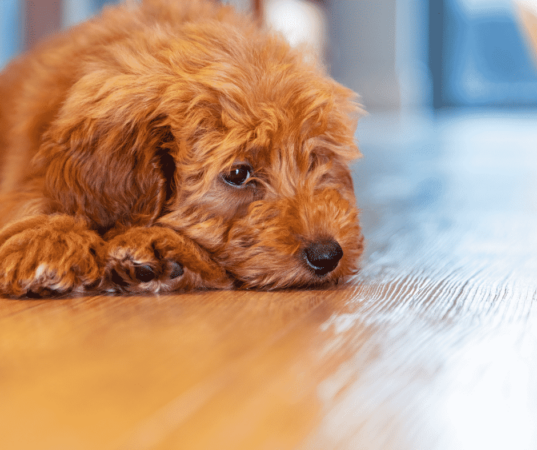
Dog laying on a hardwood floor looking a little lonely

Though it’s not always possible, you can call on others for help with your dog’s separation anxiety.

Friends and Family

When choosing someone to watch over your pet, opt for people who you know well. Ideally this would be family, friends, or a neighbor that is familiar with your dog and home already. They can visit your dog throughout the day, providing food, exercise and companionship.

Having friends and family participate in exercise, training and grooming sessions allow for bonds to form between them and your dog. Being around a person they trust will help to minimize their reaction to your absence.

Hire a Dog Sitter

Your friends and family might not always be available to look after your dog while you’re away. In this case, it might be time to introduce them to a professional dog sitter. Upon arriving, let the sitter introduce themselves to your pet and offer a treat; both dog and sitter will feel more relaxed and a positive association will develop between the two.

Explain all your dog’s needs to the sitter and write them down on a list. This should include a schedule for feeding, bathroom breaks, walks/playtimes, any medication given, and a list of emergency contacts. It’s important for dogs to get adequate play time.

Take Them to the Dog Hotel

If you’re going to be away from home for weeks at a time, whether for work or vacation, consider using a boarding facility. These kennels are built to take care of pets for an extended stay. Your dog will receive plenty of attention, interaction with other pooches, and top-notch dog care. Research what the best care centers are near you and get in touch with them personally before you make any decisions.

At Pet Butler, we understand that leaving your pet behind is hard. We know you want to give them the best care you can. That is why we specialize in caring for your pet’s special area by scooping up their waste. Find a local Pet Butler near you or call 1-800-PET-BUTLER to learn how we can make your pet’s life happier, healthier and cleaner.
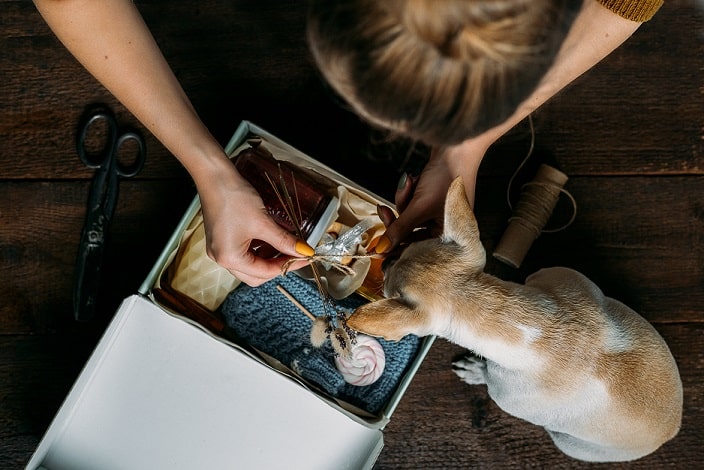
Chosen Dog Subscription Boxes By Dr. Lisa

Dog Activities Articles

Pet Dog Subscription Boxes By Dr Lisa

One of the more popular new trends among dog owners is purchasing “subscription boxes” for their pets. These subscription boxes have been seen in other industries like cosmetics, self-care, and fashion. Dog subscription boxes include items like toys, treats, chews, grooming supplies, and other pooch-related gear. While most of the popular subscription brands are high quality, it can be hard to know which services provide the best products for the best value. Dr. Lisa, our in-house clinical consultant, is helping you by taking a closer at leading subscription boxes to help you figure out which box is right for you and your dog. 

  1. BarkBox: The gold standard of pet subscription boxes comes from BarkBox. Its colorful themed bundles are each filled with 2 innovative toys, 2 all-natural bags of treats, and a chew. These packages are custom-made to fit your dogs’ size and dietary restrictions to ensure safe and happy playtime. Beyond its bright packaging and fun toy designs, BarkBox has also created the most cost-efficient subscription box. For a 12-month subscription, each gift box will cost just $23. Highly rated by places such as USA Today, Cosmopolitan, and Good Morning America, this should be your go-to option.
  2. Bark Super Chewer or Bullymake: If your pet is more sizeable or rougher on his/her toys, Dr. Lisa recommends looking at either Bark Super Chewer (a BarkBox spinoff) or Bullymake, a company devoted to making longer-lasting toys. Bark Super Chewer includes 2 tough toys, 2 bags of treats, and 2 chews at $45 for 1 month or as low as $30 for 12 months. Bullymake includes 2-3 tough toys and 3 bags of treats OR 4-5 tough toys only. It costs as much as $39 for 1 month and as low as $31 for 12 months.
  3. PupBox: This subscription is geared for puppies. Puppies are another type of dog that requires specially designed toys. As they grow, their behaviors and physicals will change – certain toys will be more appropriate at certain ages. With 5-7 items per box including training guides, treats, chews, and accessories, this subscription service tracks your pup’s age and size to constantly provide appropriate supplies. A 1-month subscription costs $39 and a 12-month subscription costs $29. It probably makes more sense to order around a 6-month subscription, as most puppies experience the largest development in that time period.
  4. Pupjoy: Yet another well-rated pet subscription box, Pupjoy has the best one-time price out of any of these products. At a flat rate of $30 per bundle, this choice is best for pet owners who are skeptical of subscription boxes or for people looking to give a cheaper pet-related gift. Additionally, shoppers who love their purchases can join the VIP (very important pup) club! With reduced prices, a rewards program, and a friend referral system, Pupjoy continues to sweeten the deal and lower fees. 


All of these pet subscription boxes follow a few trends: they offer toys, treats, and accessories, they are more cost-effective with longer subscriptions, they have high customer satisfaction, they have been vetted by established organizations, and they offer dietary and size customizations. These facts and features all point to the fact that subscription boxes are the best and most innovative method of shopping for your pets… by letting a professional do it for you! Most importantly, pet subscription boxes are a fun new way to stay in touch with your dog. At the end of the day, that’s what they are all about – to remind us that we have an obligation to be responsible owners and to make our pets happy. Giving them toys and treats are great starting points for building a strong, continuous, and loving bond. 


At Pet Butler, we understand what it means to want to provide the best possible care to your clients. That is why we have Dr. Lisa, our in-house clinical vet, to help us give you the best and right information for your pet. Also, when you hire Pet Butler, we remove all your pet’s waste from your yard everything – guaranteed. Learn more about the services we offer today!  

Heatstroke and Dogs

Pet Safety Articles

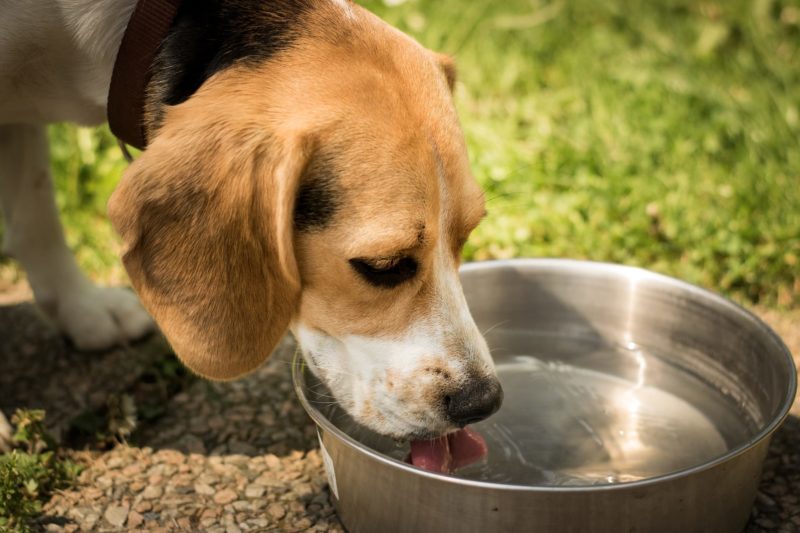
Dog drinking

With summer in full force and temperatures continuing to rise, responsible pet owners must once again monitor the climate’s effect on our pups. Covered in fur, our fuzzy little friends can’t sweat like us humans, and we often forget that their panting doesn’t always do enough to maintain a healthy body temperature – especially on long walks or during playtime outside. While generally not a problem, in certain scenarios and with certain types of dogs, overheating – also known as hyperthermia – can lead to heatstroke and some very deadly situations.

How Hot is Too Hot for a Dog?

Heatstroke, as described above, happens when dogs are unable to cool themselves properly, and usually occurs at internal temperatures around 106 degrees. Note, however, that anything above 103 degrees is considered abnormal or hyperthermic, and above 106 is considered lethal. Although those temperatures seem high, they are far from impossible and pose a very real threat to our puppies. If prolonged for enough time, heat can induce…

  • Unconsciousness
  • Extreme and random bleeding (due to reductions in coagulation)
  • Permanent brain damage
  • Potential organ failure

But don’t panic! There are a lot of ways to identify and reverse hyperthermia before it takes its toll.

Knowing the Signs of Dog Heatstroke

The first thing we need to do to stop heatstroke is to properly recognize when it’s happening. Besides the frightful symptoms already listed that could lead to a serious emergency, there are early stages of hyperthermia, such as…

  • Heavy panting
  • Excessive drooling
  • Lethargic or uncoordinated movement
  • Vomiting

Other less obvious signs include rapid chest expansions and discolored gums, which can range from a brighter red to a paler pink.

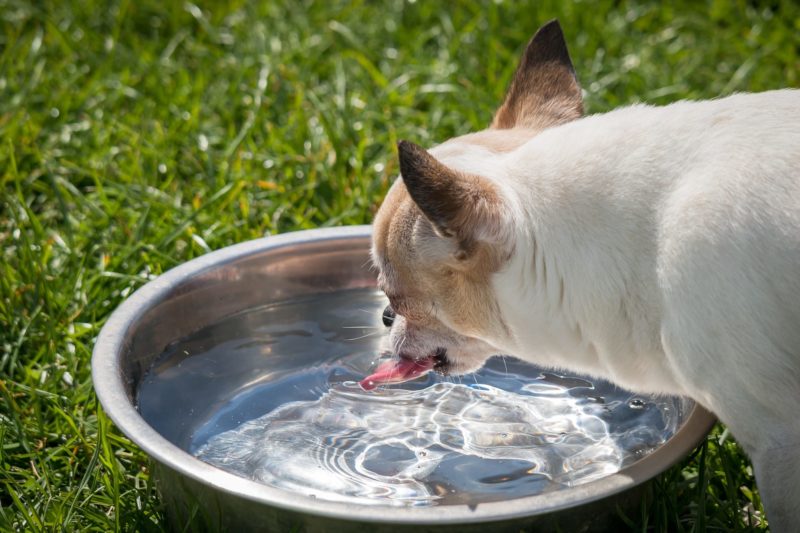
Chihuahua dog drinking water

All these symptoms should serve as a red flag and you should take the following steps:

  1. Discontinue whatever activities are taking place immediately.
  2. Next, find a cool place either indoors or outside with shade, water (cool, not cold), and enough space to lay down.
  3. Placing your dog near a fan is normally a good idea, and you should douse him/her with cool water (once again cool, not cold).
  4. It’s important to let your dog lower its body temperature slowly; otherwise, it could go into shock.

Never use an ice bath in this process. Once your dog begins to behave naturally again, take them to the nearest and most available vet. Most of the time, your pooch will have recovered safely, but it’s best to let a professional make sure just in case. As always, the sooner the better.

Preventing Heatstroke in Your Dog

An even better way to treat heatstroke, though, is to avoid it entirely.

  • Don’t leave your pet in a car on a hot day, even with the windows cracked
  • Don’t leave your dog outside for extended periods of time
  • Don’t play too much when there’s high humidity.
  • Be careful with using muzzles in hot temperatures because they can limit airflow
  • Remember: just because you’re comfortable doesn’t mean your puppy is!

We have very different tolerances for the weather, and your pup can’t vocalize their discomfort.

Don’t Let Your Dog Overexert Itself

Even more dangerously, sometimes dogs ignore their own intuition – whether to make us happy or to just live in the moment. In the past, highly active breeds have been known to collapse due to the heat, since they can become so distracted in whatever they’re doing. It’s better to watch out for them instead of accidentally allowing overexertion; this applies to all furry friends, no matter how in-shape or healthy they are. Lastly, be ready to give your dog water and rest at all times. The more prepared we are as owners, the safer your dog will be.

Dogs at Higher-Risk to Heatstroke

As far as risk on the individual level, there are some characteristics prone to overheating:

  • Less able dogs, either young or old, have less developed constitutions
  • Dogs with dark, long, or thick coats have more insulation
  • Brachycephalic breeds – bulldogs, pugs, and other pups with wide skulls and short noses, have a harder time breathing
  • Obese, sick, or medicated dogs can respond more negatively to hot temperature
  • Finally, dogs that have already experienced hyperthermia have weakened thermoregulatory systems

If your pet applies to one or more of these categories, take extra precautions when bringing them outside and engaging with them. It’s important that they still exercise daily – just be a bit more careful.

Summer is perhaps the best time of year to spend with our happiest family members – parks are open, swimming is a blast, and being outside is always a treat. Everyone, including our dogs, should treasure this time and enjoy it while we can. But along with the fun, a little bit of caution is a good idea, too.

Inside the Mind of Dogs

Dog Behavior Articles

dog mind

The first time our dogs sit, lay down, or roll over, many inevitable questions follow. How much more can they do? What else can they learn? How smart are dogs, and what really goes on inside those fuzzy little heads? Thankfully, the dog-world’s continued curiosity surrounding these ideas has led to a plethora of research and given rise to some remarkably interesting results.

How Do We Measure Dog Intelligence?

Before diving into this discussion, it’s important to clarify what “smart” really means. Truthfully, it’s difficult to formulate a specific definition. There are a variety of ways to evaluate our pets on how they perceive the world, and since many of these assessments often focus on a particular sense, certain tests might give some breeds an upper hand. An olfactory or auditory exam, for example, gives very positive results for hounds, whereas exams focusing on emotional receptiveness or social intuitiveness are less impressive. Therefore, depending on what qualities an owner is looking for, one breed might be “better” or “smarter,” than another.

What Makes a Dog Smart?

That said, general intelligence is an accepted idea by scientists studying our dogs’ brains; it is the collective determination of all the factors that make a dog “smart.” These factors range from cognizance about object permanence or knowing that objects continue to exist, despite a present disappearance, to realizing that time is linear and continuous.

Other notable qualities some dogs exhibit include the ability to read cues such as pointing fingers, the capability to express complex emotions like jealousy and playfulness, and the capacity for simple spatial awareness. And yes, many dogs can learn to observe their humans. While it’s questionable that they experience true empathy with their humans, they do understand our tone, our behavior, and our faces. They can detect when we are happy, sad, or mad, even though they do not necessarily process those feelings back. They do think about us, just in their own way. Of course, not all dogs develop these traits, nor are they all capable of such feats. But, with the help of researchers around the globe, as well as collegiate institutions and the Association for Psychological Science (APS), we know that our pets can understand a lot more than we previously assumed.

Dog Breeds Think Differently

With these attributes in mind, researchers have recognized some trends among dog breeds. According to leading dog psychologist Stanley Coren, the smartest dogs are…

  • Border Collies
  • Poodles
  • German Shepherds
  • Golden Retrievers
  • Doberman Pincers

These dogs are the Einsteins among the canine, and they thrive in more active environments because of it. In fact, breeds that are more energetic and social overall usually tend toward the smarter side of the spectrum, as they derive their brainpower from such a lifestyle.

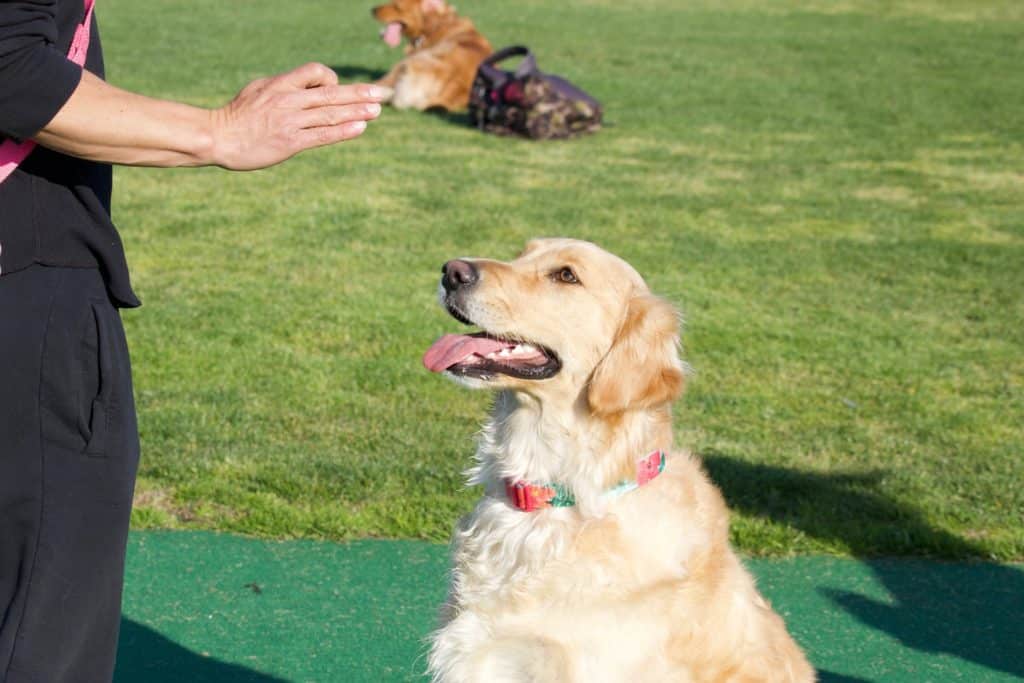
dog training

Another characteristic often associated with dog intelligence is their size. It has been found that, while small dogs are no dummies, the larger breeds are more intellectually gifted. Professor Coren approves this claim, as only one small dog can be found in his top ten smartest dogs: the Papillon.

Exercising Your Dog’s Brain

Although these trends have been proved in more recent history, that isn’t to say your dog isn’t smart. Moreover, it does not mean your dog has to stay as a duller furry friend. The best exercises to assist brain growth are self-explanatory:

  • Teach them new tricks
  • Use hand gestures alongside commands
  • Give them challenges

There are plenty of puzzle-oriented dog toys out there which healthily stimulate brain activity. There are even food bowls designed in this fashion – use them!

Start Young

These teaching mechanisms are preferable at a younger age. Puppies, just like babies, respond to teaching better than older dogs, and this applies in everything from socializing and obedience to tricks and games. Keeping them active and social, especially when they are puppies, will raise them to be smart little guys.

There is still a lot to know about how man’s best friend comprehends the world, and science is on the cusp of more and more revelation. But for now, it is at least satisfying to know that they think about humans and do have some unique talents. It is also pleasing to know that they’re more intelligent than a lot of other animals! Dogs have been proclaimed again and again as one of the smartest species on the planet, and although we are perhaps a little biased in giving them high praise, they don’t deserve any less. Besides elephants, dolphins, primates, and a few other species, they are one of the most intelligent mammals to walk our earth.

What to Know About Coronavirus & How it Affects Pets

Pet Health Articles

virus pets

Author – Dr. Lisa McIntyre

Veterinarians are often overlooked by the general public as a resource when it comes to health crises, however, we are a critical component in the One Health movement and work in close collaboration with other authorities, such as the World Health Organization and the Centers for Disease Control and Prevention. Case in point is the recent coronavirus outbreak.

What is Coronavirus?

Coronavirus is a type of RNA virus with a “crown” of protein spikes around its envelope, which acts as a shield, ensuring the stability of the virus and its ability to cause infection.

A lot of what we know about the recent outbreak of the strain, dubbed 2019-nCoV/COVID-19 (or SARS-CoV-2), is based on information we know about other coronaviruses, including the strains that cause Feline Infectious Peritonitis, as well as MERS-CoV and SARS-CoV in humans. (3)

How Does Coronavirus Spread?

Coughing, sneezing, and contact with aerosolized particles is the most likely way to acquire disease. (2)

Who is at Risk?

Humans and animals who have compromised immune systems due to age or existing disease are more susceptible to developing severe clinical signs resulting from infection with the COVID-19. Coronaviruses are most contagious when an individual is experiencing signs of the illness, such as coughing, fever, and difficulty breathing. (2)

Can Animals Get This Recent Strain of Coronavirus?

No – Currently, there is no evidence to suggest, nor do veterinarians have reason to believe, dogs and cats can become infected by 2019-nCOV or act as a reservoir for humans. (3)

Pet owners should maintain good hygiene, washing their hands well after contacting pets.

A Recent Case to Know About

A dog belonging to a coronavirus-infected individual in Hong Kong recently tested weakly positive for COVID-19. Oral, rectal, and nasal swabs were taken from this dog; the coronavirus was detected but actual infection was not confirmed. Environmental contamination could have been the cause of the weakly positive test. There is no evidence to suggest that cats and dogs can host 2019-nCoV or act as a reservoir for humans. (4)

Can Animals Spread Coronavirus to Humans?

No – It doesn’t appear that 2019-nCoV “jumps species” readily or is zoonotic, though handling of animals while ill is discouraged. (3)

pet dog

Individuals who have confirmed cases of 2019-nCOV should restrict contact with other mammals, including pets, until cleared of infection.

All pet owners should maintain good hygiene, washing their hands for 20 seconds or more after contacting pets or surfaces routinely handled by the public.

If You Have Pet Health Concerns

If there are any changes in the health condition of your pets, advice from veterinarians should be sought as soon as possible.

If you do suspect your pet has been in contact with an individual exposed to 2019-nCoV and has become ill, contact your veterinarian prior to bringing your pet to a public place such as a clinic. As with most novel diseases, new information is gathered daily and is subject to change. (3)

The History of Animals & Coronavirus

The Viruses

  • Coronaviruses belong to the family Coronaviridae. Alpha- and beta-coronaviruses usually infect mammals, while gamma and delta coronaviruses usually infect birds and fish. (3)
  • The genetic code of this recent strain resembles a coronavirus which infects the Horseshoe Bat, though currently the main route of new infections appears to close contact with other humans and their secretions. (3)

Veterinarians and Coronaviruses

  • Veterinarians have a long history of diagnosing and treating strains of coronavirus in domestic animals such as dogs, cats, and birds.
  • Our patients are often the literal “canaries in the coal mine”; our experience, in everything from sequencing to managing coronavirus outbreaks, is critical to minimizing the global impact of COVID-19.

Types of Canine Coronaviruses

CCoV (Gastrointestinal)

  • Canine enteric (gastrointestinal) coronavirus (CCoV) was first identified in 1971.
  • CCoV is found worldwide and generally causes a mild to severe, self-limiting diarrhea and anorexia in affected dogs.
  • It is rarely fatal and is spread via a fecal-oral route; some dogs shed the virus without exhibiting signs of illness.
  • Shedding of CCoV in the stool occurs most significantly 16 days post- infection and then intermittently thereafter.
  • Puppies 5-12 weeks are the most susceptible population, as maternal antibodies wane and prior to vaccination.
  • Dogs should be vaccinated for CCoV during their series of “puppy shots” and annually thereafter.
  • There is no treatment other than supporting the dog with fluids and good nursing care as well as treating any concurrent bacterial diseases such as Campylobacter or Clostridial infections.
  • CCoV vaccines are NOT protective against human respiratory variants of coronavirus, which will likely take 18 months or more to develop.

CRCoV (Respiratory)

  • CRCoV is an unrelated canine respiratory coronavirus discovered in 2003.
  • It is genetically most similar to a bovine (cow) coronavirus and the coronavirus that causes the common cold in humans.
  • It spreads via close contact among dogs exhibiting signs such as coughing, sneezing, and watery eyes.
  • Along with several other pathogens including Bordetella Bronchiseptica and parainfluenza, it has been implicated in causing “kennel cough”.
  • There is no vaccine for this strain of coronavirus and respiratory signs are usually mild and resolve in 14 days.

When & Where did the Recent Outbreak Begin?

The first cases of COVID-19 were reported in December 2019 in Wuhan City, Hubei province, China; reports suggest a seafood and animal market may have been ground-zero for the epidemic. (1)

How Do I Avoid Infection?

If possible, stay away from infected individuals or those with respiratory symptoms by a distance of at least 6 feet. (2)

Coronaviruses are not particularly hardy in the environment, meaning its particles do not survive on surfaces or in the air for long periods of time. This makes proper hygiene essential in controlling the spread of disease. (2)

How Can I Help Contain the Spread of Coronavirus?

  • Hand-washing with soap and water
  • Staying inside if you are ill
  • Disinfecting surfaces
  • Staying clear of symptomatic humans and animals
  • Avoiding touching your eyes, nose and mouth
  • Cooking all animal products

hand washing

Unfortunately, anti-viral treatment and an effective human vaccine are not yet available.

Are Face Masks Helpful?

Face masks are helpful in containing the secretions expelled by infected individuals. However, the best face masks are a special respirator mask called a N95. It is not readily available and is not the same as a standard surgical mask which protects a sterile surgical field from fluids expelled by the surgeon. (3)

What is the Current Status of the Recent Coronavirus Outbreak?

Given the sensitivity of the changing data, the most up-to-date information and advice on human infection can be found on the WHO (https://www.who.int/emergencies/diseases/novel-coronavirus-2019) and the CDC websites.

The most up-to-date information related to animal health is available at https://www.oie.int/scientific-expertise/specific-information-andrecommendations/questions-and-answers-on-2019novel-coronavirus/.

  1. https://www.avma.org/blog/what-do-you-need-know-about-coronavirus
  2. https://www.oie.int/scientific-expertise/specific-information-and-recommendations/questions-and-answers-on-2019novel-coronavirus/
  3. https://www.usatoday.com/story/news/nation/2020/02/28/coronavirus-dogs-covid-test-positive-hong-kong-patient-pet/4903014002/
  4. https://www.sciencedirect.com/topics/veterinary-science-and-veterinary-medicine/canine-coronavirus

About the Author – Dr. Lisa McIntyre is a practicing veterinarian and business owner since 1999.

Find a Pet Butler 800-Pet-Butler