The Difference Between Service, Therapy, and Emotional Support Dogs

Dog Behavior Articles

Support Dogs

While it wouldn’t hurt to have my dog bring in a steady paycheck, her weekly job at hospitals, elementary schools, and assisted living facilities brings untold benefits to the humans with whom she interacts. The joy I receive and the affection she gets from these strangers who are now friends make her job as a therapy dog the best around. Luna is perfectly suited for therapy work. She’s gentle, intuitive, doesn’t bark, is non-reactive around other dogs, and loves nothing more that to receive hugs and positive reinforcement. Therapy work requires a special certification and some specific training and de-sensitization to the sounds of IV pumps beeping, dropped bandage material, or the clatter of wheelchair noise. Some of these “tricks” can be taught, and others are just a part of her genetic makeup. Other pups hard at work and with a special skill set include those that act as service dogs and dogs enlisted as emotional support animals.

What makes these dogs capable of doing their unique jobs and who do they serve?

Emotional Support Animals

Emotional support animals can be any species: dog, cat, chicken, pony, or bird.

They don’t require a special test to receive the designation but must provide their owner therapeutic companionship and deemed necessary by their owner’s physician. Most emotional support animals are strongly bonded to their humans, are obedience trained, and have a calming presence which relieves distress.

Where They’re Permitted

These pets are legally allowed to accompany their owners on airplanes and owners can qualify for no-pet housing if they have a condition requiring their emotional support animal to be present. Otherwise, animals are not permitted access to pet-free public areas and businesses. Because the term “emotional support animal” has been abused over the last several years, housing authorities and airlines often require written documentation of a psychological or emotional diagnosis from a medical professional.

Therapy Dogs

Therapy dogs are enlisted to provide comfort and affection to people in a wide range of facilities including hospitals, hospice centers, schools, and in crises like natural disasters or to relieve other traumatic stress such as during funerals or acts of violence. It has been shown that contact with animals lowers humans’ blood pressure and heart rate, reduces anxiety and increase endorphins and oxytocin – the feel-good chemicals released by the body.

Certifying Therapy Dogs

Therapy dogs require obedience training and an innate gentleness, acceptance of strangers and other pets, and enjoy physical contact. The temperaments of Golden Retrievers and Labradors are often well-suited to therapy work though any breed or mix may possess the appropriate personality for job.

Prior to each therapy visit, handlers must ensure their pets are current on vaccinations and zoonotic disease screening and are clean and well-groomed. Testing and certification are offered through several regional and nationwide organizations including The Bright and Beautiful Foundation, Pet Partners, Alliance of Therapy Dogs, and Therapy Dogs International. Contact the organization to determine what skills your dog must possess to pass the certification test and when testing is offered near you.

Service Animals

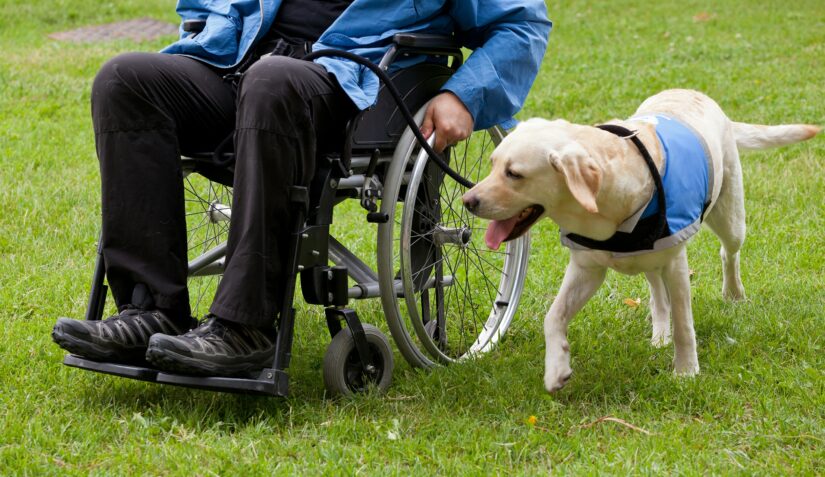
Unlike emotional support dogs and therapy animals, service animals like dogs and miniature horses have unrestricted legal access to public spaces and businesses as designated by the Americans with Disabilities Act and local governments. While it is legal for someone to ask if the pet is required due to a disability or what tasks the service dog can perform, they may not ask about the nature of a disability.

Service Dogs vs. Service Animals

Service dogs have a specific job, rigorous training, and certification which permits them to aid their human handler with tasks particular to the person’s disabilities. Service animals are employed to alert an owner when…

  • Blood sugar is low
  • The onset of seizures is eminent
  • Provide room checks for someone with PTSD
  • Enable someone with vision loss to cross a street

Many service dogs are trained by Canine Companions for Independence, K9’s for Warriors, and Guide Dogs for the Blind and then adopted by someone with a disability though they can be trained by the owner or another professional dog trainer. Service dogs must be leashed, harnessed, or tethered and strangers should never interrupt a service dog when they are working or without owner’s permission. Service dogs are intelligent, highly trainable, intuitive, loyal, and even-tempered.

While it may seem that the terms emotional support animal, therapy dog, and service dog are interchangeable, make no mistake, these dogs have very different training and certification requirements, legal accessibility rights, and jobs they perform.
What Does My Dog’s Urine Mean?

Pet Health Articles

dog urine

Naturally, a follow-up to our ever-popular poop blog would be about the wonders of the urinary system.  Specifically, what do all the smells, colors, volume, method, and frequency of your pet’s urine excretion mean about their overall health and behavior? There is a wide variation in “normal” pet urination, from amount of water consumed (and thus presumably urinated), to the color of urine and everything in between. Let’s cover a bit about what is typical and how to know if your pet’s urinary system has gone haywire.

FAQs About Dog Urine

Urine is constantly being formed by the kidneys when the body’s blood is filtered. The urine then and travels through tiny tubes called ureters from each kidney to the bladder. When the muscular bladder contracts or becomes overly full, urine is forced down the urethra (which courses through the male’s prostate gland), and out a small opening in the male or female sex organs. Blood volume, hydration, and thus urine volume has a lot to do with how much water your pet has consumed; normal dogs drink about an ounce per pound of body weight a day.

How Much?

This translates into 10-20 ml urine produced per pound per day. Smaller and younger dogs tend to be on the higher end of this number.  For example, a 10-pound dog may urinate a cup of pee a day! Dogs that urinate frequently but are straining to do so with minimal urine output and discomfort undoubtedly have inflammation and/or obstruction in the urinary tract. Contact your veterinarian immediately if your pet is experiencing these symptoms.

How Often?

For a puppy, it’s not unusual to have to urinate every 3-4 hours when they are very young. Healthy adult dogs need to urinate at 6-10 hour intervals, though some rock stars can hold their urine for a longer duration if you are stuck in traffic.

How?

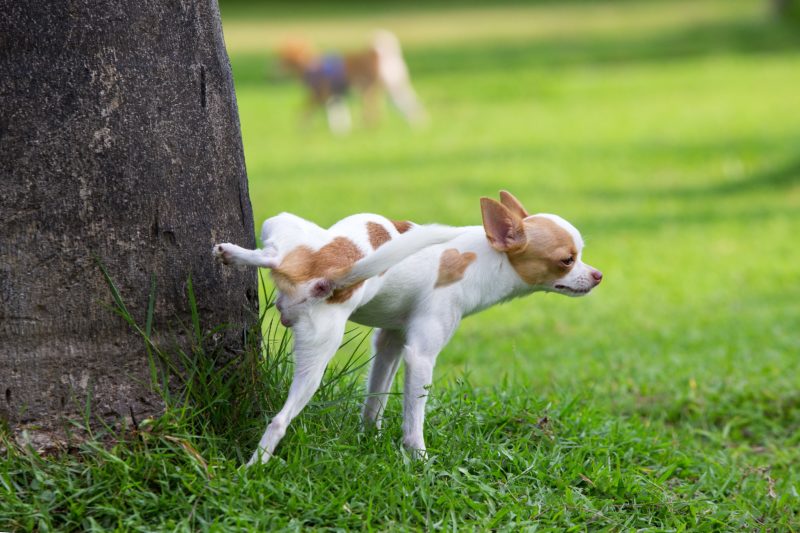
Most pups, some neutered males, and most adult females squat to relieve themselves. Lifting the leg to pee is normal for adult males in order to eliminate and to mark territory in males and some females. Marking behavior can occur normally, though disruptively, at every tree during a walk. Marking is intentional and lasts just a few seconds while your dog is seemingly alert and happy.

What Does Healthy Dog Pee Look Like?

A well-hydrated dog should be producing light yellow colored urine that has just a slight ammonia smell and be asking to potty at regular, but not too frequent, intervals throughout the day.

Because we’re all special snowflakes, there exists a spectrum of normal when it comes to pup pee and poop. It’s best to monitor your pet and consider anything outside of their typical behavior and urine odor, color, volume, or frequency a sign to call the vet. Many times, your veterinarian will request you present them with a first morning urine sample. This entails chasing your pet outside before coffee with a ladle or small dish to catch a teaspoon of pee.  What fun! Other methods of urine collection include allowing your veterinarian to pass a urinary catheter or to use a fine needle to extract urine through the bladder wall for a sterile sample.

What Does My Dog’s Pee Color Mean?

What should you be watching for in your pet’s pee that may indicate a health problem? Urine that is especially:

  • Dark
  • Orange
  • Red, with a visible blood clots
  • Greenish tint

These can all indicate troubles such as liver disease, muscle breakdown, infection anywhere in the urinary tract or just outside the urethral opening, tumors, or stones.

Clear Urine

Especially clear urine can be an indication that your pet is over-consuming water, has an endocrine disorder such as Diabetes or Cushing’s Disease, or the kidneys aren’t functioning at their full capacity and unable to normally concentrate urine.

Why is My Dog Peeing in the House Again?

Should you be concerned if your previously housebroken puppy or dog starts peeing in the house? Can I get a “yes, ma’am!”?

  • In some cases, especially with juvenile or senior pets, they may have been incompletely housebroken or are having symptoms of cognitive dysfunction syndrome or senility changes. Behavior problems and canine dementia cannot be diagnosed without working up other medical disorders first.
  • It’s possible your puppy has an infection, a congenital defect in the urinary system, or stones.
  • Senior pets may have a medical condition associated with the urinary tract or even arthritis which makes going down the deck stairs to get to the yard or lifting their leg painful. You might “hold” it a bit longer if you were hurting too!

It’s important to differentiate having an intentional pee accident from unintentional urine leakage or incontinence. Many times, the volume of urine released by an incontinent dog is smaller, happens at rest and in a reclined position, and your dog may be completely unaware the accident is happening. In older pets, relaxation of the sphincters or urine overflow caused by a neurological disease may be to blame.

A urine test, bloodwork, and imaging by your veterinarian may be needed to determine and treat the cause and get you and your dog back on the right track!

Signs Your Pet is in Pain

Pet Health Articles

Pet butler pet wellness

One of the questions I get asked most as a veterinarian is, “how do I know if my dog is in pain?” Much like a pediatrician who relies on non-verbal clues to indicate a patient’s health status, veterinarians become acutely aware of both mental and physical pain by observing a dog’s body and behavior. Common conditions include arthritis pain in senior pets, gastrointestinal pain in puppies who have ingested a toy, or the mental pain of separation anxiety in a dog who had been previously neglected. Pain is a complex topic, but we know “mammals share the same nervous system, neurochemicals, perceptions, and emotions, all of which are integrated into the experience of pain”, says Marc Bekoff, evolutionary biologist and author.

Understanding a Pet’s Pain Scales

Because when we know better, we do better, and scientists including veterinarians have developed various pain scales for animals. Using these scales to quantify pain in conjunction with a physical examination and observation, we can address pain with a combination of medications, laser therapy, massage, acupuncture, and emotional support among many modalities. Dog owners can perform a physical assessment and reference these scales to determine whether their pet is in pain and needs medical attention. On a scale of 0-5, anything above a 1 justifies more than a “wait and see” approach, and you should schedule a visit with your vet.

How to Examine Your Pet

Examination of your pet should include a “nose to toes” approach, and I recommend performing one regularly. Because pets have different levels of pain tolerance, reactions to pain, and temperaments, know your dog’s baseline, or “normal”.  Do they regularly react when you touch their feet? If the answer is yes, pulling away a foot during an exam may not be a good pain indicator for your pet.

  1. Start at your pet’s nose and make sure there is no drainage or change in shape.
  2. The same should hold true for the eyes which should be clear and bright with no squinting.
  3. Ears should also be clean and free from discharge and odor.
  4. A dog’s mouth shouldn’t have a foul smell (know your pet’s normal smell) indicative of periodontal disease (ouch to tooth pain!) and the gums should be bubblegum pink.
  5. Manipulation of the limbs, neck, and spine should not illicit a response and your dog should bear weight equally on all four feet.
  6. When putting pressure on the belly, wincing or arching of the back can indicate pain.
  7. Check the pads on your dog’s feet – Scrapes and cuts are common in these areas and animals typically will endure the physical pain of walking on the foot to the emotional pain of not going on their regular walk.

Not all lumps and bumps are painful but bring any new masses to your veterinarian’s attention. If you have a stethoscope, know your dog’s resting heart rate. A persistent elevation may be due to discomfort. Likewise, panting or an increased respiratory rate is common among dog’s in pain.

Know a Pet’s Behavioral Cues

Behavioral clues that your pet may be in pain include anything outside of their normal.

  • Is your dog’s appetite decreased?
  • Do they seem restless or have difficulty sitting or standing?
  • Do they no longer jump on the bed or are they sluggish on walks?

Not all dogs will whimper, cry, or groan when they are hurting, though some, like huskies and other opinionated breeds, do. Similarly, I’ve observed dogs bearing full weight on a fractured bone, only responding to direct manipulation of the area while others continue to have phantom pain or anticipatory stress walking on a completely healed leg.

Excessive biting or grooming of a painful area is another sign your dog may need medical attention. More subtle clues can be physically distancing them from others, lack of interest in their surroundings, signs of aggressive behavior, or a “worried” facial expression with droopy ears, arched brows, and darting eye movements. A hunched posture, tense body position, or a “praying” pose with the rear in the air and front legs extended are often seen in dogs with belly discomfort.

Know that you are not alone when supporting your best friend. Asking neighbors who might not see your dog everyday for their opinion on your dog’s body condition or movements. Sometimes, we normalize our own pet’s condition because we are constantly interacting! Your veterinarian can also provide with resources to identify and address painful conditions. Because pain can become a vicious cycle if not treated, be your dog’s best advocate and speak for them when they can’t.


1 https://www.nationalgeographic.com/news/2016/12/animals-science-medical-pain/

2 https://www.veterinarypracticenews.com/download-these-pain-scales/

Cold Weather Safety for Dogs

Pet Safety Articles

Cold Weather Dogs

When the fall season gives way to winter, we eagerly bust out our winter jackets, hats, gloves and sweaters to stay warm. We avoid going outside for extended periods of time, especially in freezing temperatures, and we bunker down in our homes. Although the weather change might be hard to get used to, these shifts in weather are felt more acutely by our dogs who can take longer to acclimate to outdoor changes.

Cold Tolerance for Different Breeds

Some Northern breeds like the Akita, Husky, Alaskan Malamute and Keeshond are built to withstand the arctic chill; their dense coats and furry feet act as insulation and help them navigate icy terrain. Others, like the Chihuahua, Poodle and Dachshund have thin coats and less muscle mass.

For smaller breed dogs, their anatomy keeps them closer to the ground where they come into direct contact with ice, snow and de-icing salt. These breeds are especially sensitive to exposure, and if their human owners are feeling chilled, you can bet they are too.

Tips for Dog Safety in Cold Weather

While we can turn up the heat, throw on some extra layers and break out our waterproof boots, our dogs need our help to keep safe in cold weather.

Add Extra Layers

One way to ensure our canine friends maintain a normal 101.5-degree Fahrenheit body temperature is to add an extra layer of fluff or insulation. Thin-skinned, delicate breeds such as the Italian Greyhound can use a coat or sweater that protects the belly and torso. Excessive hair between a dog’s toes can be trimmed to avoid slipping on surfaces and to limit the snowballs that form in between the toes. A well-groomed pooch can also be outfitted with booties for insulation and to provide traction on slippery surfaces. Most dog booties are elastic or have Velcro fasteners and can be laundered. Wiping down bellies and feet after coming in from the outdoors goes a long way in maintaining optimal health.

Limit Outdoor Playtime

Acclimating our dogs to the colder temperatures is best done by limiting outdoor playtime to 5-10 minutes and extending that period gradually.

Signs a dog is too cold:

  • Depression
  • Heat-seeking behavior
  • Shivering

As their internal temperature drops and they become hypothermic, it’s possible for a decreased heart rate, coma and even death to ensue. Dogs are more susceptible to frostbite on delicate skin such as the ear tips and tail. The most noticeable change in affected areas is a color change from pink to white or blue-grey.

Extra Care for Young and Senior Pets

Caring for senior or young pets when the weather is cold may mean keeping them indoors or providing a warm, cozy shelter. These dogs are less able to regulate body temperature, might be lower to the ground resulting in belly exposure to the snow or have compromised immune systems leaving them to feel physiologically stressed.

Temperature Safety Rules

As a rule, most dogs are comfortable at temperatures above 45 degrees and don’t likely need a coat. Below 32 degrees, most dogs will be feeling an uncomfortable chill. As the thermometer dips under 20 degrees (be sure to consider wind too), cover your pet when outside unless they happen to be an Arctic breed.

Maintain a Healthy Nutrition

Lastly, nutrition and hydration should be carefully considered when the weather is cold. Keeping your home’s humidity level high can help pets feel warmer and decrease the risk of cracked pads and dry skin. Dehydration is a concern in wintertime just as it is in the summer. Some dogs may drink more water to offset the lack of humidity in the air. Always provide ample fresh water to their bowls throughout the day. You can even give them ice cubes to snack on and opt for a heated water bowl if necessary.

If your dog is active in the snow or spends a lot of time outdoors, they utilize more calories to maintain their body temperature. To care for your dog in the winter, you might find additional kibble is necessary to maintain body weight and optimal health.

Paw Balm Recipe

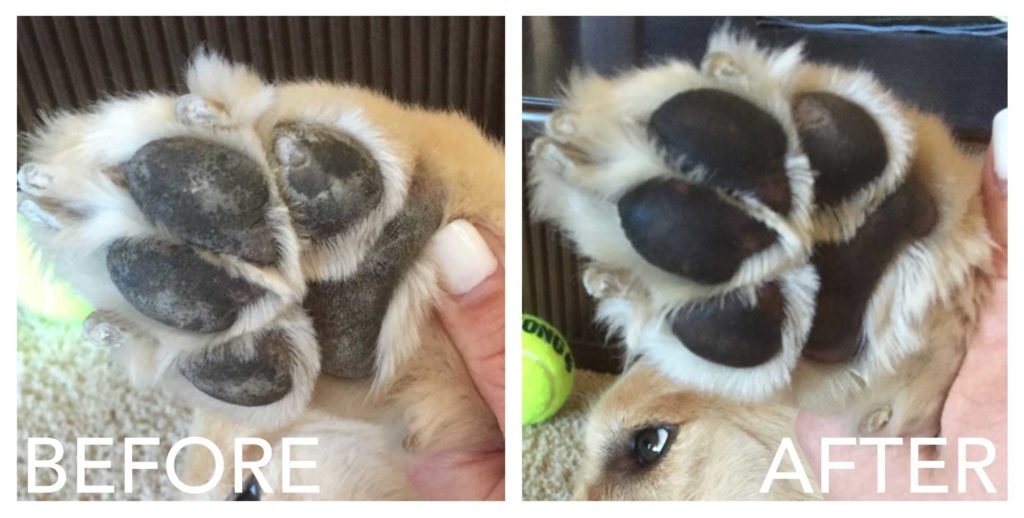
Paw balm works as a preventive treatment or to help soften dry paw pads and noses during the winter.

paw balm

What You Need:

  • 21-24 standard lip balm tubes OR 6 1-oz. tins
  • A small digital kitchen scale, optional
  • Small pot or double boiler

Ingredients:

  • 2 oz. (approx. 2 tbsp.) olive, sunflower, or sweet almond oil
  • 2 oz. (approx. 2 tbsp.) coconut oil
  • 1 oz. (approx. 1 tbsp.) shea butter
  • 4 tsp. beeswax

Instructions:

  1. In a small pot or double boiler over low heat, melt the oils, shea butter and beeswax. Stir continuously until all is melted and well blended.
  2. Carefully pour the mixture into lip balm tubes and/or tins.
  3. Let them cool on the counter until they’ve hardened.
  4. Cap and label.
  5. Keep away from extreme heat.
  6. Apply the balm as a preventive treatment or to help soften dry paw pads or noses.


At Pet Butler, we want your dog to enjoy the outdoors while remaining safe and healthy. You can focus on quality outside time with your pup, and we’ll take care of their waste removal on a weekly, every other week or monthly basis.


Reduce Pet Anxiety on New Year’s Eve

Dog Behavior Articles

pet anxiety

No time is more fun (and stressful) than the holiday season. Super-charged with anticipation, the rush of Black Friday shopping, and capped by the ball drop as we ring in the new year, our bodies are in physiologic overdrive. Our pets also react to stress and the irregular holiday schedule with elevated heart rates, cortisol dumps, changes in blood pressure, and increased anxiety. Regular exercise and meditation help humans release natural feel-good chemicals that can reduce the effects of holiday strain.  And we can assist our pets do the same by giving them a festive, safe, and stress-less New Year’s celebration with some safety essentials and having a coping strategy to guide them into the new year!

Establish Safe Spaces

First, make sure your pet has a calm place in which to retreat such as a kennel or a den created in a cozy bathroom or laundry room.  Loud noises which accompany New Year’s Eve celebrations such as fireworks, balloons popping, and the screech of noisemakers can startle dogs. Owners often think of their fearful pets during a thunderstorm or 4th of July celebration but forget about the excessive holiday cheer.  Offer the same safe space with insulated walls and few exterior noises or the comforting pressure of a thunder shirt during the chaos. Ask “Alexa” to play Classical Music for Pets.  She will happily oblige (I recommend Canon in D).

Partygoers may inadvertently leave exterior doors open or meander into unmarked rooms looking for the lavatory or another bottle of champagne. Make sure your pet is secure in their space and their haven is clearly marked with a hanging sign reading DO NOT DISTURB.  If the ringing doorbell triggers your dog, you may want to indicate guests to knock first or just walk right in if your pet is behind closed doors.

Get Active Before the Festivities

Other ways to assist your pet navigate the transition into the new year include giving them room to run prior to being kenneled. A good romp in the snow, a game of fetch, or a pre-party outing at the dog park can work wonders at reducing energy and tension. Natural stress reducers include not only exercise but calming pheromones such as Adaptil collars and plug-ins, Composure Pro supplements containing L-tryptophan and L-theanine, and supplements containing valerian root or Bach flower essence. If your dog is overly stimulated and anxious by the time New Year’s Eve rolls around (and aren’t we all) talk to your veterinarian about prescription medications to provide relief. It is never in your pet’s best interest to ignore symptoms of stress; they rely on us to provide a safe environment and meet all their physical and emotional needs.

Keep Human Treats Out of Reach

Noisy revelers often snack on chocolatey desserts or drink alcohol while celebrating. Make sure all treats and snacks are out of reach. Alcohol consumption by dogs, even just one mixed drink, can lead to depression, an unsteady gait, vomiting and in some cases, a serious drop in blood pressure and body temperature. As marijuana consumption, especially in the form of edibles, becomes more commonplace, pet exposure has substantially increased. The National Animal Poison Control Center educates owners on the side effects of ingestion which may include drowsiness, unsteadiness, a decrease in heart rate, and possible seizure activity.  If you suspect your pet has consumed any known toxins such as alcohol, chocolate, marijuana, human medications, or foods containing raisins or sugar substitutes, call your 24-hour veterinary clinic or the APCC right away at (888) 426-4435.

As I get older, the thrill of staying up until midnight has diminished. Instead, I like to snuggle on the couch with my pups, watch a movie, share a few bits of popcorn or pretzels, and give them some extra love.  My furry family appreciates it!

Maintaining Pet Oral Health and Benefits of Anesthesia-Free Dentistry

Pet Health Articles

PBC Blogs 1500 × 1200 px) (7)

Most of us know the importance of regular dental care for ourselves and our human family members. We are taught, at a young age, to brush at least twice daily, using circular strokes along the gumline to loosen debris and to floss in-between our pearly whites to clear the remnants of lunch from between the teeth.

Plaque, that disgusting film made up of bacteria and food particles, can turn into tartar when left undisturbed and exposed to the mineral components of saliva. Not only does the presence of tartar and plaque lead to terrible breath and unsightly stains, but serious health complications such as gum recession, inflammation, bone loss, and potentially tooth loss if left unmanaged. An angry, unclean oral cavity can act as a portal for bacteria invaders, traveling through the tiny blood vessels in a dog’s mouth causing disease in organs such as the heart, kidney, and liver.

Dog’s Mouths are Cleaner than Humans

Not true! Pets’ mouths are no different than ours, requiring daily brushing using products with antimicrobials, such as chlorhexidine, or the use of abrasive chews. Some dental treats, like Oravet, contain a product called delmopinol which provides a protective barrier on teeth to prevent bacteria from adhering. Oral rinses are also available to keep our pets’ mouths healthy.

But, just like humans, most pets will require professional cleaning, scaling, and radiographic examination of the tooth and surfaces below the gumline.  You can’t treat what you can’t see, and because over 80% of dogs older than 3 have active dental disease, a veterinary-supervised dental evaluation and treatment plan is essential.

Anesthesia vs. Non-Anesthesia

Because dental care under anesthesia for your best friend can be cost-prohibitive and just downright scary, anesthesia-free dental cleanings are becoming one popular option for eliminating calculus and plaque. While routine scaling above the gumline may help improve the appearance of your dog’s mouth, be sure you are aware of the risks and limitations of anesthesia-free dentistry. The American Veterinary Dental College, American Veterinary Medical Association, and the American Animal Hospital do not support this cosmetic procedure.

Here are a few reasons why:

  • It doesn’t address periodontal disease and gingivitis, or inflammation of the tissues around and under the gumline, where most oral health problems exist. Anesthesia-free dental cleanings give dog owners’ a false sense of security.
  • Scaling causes small defects in the tooth enamel from manual scraping, which are prime spots for adherence of future oral bacteria, accelerating plaque and tartar accumulation leading to more oral disease. In humans, we have those micro-fissures eliminated by a polishing step which isn’t possible in a wide-awake pet.
  • “Anesthesia-free” means your pet isn’t intubated and their airway is not protected. Pets can’t be told not to swallow or move during the procedure, which can lead to aspiration of the loosened oral bacteria and tartar and possibly pneumonia. An endotracheal tube protects the pet’s airway while supplying oxygen and gas anesthetic.
  • Intraoral X-rays can’t be completed while your pet is awake. Tooth root fractures, abscesses, and even certain cancers can all lurk below the gumline.
  • Pets can be subjected to fear and pain as large pieces of tartar are manually cracked from the surface of the tooth leading to aggression or fearful behavior next time the pet is approached to examine the mouth or touched around its head. It can be hard for animals to remain perfectly still during the procedure and it isn’t uncommon to accidentally scrape sensitive gum tissue with the scaling instruments.

Anesthesia is incredibly safe when performed by a competent veterinary team and your pet has proper monitoring. Most problems that occur under anesthesia are due to undiagnosed, pre-existing diseases such as cardiomyopathies or bleeding disorders.

A thorough pre-op exam and blood testing can help determine if your pet isn’t a candidate for anesthesia. I have countless stories of senior pets who had periodontal disease and extractions detected and performed under anesthesia; pet owners tell me by eliminating disease and painful teeth their pets were playing and eating like puppies again.

It’s our responsibility as pet parents to make sound medical decisions to keep our dogs healthy; with a toolbox including chews, pastes, rinses, and a veterinary-directed oral care plan, we can do our best to keep their mouths in tip-top shape!

How To Choose the Right Dog for Your Family

Pet Adoption Articles

Picking Your Family Dog

Round, lean, short, tall, active, sedentary, long-haired, wiry-haired, fuzzy-faced DOGS! It’s incredible how creatures in the same species can all express so many different physical and mental characteristics, from coat maintenance requirements to activity and intelligence levels. There is not a one-size-fits-all pet; as families are unique, so are the various dog breeds and their suitability for different living situations.

What is the right dog breed for your family?

To choose the best dog to bring home to your nest, it’s best to understand a bit about each of the 7 classes of canines and what traits are common among them.

Sporting Breeds

This class includes retrievers, such as the Golden and Labrador, as well as spaniels, pointers, and setters. About 25% of purebreds registered with the American Kennel Club belong to a sporting breed. They are known to be hardy dogs, capable of flushing out fowl and responsive to training due to their high level of intelligence and desire to please.  These dogs tend to be gentle in nature, which makes them ideal companions for families with young children, as well as service dogs.

Because most are highly active, don’t expect lazy Sunday afternoons when you’ve got a setter or spaniel by your side.  In addition to the more intense grooming needs of longer-haired breeds, they thrive when given a job like retrieving a ball, stick or romping in the woods using their noses to pick up a scent.

Non-Sporting Breeds

This class includes a wide variety of shapes, sizes, and personalities. It’s more than likely you’ll find a dog that meets your family’s needs.  Looking for a dog that sheds minimally but is highly intelligent and great with kids and adults alike? Look no further than a poodle! It’s no wonder we see so many -oodles these days!

French bulldogs are adaptable, playful, smart, and adorable at under 28 pounds. Just be sure you seek a reputable breeder that strives to maintain healthy skin and a longer snout in their lines.

The mid-size Dalmatian was once used to guard horses and to clear paths in the days of horse-drawn fire engines.  They can be sensitive and aloof but are also known to be energetic, goofy, playful, and active shedders.

Working Dogs

This class is composed of dogs that were bred to perform tasks such as pulling sleds, guarding property, or to be used in police work. Boxers, Mastiffs, Huskies, Dobermans, and St. Bernards all belong in the working dog group. They tend to be large, athletic, occasional droolers, loyal, and fearless. These dogs aren’t suitable for apartment living, those with spotless upholstery, or families with young children.

Herding Dogs

This class includes Collies, German Shepherd dogs, and Australian Cattle dogs. Herding dogs are known to be confident, courageous, and extremely intelligent.  Collies and Shepherds are also fearless shedders! These dogs live to do a job like rounding up small children (not always desirable) and need mental and physical stimulation. If you love obedience, nose work, or agility classes, herding dogs may be the perfect choice for your family.

Hound Dogs

This class of dogs has one thing in common: a natural ability to provide hunting assistance with their exceptional nose or speed. Hound dogs include Beagles, Bloodhounds, Basset hounds, and Greyhounds. Beagles like to welcome family members home in an ebullient way! Notorious for making loud braying sounds, they hunted in packs and are companionable, happy-go-lucky pups great for families who don’t mind the noise but value loyalty and their friendly nature.

On the other end of the spectrum are the hounds such as the Afghan and Irish Wolfhound, gentle giants who can grow up to a pound a day during their first months as pups. (5) Greyhounds, surprisingly adaptable to small space living, may not co-exist well with small children or other furry creatures as they have a high prey-drive, particularly those bred for racing. 

Terriers

This class is best known for its easy to maintain haircoats and independence. They can be stubborn, energetic, and intolerant of other dogs, but are incredibly friendly and loving. The most famous terrier, the Soft Coated Wheaten terrier from the Wizard of Oz, is known to shed minimally and be a lovable family member. The alert and playful Scottish terrier are among those best suited for modern family living.

The Toy Group

Represented by the smallest members of the canine species, ranging from 4-16 pounds, and by those with the longest average life expectancy.  Some pups such as the Pomeranian, low shedding-Maltese, Miniature Poodle, and Chihuahua can live up to 18 years. Due to their physical nature, they are the most portable canine pets and ideal for families who can’t exercise their dog rigorously.

Like the gentle retriever, Shih Tzus are a calm companion in a much smaller package but with equally challenging grooming requirements. If you enjoy brushing, trimming, and bow-tying your lap dog’s locks, these are the pups for you. Pugs are typically friendly little sprites who also age into calm family members with a love of attention and treats! (6)

Choosing the top dog for your family is a little bit of luck and a lot of research…may the best dog win!

Understanding Dog Lymphoma and How To Look For Canine Lymphoma Signs

Pet Health Articles

Dog Lymphoma

At 5 years old we had to say goodbye to our beautiful Golden Retriever, Maddie.  Just short of one month of displaying signs of canine lymphoma, she passed at home with some degree of struggle and surrounded by much sadness.  At the time, I was 17 years old and didn’t possess the medical knowledge I do now.  I also wasn’t aware that a gentle passing assisted by a veterinarian would have made the process slightly easier to bear.

Though the veterinary community and pet owners are more educated about the disease process, symptoms, and treatment options available, lymphoma in dogs is still prevalent. According to Purdue University College Of Veterinary Medicine, lymphoma  accounts for 7-14% of all cancers found in dogs and resembles non-Hodgkin’s lymphoma in humans.

What Is Lymphoma?

Canine lymphoma is marked by enlarged lymph nodes or lymphatic tissue, often appearing as “golf balls” under a middle aged to senior dog’s neck. While multicentric lymphoma (which is confined to the lymph nodes) accounts for 84% of all lymphomas in canines, it can also have its primary source in the gastrointestinal tract or organs such as the eyes, skin, and chest.

Ultimately, many of the body’s systems are invaded as the cancer spreads to places like the spleen, liver, and bone marrow.   Cancer is caused by a mutation and aggressive replication of B or T lymphocytes which normally act as part of the body’s immune system brigade, destroying abnormal cells or recognizing foreign invaders such as bacteria. (3)

While environmental triggers such as exposure to secondhand cigarette smoke, viruses, or the sun’s rays account for some types of cell mutations, a genetic component has been found which predisposes some breeds to lymphoma. According to the National Canine Cancer Foundation and Broad Institute breeds over-represented with this disease include: Boxers, Bull Mastiffs, Basset Hounds, Saint Bernards, Scottish Terriers, Airedales, Bulldogs, Cocker Spaniels, Golden Retrievers and Irish Wolfhounds. Using genetic information to manipulate the progression and development of disease is at the forefront of much cancer research.

What Should You be Looking For Canine Lymphoma?

The symptoms of canine lymphoma, otherwise known as lymphosarcoma are:

  • Visibly enlarged lymph nodes in the neck, chest, or back legs
  • Trouble swallowing, coughing, or sputtering when eating and drinking
  • Difficulty breathing and increased panting
  • Diarrhea with gastrointestinal lymphoma
  • Losing appetite and energy
  • Skin lesions that look like open sores or lumps

Many times, pets are still energetic and have a good appetite despite the enlarged lymph nodes or lesions.

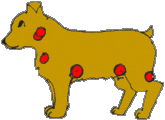
Lymphoma signs in dogs

The spots indicate the location of peripheral lymph nodes in dogs. Illustration by Dr. Wendy Brooks.

How Is Lymphoma Diagnosed?

A trained veterinarian will take a biopsy of the affected area and examine it closely under a microscope. A special staining of the sample may be performed to determine which type of malignancy your pet has developed. Other tests of the blood, urine, bone marrow, as well as imaging and sampling the internal organs with an ultrasound will help to determine how widespread the disease is.  This is known as staging the cancer and gives veterinary oncologists an opportunity to better treat the disease and refine the prognosis.

How Can We Treat Lymphoma?

Dogs with multicentric lymphoma who do not undergo treatment typically survive only a few months.  Treatment options and response to treatment depend on the type of lymphoma (B cell, T cell, small cell, low grade), stage of cancer, whether your pet is currently acting ill, whether they have received previous treatment for the disease, other concurrent illnesses, calcium levels at the time of diagnosis, and financial limitations.  Most protocols involve giving a combination of chemotherapy drugs over several months. In general, dogs receiving treatment do not suffer the same effects as people such as nausea and hair loss.

The goal of treatment is to achieve remission, or at least regression. Remission is represented by a return of the lymph nodes to normal size and resolution of any signs related to the disease. 65-70% of dogs who receive some type of treatment protocol can expect to see a first remission.  How long the remission period lasts varies on the type of treatment the dog receives.

The median survival time for B cell lymphomas is one year when receiving the most standard combination of chemotherapeutics. 25% of patients can expect a good quality of life for two years! More recently, a vaccine used to target and kill malignant cells has received conditional FDA approval adding to the toolkit to treat lymphoma.

As new treatment options become readily available and clinical trials at veterinary teaching hospitals are completed, we can hope to see a day when dogs with lymphoma stand a better chance at a cure.

Signs Your Dog Is Stressed and How To Relieve Anxiety in Your Pet

Dog Behavior Articles

Stressed Dog

Ommmmmm…… As I sit with my legs crossed, hands to the heavens, and eyes closed, I can almost feel myself becoming one with the universe.  It is no secret that regular exercise and breathing deeply helps the body release natural feel-good chemicals. Which, in turn, can promote a better night’s sleep and sharper thinking.  Physiologically, our pets’ bodies operate in much the same way we do.  We know they anticipate, perceive, and react to stress very similarly; anxiety leads to rapid heart rate and breathing, raised cortisol levels, and outward signs of stress like panting, whining, shifting of weight off the front limbs, yawning, or pacing.

Signs Your Dog Is Stressed and How To Relieve Anxiety In your Pet

How can we assist our pets during times of stress or change and enable them to cope with situations that may prove taxing?  First, recognize that some events are inherently hard on animals, taking into consideration your own pets’ personalities and environment. Animals are very perceptive. For example, if your human family is experiencing stress, your pets may become agitated as well.  Change, whether it be a move, an animal or human addition to the family, or the loss of a loved one can be upsetting.  Travel, storms, babies crying, separation from family (even for just a few minutes), pain, and illness are also common stressors.

Signs your pet may be experiencing stress include:

  • Hiding
  • Vocalizing
  • Panting
  • Salivating
  • Shaking
  • Needing physical closeness to their human
  • refusing food
  • Inappropriately urinating and defecating.

Tips to Manage Stress & Anxiety

  • Make sure your pet has a calm place in which to retreat such as a kennel for a dog. A quiet, interior room or bathtub may relieve anxiety during a thunderstorm or fireworks.
  • Thundershirts can provide relief by essentially wrapping your dog in a protective “hug”. By utilizing gentle, constant pressure symptoms of anxiety decrease.
  • Do not inadvertently reward unwanted behavior such as crying or shaking by “reassuring” your dog things will be ok. Because such positive reinforcement can cause the behavior to persist or escalate.
  • Make the kennel or safe space the best place to be by offering a high value treat such as a peanut butter filled kong every time they rest quietly in their “den”.
  • Exercise your pet by taking a walk, tossing a toy, attending an obedience or agility class, or incorporating some of those yoga moves while exercising with your pet. Giving your pet a “job” or place to succeed can work wonders for calming nerves and instilling confidence.

Separation Anxiety

If separation anxiety is a problem, try to ignore your pet for the first few minutes after you arrive home. Allowing them time to settle, and don’t forget to reward calm, quiet behavior with your attention. Also, try to vary your departure and arrival routine and schedule.  Your dog will come to associate the sound of the hair dryer or garage door opening with your departure may cause anticipatory stress.

Alternative Stress Relief Methods

  • Natural chemicals such as dog appeasing pheromone (DAP or ADAPTIL) can calm dogs under stress. Collars, plug-ins, and sprays are impregnated with the odorless product and are worn or placed strategically on bedding during travel or throughout the home.
  • Essential Oils. Lightly diffused essential oils such as lavender and chamomile may be relaxing though in concentrated doses they can also be toxic. Make sure your dog can’t taste test any oils you may use in your home. Rescue Remedy is a Bach Flower blend that can be given orally to your pet or in the water bowl. It can be found online at: VitaminShoppe.com or at Whole Foods. Other common supplements used in managing pet anxiety include: Melatonin, Valerian Root, and Passion Flower extracts.
  • Calming CD’s and Videos. These can help your animal relax while you are away or divert their attention from a major weather system. Relaxation Music for Dogs and Cats Vol. 1 and DVD’s such as Dog Sitter (multiple volumes) can be found on Amazon.  These videos show familiar and comforting scenes such as fish swimming in a bowl, layered with sounds appealing to dogs including the phrase “good dog” audible only to canine ears!

Senior Dogs & Stress

In older dogs, pain is a common cause of physiologic stress and can be treated via a multi-modal approach involving anti-inflammatory medications, massage, acupuncture and supplements. It is best to consult your veterinarian to see which therapy and dosage is best for your animal depending on their specific condition. Board certified veterinarians who specialize in rehabilitation and recovery, chiropractic, and physical therapy are available at most veterinary teaching hospitals and major metropolitan areas.

The bottom line is to get moving and have fun! You will often hear me say, “a mentally and physically tired dog is a happy dog and owner!”

Now, lace up your running shoes and grab a leash. You and your pet are on the road to relaxation!

What To Do If Your Dog Gets Sprayed by a Skunk

Pet Health Articles

skunk in lawn

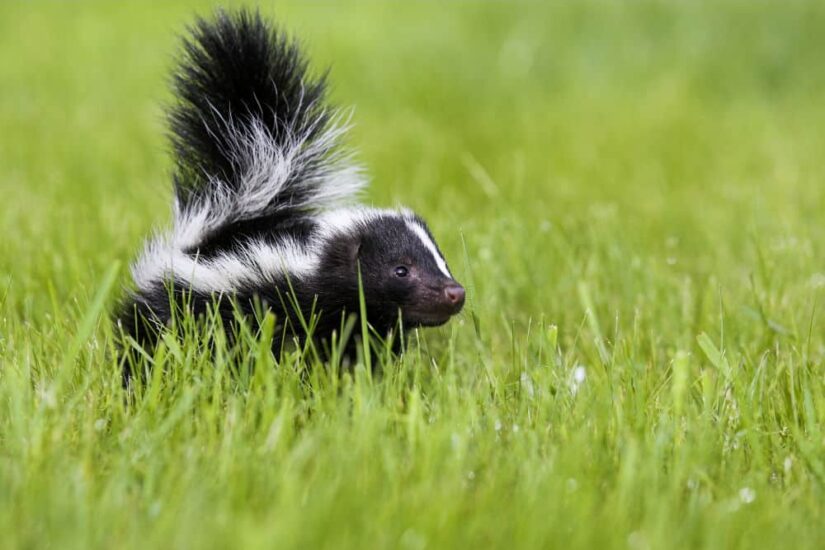
What’s black and white and strikes fear into the hearts’ of dog owners? Skunks! If your dog spends time outdoors there is a good chance it will get sprayed by a skunk, or come close to one at least once during their lifetime. Keep on reading to learn why skunks spray and what you can do if your dog gets sprayed by a skunk!

Skunk Odor and Getting Rid of It

If you have taken steps to avoid getting skunked but still end up in the unenviable position of cleaning up the aftermath, there are a few things to know about bathing your dog after getting sprayed by a skunk. Skunk secretions are made up of oils that become fouler smelling when your dog is wet. It’s not just your imagination; it’s actually the chemical compounds that make up the oils converting into more noxious products.

The thiols and thioacetates readily bind with skin proteins and can cause tearing, temporary blindness, nausea and vomiting if swallowed or sprayed into your pet’s eyes. Call your veterinarian if your dog is especially distressed or in pain as they can permanently damage their delicate corneas if not properly treated. Rinsing eyes with copious amounts of cool water may be enough to prevent serious injury.

Understanding the make-up of skunk spray has helped develop effective remedies. Oils on the fur and skin can only be broken down and washed away using a detergent and the chemicals must be converted into less stinky compounds. Tomato juice and vinegar, sadly, are not helpful.

Over-the-counter products such as Nature’s Miracle Skunk Odor Remover and Thornell’s Skunk-Off shampoo are wonderful to keep on your shelf if you have an inquisitive hound. Unfortunately, many skunk encounters happen during early morning or late evening excursions when pet stores are likely closed.

Why do Skunks Spray?

Their tell-tale smell is emitted from scent glands under the tail and secreted when they are startled or defending themselves. Though getting “skunked” can happen to you or your dog in the blink of an eye, skunks often hiss, stamp their feet, or growl as a warning before spraying their scent. Some experts believe they are able to hit a target within 15 feet!

Not only is the odor pungent and long-lasting, but skunks can carry diseases such as rabies and leptospirosis. It’s important to discourage their presence around your family and pets by eliminating any food sources, blocking access to underground hideaways, and ironically, using sweet-smelling citrus peels, ammonia soaked rags, or predator urine (or commercially available equivalent) as a deterrent. Skunks usually emit their scent directly in the face or your curious or protective dog.

Skunks tend become relatively inactive during the coldest months, preferring to commune underground to keep warm. In February and March, skunks typically mate, and spend more time looking for food such as berries, grubs, grains, seeds, and other insects at dusk, dawn and during the nighttime.

They aren’t opposed to snacking on garbage, compost heaps, or other food sources humans may have intended to feed birds or other wildlife. Skunks make their den and rear their young in burrows underground but are opportunistic and will happily reside underneath a front stoop or window well if left undisturbed.

Deskunking Your Dog

Here’s a DIY dog shampoo if your dog gets sprayed by a skunk. Head to your medicine cabinet or the local convenience store for:

  • 1 quart of 3 % hydrogen peroxide.
  • 1 tsp of dishwashing detergent and
  • ¼ cup of baking soda.

Mix the ingredients in a bowl and use rubber gloves to saturate and scrub your pet’s fur. Don’t leave this solution on your dog for too long, as the peroxide may discolor fur.  Though much of the scent may be concentrated near your pet’s head, avoid the delicate eye area. Rinse thoroughly, and then wash your dog again, but with their regular pet shampoo.

Keep an eye on your furry friends as their outdoors this season!

Find a Pet Butler 800-Pet-Butler