
Anxiety is not just a condition reserved for humans. Pets can suffer from anxiety too. Physiologically, our pets’ bodies operate in much the same way we do. We know they anticipate, perceive, and react to stress very similarly; anxiety leads to rapid heart rate and breathing, raised cortisol levels, and outward signs of stress like panting, whining, shifting of weight off the front limbs, yawning, or pacing.
For pets that come from shelters or rescues, this dependency and anxiety can be much more intense. This could be due to past neglect and abuse resulting in pet anxiety. The good news is that there are many tools to help pet owners reduce their pets’ anxiety.
What are signs my pet has anxiety?
How can we assist our pets during times of stress or change and enable them to cope with situations that may prove taxing? First, recognize that some events are inherently hard on animals, taking into consideration your own pets’ personalities and environment. Animals are very perceptive. For example, if your human family is experiencing stress, your pets may become agitated as well. Change, whether it be a move, an animal or human addition to the family, or the loss of a loved one can be upsetting.
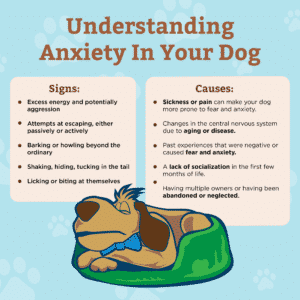
Every pet deals with anxiety in different ways, but some common signs that can indicate that your pet is stressed out can be:
- Pacing
- Hiding
- Trembling or Shaking
- Excessive Panting or Salivating
- Hypervigilance
- Lip licking
- Frequent yawning
- Decreased appetite or refusing food
- Destructive behavior
- Potty accidents
- Increased frequency of needing closeness
Once you learn how to detect when your dog is anxious, you can begin to identify the triggers that are causing the anxiety and then try to minimize them. By keeping records of the issues your pet is facing and working closely with your veterinarian, you can help diffuse problems before they occur.
What can cause my pet to have anxiety?
Anxiety can be caused by a lot of external and internal factors. First, recognize that some events are inherently hard on animals, taking into consideration your own pets’ personalities and environment.
Animals are very perceptive. For example, if your human family is experiencing stress, your pets may become agitated as well. Change, whether it be a move, an animal or human addition to the family, or the loss of a loved one can be upsetting.
Travel, storms, babies crying, separation from family (even for just a few minutes), pain, and illness are also common stressors.
Some other common causes of anxiety in pets include:
Dog Breed
Certain dog breeds are prone to separation anxiety. A first step is to make sure you research any breed of dog that you consider – making sure it fits into your lifestyle. If you are bringing one of those breeds into your home, be sure that you have the time to commit to reassuring, training and setting your anxious dog up for success.
Pet History
If your pet has a history of abuse, abandonment, or life as a stray can all lead to anxiety that does not automatically go away when he or she enters your loving, stable home.
Age and Health
In older dogs, pain is a common cause of physiologic stress and can be treated via a multi-modal approach involving anti-inflammatory medications, massage, acupuncture and supplements. It is best to consult your veterinarian to see which therapy and dosage is best for your animal depending on their specific condition. Board certified veterinarians who specialize in rehabilitation and recovery, chiropractic, and physical therapy are available at most veterinary teaching hospitals and major metropolitan areas.
How Can You Manage Anxiety in Your Pets?

Exercise Your Dog
Exercise is a keyway to help your pet burn off excess energy that can build up to cause anxiety. Routine exercise creates a time for bonding with your pet as well as an opportunity to tire out your pet. Exercise your pet by taking long walks, tossing a toy or attending an obedience or agility class. Giving your pet a “job” or place to succeed can work wonders for calming nerves and instilling confidence.
Physical Contact
Petting your pet or cuddling with your pet regularly can help reduce his or her anxiety. Especially when your pet is experiencing an anxiety episode, physical contact can help reduce it. Simply picking the pet up, cuddling it on the couch, or giving them a good long petting session can be a great solution.
Create a Safe Space
Make sure your pet has a calm place in which to retreat such as a kennel for a dog. A quiet interior room or bathtub may relieve anxiety during a thunderstorm or fireworks.
You can help your dog associate their kennel or safe space as the best place to be by offering a treat every time they rest quietly in their “den”.
Give Your Dog a Massage
Anxiety causes muscle tension, making massage therapy a perfect way to reduce tension. Keep one hand on the pet for comfort while using the other to massage long strokes along the pet’s body.
Calming Clothing
Clothing items such as coats and t-shirts can offer comfort for your anxious pet. These heavy clothing items offer mild, constant pressure to a pet’s body like the swaddling of a newborn baby. Thundershirts can provide relief by essentially wrapping your dog in a protective “hug”. By utilizing gentle, constant pressure, symptoms of anxiety decrease.
Time Outs
When anxiety leads to bad behavior, it may be time for a little time-out session for your pet. Pet crates can allow pets to feel safe and secure and provide a place for them to calm their nerves. Reduced light, lowered motion, and less background activity reduces stress.
Do not inadvertently reward unwanted behavior such as crying or shaking by reassuring your dog things will be ok. Such positive reinforcement can cause the behavior to persist or escalate.
Separation Anxiety
If separation anxiety is a problem, try to ignore your pet for the first few minutes after you arrive home. Allowing them time to settle, and don’t forget to reward calm, quiet behavior with your attention. Also, try to vary your departure and arrival routine and schedule. Your dog will come to associate the sound of the hair dryer or garage door opening with your departure may cause anticipatory stress.
Learn more about separation anxiety in dogs and how to manage it.
Alternative Methods for Treat Stress and Anxiety in Dogs
Natural Supplements
Many pet owners have explored natural supplements and alternative products to help pets suffering from anxiety. Be sure to consult with your veterinarian prior to use.
Natural chemicals such as dog appeasing pheromone (DAP or ADAPTIL) can calm dogs under stress. Collars, plug-ins, and sprays are impregnated with the odorless product and are worn or placed strategically on bedding during travel or throughout the home.
You may also explore things like CBD, melatonin, thiamin, chamomile, L-Theanine or L-tryptophan to help your pet deal with his or her stress and anxiety.
Calming Music or Videos
Both dogs and cats have been shown to respond positively to music therapy as a calming and relaxing effect. Classical music has been extremely impactful for dogs in stressful states.
Videos that show familiar, comforting images and sounds can help pets relax while you are away, or from causes of stress such as thunderstorms.
Essential Oils and Other Fragrances
Beware of using essential oils and other fragrances to try and calm your dog’s anxiety, as they can irritate your dog’s skin or other senses. Concentrated doses can even be toxic.
Learn more about safety with essential oils and candles for pets.
Tips for the Holidays
Pets can have an especially difficult time managing stress and anxiety around the holidays. Loud noises, large gatherings and an abundance of food and alcohol all present challenges for keeping your dogs and cats safe and anxiety-free.
Read our 4th of July safety tips and New Year’s Eve safety tips for more information.
At Pet Butler, we understand that pet anxiety can have a crippling effect on you and your pet’s relationship. We know you want to give them the best care you can. That is why we specialize in caring for your pet’s special area by scooping up their waste. Call 1-800-PET-BUTLER or find a Pet Butler near you to learn how we can make your pet’s life happier, healthier, and cleaner.